top of page

Magazine Articles

#


From "Appalled" to Taking Action


EquuStyle: What inspired you to dedicate your life to equines, and what was the defining moment that led to the opening of Liberty Sanctuary?


Debra West:  I’ve loved horses much of my life but it wasn’t until I learned about the atrocities in the slaughter pipeline that I was truly “appalled” to action.  My husband and I had developed an infrastructure with horses in mind on a decent amount of land.


When I learned about horse slaughter, we knew we had to help and started rescuing precious souls from the pipeline, bringing them to Utah so that we could give them refuge and work to educate the public and our legislators. Once the horses are healthy and show curiosity for humans, we work to train them and find them forever homes.


A rescued wild mustang is being ridden by a horse trainer at Liberty Sanctuary in Utah.
One wild mustang is rescued from the slaughter pipeline and receives training at Liberty Sanctuary in Utah

Fighting Against Equine Slaughter


EquuStyle: Regarding your work with SAFEACT.org and other animal welfare groups, what does the SAFE Act aim to achieve, and why is federal legislation urgently needed now?


Debra West:  We built and launched SAFEACT.org back in 2024 and the campaign was responsible for sending over 10,000 letters to legislators from constituents in all 50 states demanding a ban on horse slaughter.  The unspeakably horrifying horse slaughter industry must be shut down. It’s simply unconscionable to think of people making money off of a horse’s back in this especially gruesome and unjust way.


Besides the obvious cruelty to animals, we have recently learned that the slaughter pipeline also gives cover to criminals involved in human, sex and drug trafficking. Related, the pipeline is responsible for spreading dangerous zoonotic and other infectious diseases that could be antibiotic resistant and very hard to treat. Most kill buyers are finding greater profits as horse traders, selling horses in the US but they are still using slaughter as a marketing tool and that’s atrocious.


The slaughter pipeline must close, horsemen will take greater responsibility, American horses will be absorbed into the community, and there should be more transparency and better conditions by traders on behalf of the horses in their care.  Slaughter numbers are up again this year but horses sent to slaughter represent .4% of all horses in the United States. There are homes in America for these .4% of the population. We meet with our legislators to try to develop solutions on behalf of America’s most vulnerable horses. In the end, I don’t care how the pipeline closes, just that it does close. 


The SAFE Act keeps getting locked up in the Agriculture Committee and may not be the best vehicle at this point. It’s now looking like the BUILD America 250 Act - H.R.8870 may lead the way for the horses in the House.


The U.S. House Transportation and Infrastructure Committee passed its five-year surface transportation reauthorization bill, which includes a bipartisan amendment led by U.S. Reps. Jeff Van Drew (R-N.J.) and Dina Titus (D-Nev.), joined by Reps. Tim Burchett (R-Tenn.) and Jimmy Patronis (R-Fla.), to prohibit the transportation of horses for slaughter for human consumption - this language echoes the critical language of the SAFE Act. The bill moves on to await consideration on the House floor now and it’s important we all continue to let our legislators know we oppose the slaughter of American horses and that we support H.R. 8870.


IN 1 MINUTE

YOU CAN HELP SAVE THOUSANDS OF HORSES

A few simple clicks will send your support to legislators urging them to ban the export of

American horses for slaughter by passing the Save America’s Forgotten Equines Act

in the 119th Congress (HR 8870)


Keep America’s Horses SAFE in the USA.


An Icon Sponsor of "The Lost Horses" Campaign


EquuStyle: How is Liberty Sanctuary using its platforms to energize "The Lost Horses" campaign in support of the SAFE Act?


Debra West:  Liberty Sanctuary has been an Icon Sponsor of the Lost Horses campaign since early on. We were also pleased to host the first Lost Horses event during the Sundance Film Festival and supported other events.  We helped with marketing in redesigning our platforms to support their messaging and even brought on YESCO, a national digital billboard company, to donate space to the Lost Horses. Liberty’s overall commitment in dollars and services was close to $90,000 in support of the Lost Horses campaign to help bring an end to horse slaughter.


The Lost Horses: The Campaign will change the way people think about horses.

EquuStyle: What are the most impactful, actionable steps our readers can take today to urge their representatives to support a ban on horse slaughter?


Debra West:  The best thing readers can do now is to contact their legislators in support of H.R.8870, the BUILD America 250 Act including the Van Drew-Titus Amendment which bans the export of American horses for slaughter for human consumption. We are updating SAFEACT.org to point constituents in that direction and they should also call the U.S. Capitol Switchboard at (202) 224-3121 to be connected to their congressional office.


It's important to realize that every citizen can make a difference by joining others in fighting against equine slaughter.


Proactive Partnership with Other Equine Groups


Woman gently rests forehead on a white horse in a Rescued Hearts documentary poster with award laurels and healing theme.
Rescued Hearts is an award-winning documentary directed by Dana Croschere and Krisanna Sexton that explores the miracles, mystery, and science of equine-assisted healing

EquuStyle: What results have you seen from teaming up with groups like Horses for Mental Health to host community screenings of films and lead post-film discussions, such as the documentary Rescued Hearts?


Debra West:  Whenever we can create effective campaigns that allow us to collaborate with professionals, the horses win.  The horses need us to have a big, inviting tent to allow others to join us, invite their friends, become educated and inspired. This leads to action.  It helps to exchange ideas with others in the industry and outside of it. I firmly believe you don’t have to be a horseman to appreciate America’s vulnerable horses and help fight for protections.


This is about freedom and justice above all – and most of us can relate to that. Horses have been synonymous with freedom and have been celebrated in art and culture in appreciation of those themes and their majesty. 


In collaboration with others, we were proud to have welcomed 300+ guests at the Rescued Hearts premiere in Park City during Mental Health Awareness Month in coordination with the Equellness Center, the Equine Empowerment Center and Horses For Mental Health.  We were thrilled to have so many come out to appreciate the horse-human connection and that’s a testament to the role horses play in our communities.


EquuStyle: Can you share a story about how partnering with organizations like 4-H to provide equine scholarships and mentoring programs has positively changed the life of a rescued horse? 


Debra West:  Max wasn’t a rescued horse – he was my own horse and a registered AQHA horse.  However, we do invite groups like 4-H, Girl Scouts, Boy Scouts, National Charity League, local high school students and others to come learn about rescuing horses and importantly about the slaughter pipeline. The aim is to create young advocates as we invite each group to meet the Liberty Herd.


I had one especially bright 4th grader tell me that we are doing good work and that she wants to help more! The engagement with the children often involves their parents and those adults can get further involved and take action.


Liberty was proud to award Tatum the Liberty Award For Equine Excellence
"She's a horse angel in every sense," said Tatum's mother Kelly, "and she [Debra West] was making a dream happen for my daughter."


Volunteers Play a Vital Role in Caring for Our Horses


EquuStyle: You have noted that community engagement and education are "absolutely critical." With over 75 volunteers assisting your organization, how do your events and educational outreach programs help foster better horsemanship within the community?


Debra West:  Our volunteers are critical to the care of our horses.  They are the most amazing and dedicated people I’ve come across who are all here for the horses 100%!  They are also Liberty ambassadors in the community. 


Our community outreach is also extended through our educational summer programs. We consistently offer 2 free clinics weekly to the community led by our trainer, Searra Brandt, as we want to help educate other local horsemen. We also work to invite other clinicians to visit and share knowledge – like Monty Roberts’ James Oliver and Wild West Taylor.  We believe sharpening our skills is also vital and we have studied the Liberty method with Carolyn Resnick’s Nan Zintsmaster and Gamilah Unbridled’s Patrick Sullivan recently.
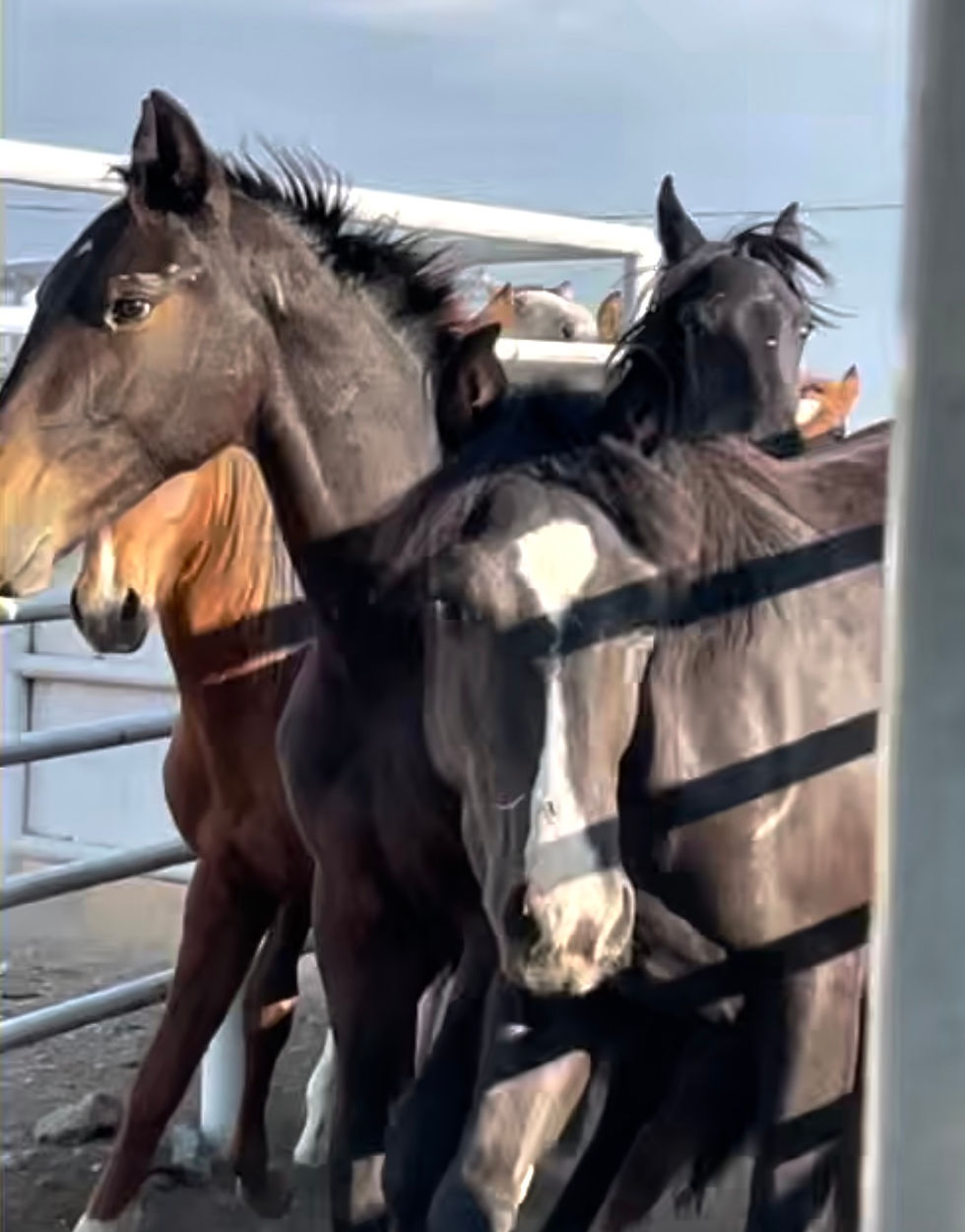
Rescued wild mustangs crowd a metal corral, including a black horse with a white blaze in front, under bright outdoor light. Liberty Sanctuary rescues and rehomes horses across Utah.
Horses rescued by Liberty Sanctuary from the slaughter pipeline
Over 80% of Americans are against horse slaughter – it’s time our legislators listened to their constituents and close these loopholes in protection of these American icons. 

Clearly, education about the slaughter pipeline is also very important.  Many people still don’t know the difference between slaughter and humane euthanasia. Many don’t know that over 92.3% of horses in the pipeline are young and healthy according to the USDA. When we bring these facts to light, we help the horses.  Over 80% of Americans are against horse slaughter – it’s time our legislators listened to their constituents and close these loopholes in protection of these American icons.  The more people know the facts and understand the better we can help make the world.


What Does the Future Hold for Liberty Sanctuary?


EquuStyle: Regarding the sanctuary's future, how do you balance the roles of volunteers, donors, and your adoption program to maintain operations? Additionally, could you elaborate on the challenges and importance of acquiring property with adequate water rights in the West? 


Debra West:  Great question and so timely!  These roles blend quite often. Our volunteers are our absolute strongest supporters. With just over 75 volunteers right now, our volunteers care about the Liberty Herd so much that they are amongst our most consistent donors and represent more than 70% of adoptions. We share the work we do online and more people seem to be drawn to the help the Liberty Herd and all of America’s most vulnerable horses through advocacy.


Regarding water in the west – it’s absolutely critical to sustaining operations – and it is prompting us to leave Utah for Colorado. Utah has been so supportive of Liberty Sanctuary and our volunteers here are incredible but we have made the decision to move to Colorado where land and water are more accessible. We are on 80 acres in Utah but only 1.5 acres of that is irrigated pasture and I think there are more sustainable options in Colorado.  We are excited for our next chapter in the state of Colorado and I’m dying to get the new wild horse license plate!


Halting the Slaughter of Horses and Burros


EquuStyle: What is the primary message you want readers to take away from your story?


Debra West:  Liberty believes the best way to help make progress for the horses is through organized collaboration with other groups; in the equine world and outside of it. This work is not about ego or who takes the lead. I’d happily be an engine at the back of a well-run train any day if it meant we were making progress for America’s most vulnerable horses. 


We know our key opposition is extremely well-funded and organized. We need that type of structure to educate the public and our legislators and truly affect change and restore wellbeing and dignity to our horses. I’d like for the public to know that there’s a place for everyone in our community and work. Whatever your talents are, the horses need you. They need us all! Reach out and we can discuss ways to work together!  There’s no talent or task too big or small. It all helps.


Humans are responsible for creating the pipeline and all of this mistreatment – it’s our duty as humans to make things right!


The next projects we would like to collaborate with others on include the Horse Heroes Collegiate Challenge to activate young voters on college campuses to engage in advocacy efforts and also a collaborative rewilding program based in Colorado to give wild horses an option to be rewilded instead of held in BLM holding facilities with no quality of life. We have passion for these projects and seek partners to help bring these to life. debra@libertysanctuary.org


All images Copyright Liberty Sanctuary-all rights reserved. Cannot be reproduced for any purpose without permission from Liberty Sanctuary.


Rescued wild horses gallop through a mountainous landscape with green shrubs and trees at Skydog Ranch and Sanctuary. The scene is dynamic and natural, under a clear sky.
A band of rescued horses trot through the vast natural landscape at the 9,000-acre Skydog Ranch and Sanctuary.

The fate of wild horses and burros in the United States remains a pressing concern for animal advocates. Thousands of these majestic creatures face the threat of slaughter after being rounded up from public lands or sold at auctions. Skydog Ranch and Sanctuary in Oregon offers a beacon of hope for rescued wild horses, providing a safe haven where they can heal, roam freely, and live with their families once again.


Three rescued wild burros walk through a field of purple wildflowers at Skydog Ranch and Sanctuary. Trees and mountains are visible in the background under a clear blue sky.
Three rescued burros stand in a flower-filled meadow at Skydog Ranch and Sanctuary.

The Crisis Facing Wild Horses and Burros


Each year, thousands of wild horses and burros are removed from their natural habitats by the Bureau of Land Management (BLM). These roundups involve chasing the animals with helicopters into crowded pens, causing severe stress and injuries. Some horses break their necks trying to escape or reunite with their families. After capture, many end up in holding facilities with limited resources, and some are sold to slaughterhouses in Mexico or Canada despite widespread public opposition.


A 2022 poll by the American Society for the Prevention of Cruelty to Animals (ASPCA) found that 83 percent of Americans oppose the slaughter of U.S. horses for meat. The opposition spans all political parties, including 88% of Democrats and 78% of Republicans, according to testimony regarding the poll results from House.gov.


The ASPCA used these results to advocate for the Save America’s Forgotten Equines (SAFE) Act, a federal bill aimed at permanently banning horse slaughter in the U.S. and ending the export of American horses for slaughter abroad.

Helicopter hovers near rocky cliffs amid swirling dust, for the purpose of rounding up wild horses and driving them into captivity with the help of a person below on a dirt path. Rugged, dramatic scene.
"West Douglas" is an image of the ongoing helicopter roundups of America's wild horses and burros by Scott Wilson. Learn more today at https://www.photoadvocacy.org/about

Yet, inhumane roundups of wild horses and burros continue. As of 2024, the BLM reports over 66,000 wild horses and burros in holding facilities, highlighting the urgent need for compassionate solutions.

In Colorado alone, the 2026 roundup program targets 1,111 free-roaming wild horses to be removed. And, in nine western states the Bureau of Land Management will remove 14,378 wild horses and corral them in overcrowded holding pens.


Skydog Ranch and Sanctuary’s Mission


Spanning 9,000 acres in Oregon, Skydog Ranch and Sanctuary is a Global Federation of Animal Sanctuaries accredited organization dedicated to rescuing wild horses and burros from kill pens and auctions. The sanctuary’s mission focuses on restoring the health, safety, and freedom of these animals while raising awareness about the challenges they face.


The sanctuary is home to approximately 300 equines, many of whom were separated from their families during BLM roundups. Skydog Ranch works to reunite these equine families, allowing them to live naturally in bands as they would in the wild. This approach supports the animals’ emotional well-being and helps rebuild the social bonds critical to their survival.


Life at Skydog Ranch


At Skydog Ranch and Sanctuary, rescued wild horses enjoy vast open spaces where they can roam freely across the property. The sanctuary is divided into seven main herds, each living in a natural environment that mimics their native habitat. While some equines require special care in rehabilitation facilities, most thrive in the sanctuary’s expansive pastures.


The sanctuary’s team provides ongoing medical care, nutrition, and enrichment to support the animals’ recovery and long-term health. By offering a safe and nurturing environment, Skydog Ranch helps these formerly wild horses and burros regain their strength and spirit.


A group of rescued wild horses stand closely together at Skydog Ranch and Sanctuary, staring forward. The background is a blurred, snowy forest, creating a serene atmosphere.
A group of curious rescued horses living in freedom at Skydog Ranch and Sanctuary gaze into the camera.

Raising Awareness Through Compassion and Change


Skydog Ranch and Sanctuary is more than a refuge; it is a platform for education and advocacy. The sanctuary uses PhotoAdvocacy to share powerful images and stories that highlight the plight of wild horses and the need for humane treatment. These visual narratives inspire compassion and motivate people to support change.


By connecting the public with the realities faced by wild horses, Skydog Ranch encourages informed action. Advocates can help by spreading awareness, supporting rescue efforts, and urging policymakers to find sustainable solutions that protect wild equines from slaughter and neglect.


A brown rescued wild foal with white star and speckled rescued wild horse stand closely at Skydog Ranch and Sanctuary; trees in the blurred background. Warm sunlight highlights their coats.
A rescued adult horse and foal gaze into the camera from their open, natural environment at Skydog Ranch and Sanctuary.

How You Can Help


Supporting sanctuaries like Skydog Ranch and Sanctuary is vital for the future of rescued wild horses. Here are ways advocates can make a difference:


  • Donate to organizations that provide care and rehabilitation for wild horses and burros.

  • Volunteer at local sanctuaries or participate in advocacy campaigns.

  • Educate others about the challenges wild horses face and the importance of humane treatment.

  • Advocate for policies that protect wild horses from slaughter and improve management practices.


Ultimately, every action, no matter how small, contributes to a larger vision of a world where wild horses and burros can live without fear of extinction or displacement. By fostering a culture of respect and stewardship for these incredible animals, we can create a legacy of compassion and responsibility that honors their place in our ecosystems. Through collaboration, education, and advocacy, we can work together to ensure that wild horses not only survive but flourish in the wild, embodying the freedom and majesty that they represent.


Learn a little about Clare Staples, Founder and President of Skydog Sanctuary, who is featured in this video by The Dodo published on YouTube on Nov. 3, 2024. "These horse rescues will make you believe in miracles. When a family of wild horses got captured and separated, one woman dedicated her life to tracking each one down so they could be free together again."


All images Copyright Scott Wilson and © PhotoAdvocacy-all rights reserved. Cannot be reproduced for any purpose without permission from Scott Wilson and © PhotoAdvocacy


The cover image of a wild stallion running free on the cover of Chad Hanson's book "The Wild Horse Effect: Awe, Well-Being, and the Transformative Power of Nature”
"The Wild Horse Effect: Awe, Well-Being, and the Transformative Power of Nature" is available for presale now and on sale March 11, 2025

EquuStyle: Who inspired you to become a photographer?


Chad Hanson: My grandfather loved cameras. I grew up watching him tinker with lenses and light meters. By the time I went off to college, it felt natural to think of the world as a subject, and to see our public land as art. I discovered “visual sociology” in school, an approach to the study of culture that uses photographs. Using photos for academic purposes put me in touch with the depression-era work of Walker Evans and Dorothea Lange. To this day, as a teacher, I still use their images in my courses. With regard to mustangs, though, it was the work of Kimerlee Curyl that inspired me early on. As far as I can tell, she has the best timing in the business.


During the workshops that I teach, on writing and photography, I often urge students to “find their heroes.” I believe there’s value in identifying, cultivating, and curating your influences. Still, at some level, it’s the face of nature that serves as the source of my inspiration. Wild horses stare at you from behind nature’s most charismatic faces, and I find the places where they live compelling too.


EquuStyle: A central theme in your book is "awe." Could you explain what "awe" means to you and how people can benefit from experiencing it?


A wild mustang stallion stands on grassy plains under a cloudy sky, looking strong and serene. Distant mountains are visible in the background. Image is from Chad Hanson's book "The Wild Horse Effect: Awe, Well-Being, and the Transformative Power of Nature”.
A wild stallion on the high plains of Wyoming

Chad Hanson: When I feel awe I am utterly struck by what’s in front of me. I experience a feeling of absorption in the moment. I actually become so absorbed that it’s hard to keep track of the moments as they slide from the future into the present. I enter a time-outside-of-time. I’m also set upon by the impression that I am a small part of a greater whole, and when I shift back to my normal mode of being, it’s with a heightened sense of gratitude.


My experience of awe is pretty common it turns out, and today, in places like the Greater Good Science Center, scholars like Dacher Keltner use modern techniques for measuring the chemical changes that occur when we feel blown-away. Levels of cortisol, the body’s stress hormone, tend to free-fall. Serotonin levels increase, giving rise to a sense of satisfaction. Most important to me, when we feel awed, the body releases oxytocin, a hormone that increases what we call pro-social tendencies. Under the influence of oxytocin, we grow kinder, more generous, and less self-centered. A whole body of evidence points to the psychological worth of awe, but the social benefits strike me as equally valuable.


EquuStyle: As a faculty member at Casper College, how do you integrate wild horses into your teaching?


Chad Hanson: I teach a short course called The Wild Horse Experience. The class includes two afternoons on campus. Then we load the vans. We head out to search for mustangs on a Saturday field trip. During the course, I share as much I’ve been able to learn about wild horses, but just as important, students describe their experiences with the horses in their lives, past and present. The course unfolds as a discussion about our relationships with horses, and then seemingly without fail, by the end of the class, the conversation shifts. Whether in the field, or in the van on the way home, we end up wondering out loud about American culture and values. In the end, The Wild Horse Experience always seems to turn into a dialog about our relationship to the natural world.


EquuStyle: Your words focus on honoring horses and giving them dignity. When it comes to wild horses, how do we treat them with dignity?


Anyone who shares their home with cats or dogs or horses knows that animals feel, show preferences, and possess personalities. In our barns and corrals, we bear constant witness to the intelligence, and sometimes the mischievousness of horses. We work with their idiosyncrasies. We teach them, and they learn. Day in and day out, domestic horses prove that they are both educable and capable of making independent decisions.


Ironically, for most of our history, when we studied horses in the wild, we tended to assume that their behaviors were instinctual and thus the result of biological impulse, as opposed to reason or choice-making. To this day, many biologists assume, “If you’ve seen one wild horse you’ve seen them all,” as if their behavior is simply patterned by “the force of nature.” Their actions: outside their control.   


I’m glad to say, in just the past few years, things have started to change. As a sociologist, I was thrilled to see, in 2021, a peer-reviewed article in the sciences suggesting that wild horses create multileveled societies. In the same year, a group of equine subjects in an Italian study passed the mirror-self-recognition test. Horses know who they are. More important, they know who they are in relation to others. We’re just beginning to understand the social relations that wild horses form beyond their immediate family bands. We need further research, of course, but it is becoming clear that mustangs engage in almost constant relationship-building. They likely identify as part of large-scale bonded groups. They can even create and acknowledge an extended clan. In my mind, each step we take to learn more about mustangs, their intelligence and their social lives, the more success we’ll find when it comes to convincing others to see their worth and dignity.


EquuStyle: What do you believe is the most effective way to change the way wild horses are managed?


Chad Hanson: As a general strategy, the Bureau of Land Management treats wild horses—legally defined as American icons and living symbols of the West—as if they were livestock bound for slaughter. In truth, we do not even afford them that level of decency. The BLM hires livestock companies with helicopters to chase and capture our mustangs. But in agribusiness, they only use choppers to locate animals. Business people would never order a helicopter to descend on a herd of stock. If we scared cattle with helicopters, they would run desperately, and potentially injure themselves in the process. We see cattle as having value (economic value) so we take steps to assure their safety. On the other hand, helicopter roundups in horse herds nearly always end with mustangs injured and killed. There are BLM staff that schedule roundup after roundup, knowing they can expect chaos, death and brutality.


The good news: people are like horses. We are not all the same. There are BLM staff members that appreciate mustangs. Within the BLM, there are men and women who would much prefer to use humane and affordable strategies to manage wild horses. I consider it my job, our job, to find those people and to work with them. They could use our help and cooperation is contagious. I am a proud member of a coalition of petitioners in a lawsuit aimed at stopping the complete elimination of two Wyoming herds, so I understand, when we are backed into a corner, we have to appeal to the nation’s highest authorities. But lawsuits come with high stakes, and consequences that we can’t fully control. Long term, I am committed to creating situations where wild horse enthusiasts and BLM staff can work together on behalf of our mustangs.


EquuStyle: In the current environment, with traumatizing helicopter roundups and holding pens, how can citizens effectively demand an end to the violence?


Chad Hanson: I encourage citizens and horse advocates to think big—bigger than we have in years. I am a fan of a concept called the “Overton window.” In short, the idea suggests that, at any given time, there is a window, of a certain size, that limits the number of solutions to public policy problems we see as “acceptable.” Thus, successful advocates “open” the window, stretching it in the direction of their interests. In other words, it helps to ask for more than what might seem currently feasible. It’s the only way to make a proposal that feels “unthinkable” today, turn into tomorrow’s “obvious” or “sensible” approach.


I would like to see a diverse coalition of citizens and equine advocacy groups wondering, in open and public forums, “Why don’t we have a Wild Horse National Park?” What about a series of, “Wild Horse National Monuments?” How about the identification of regions that we could call, “Wild Horse Commons,” in states with adjacent herd management areas? I’m talking about large and well-studied regions, home to genetically viable herds, managed on the range through non-violent, humane and affordable means. Everyone knows that suggestions on these lines will meet with opposition, but none of these proposals will ever come about if we don’t start the conversations.


In the long run, persistent efforts in these directions might bear fruit. And in the short term, discussions about expanding protections for mustangs hold the potential to pull currently “outlandish” ideas into the realm of the possible. If we shift the conversation toward hard-to-achieve goals, then suddenly, the reasonable (but currently out-of-the-question) suggestion to halt the helicopters and treat wild horses with dignity starts to feel like “common sense.”


All images Copyright Chad Hanson -all rights reserved. Cannot be reproduced for any purpose without permission from Chad Hanson.


Subscribe for equine art & advocacy

Subscribe today and receive a quarterly email to inform you about the upcoming

digital issue of EquuStyle Art & Advocacy Magazine.

Share via

© Copyright Protected

EquuStyle Magazine ©2023-2026 EquuStyle.com All rights reserved.

Privacy Policy

bottom of page