top of page

Magazine Articles


Rescued wild horses gallop through a mountainous landscape with green shrubs and trees at Skydog Ranch and Sanctuary. The scene is dynamic and natural, under a clear sky.
A band of rescued horses trot through the vast natural landscape at the 9,000-acre Skydog Ranch and Sanctuary.

The fate of wild horses and burros in the United States remains a pressing concern for animal advocates. Thousands of these majestic creatures face the threat of slaughter after being rounded up from public lands or sold at auctions. Skydog Ranch and Sanctuary in Oregon offers a beacon of hope for rescued wild horses, providing a safe haven where they can heal, roam freely, and live with their families once again.


Three rescued wild burros walk through a field of purple wildflowers at Skydog Ranch and Sanctuary. Trees and mountains are visible in the background under a clear blue sky.
Three rescued burros stand in a flower-filled meadow at Skydog Ranch and Sanctuary.

The Crisis Facing Wild Horses and Burros


Each year, thousands of wild horses and burros are removed from their natural habitats by the Bureau of Land Management (BLM). These roundups involve chasing the animals with helicopters into crowded pens, causing severe stress and injuries. Some horses break their necks trying to escape or reunite with their families. After capture, many end up in holding facilities with limited resources, and some are sold to slaughterhouses in Mexico or Canada despite widespread public opposition.


A 2022 poll by the American Society for the Prevention of Cruelty to Animals (ASPCA) found that 83 percent of Americans oppose the slaughter of U.S. horses for meat. The opposition spans all political parties, including 88% of Democrats and 78% of Republicans, according to testimony regarding the poll results from House.gov.


The ASPCA used these results to advocate for the Save America’s Forgotten Equines (SAFE) Act, a federal bill aimed at permanently banning horse slaughter in the U.S. and ending the export of American horses for slaughter abroad.

Helicopter hovers near rocky cliffs amid swirling dust, for the purpose of rounding up wild horses and driving them into captivity with the help of a person below on a dirt path. Rugged, dramatic scene.
"West Douglas" is an image of the ongoing helicopter roundups of America's wild horses and burros by Scott Wilson. Learn more today at https://www.photoadvocacy.org/about

Yet, inhumane roundups of wild horses and burros continue. As of 2024, the BLM reports over 66,000 wild horses and burros in holding facilities, highlighting the urgent need for compassionate solutions.

In Colorado alone, the 2026 roundup program targets 1,111 free-roaming wild horses to be removed. And, in nine western states the Bureau of Land Management will remove 14,378 wild horses and corral them in overcrowded holding pens.


Skydog Ranch and Sanctuary’s Mission


Spanning 9,000 acres in Oregon, Skydog Ranch and Sanctuary is a Global Federation of Animal Sanctuaries accredited organization dedicated to rescuing wild horses and burros from kill pens and auctions. The sanctuary’s mission focuses on restoring the health, safety, and freedom of these animals while raising awareness about the challenges they face.


The sanctuary is home to approximately 300 equines, many of whom were separated from their families during BLM roundups. Skydog Ranch works to reunite these equine families, allowing them to live naturally in bands as they would in the wild. This approach supports the animals’ emotional well-being and helps rebuild the social bonds critical to their survival.


Life at Skydog Ranch


At Skydog Ranch and Sanctuary, rescued wild horses enjoy vast open spaces where they can roam freely across the property. The sanctuary is divided into seven main herds, each living in a natural environment that mimics their native habitat. While some equines require special care in rehabilitation facilities, most thrive in the sanctuary’s expansive pastures.


The sanctuary’s team provides ongoing medical care, nutrition, and enrichment to support the animals’ recovery and long-term health. By offering a safe and nurturing environment, Skydog Ranch helps these formerly wild horses and burros regain their strength and spirit.


A group of rescued wild horses stand closely together at Skydog Ranch and Sanctuary, staring forward. The background is a blurred, snowy forest, creating a serene atmosphere.
A group of curious rescued horses living in freedom at Skydog Ranch and Sanctuary gaze into the camera.

Raising Awareness Through Compassion and Change


Skydog Ranch and Sanctuary is more than a refuge; it is a platform for education and advocacy. The sanctuary uses PhotoAdvocacy to share powerful images and stories that highlight the plight of wild horses and the need for humane treatment. These visual narratives inspire compassion and motivate people to support change.


By connecting the public with the realities faced by wild horses, Skydog Ranch encourages informed action. Advocates can help by spreading awareness, supporting rescue efforts, and urging policymakers to find sustainable solutions that protect wild equines from slaughter and neglect.


A brown rescued wild foal with white star and speckled rescued wild horse stand closely at Skydog Ranch and Sanctuary; trees in the blurred background. Warm sunlight highlights their coats.
A rescued adult horse and foal gaze into the camera from their open, natural environment at Skydog Ranch and Sanctuary.

How You Can Help


Supporting sanctuaries like Skydog Ranch and Sanctuary is vital for the future of rescued wild horses. Here are ways advocates can make a difference:


  • Donate to organizations that provide care and rehabilitation for wild horses and burros.

  • Volunteer at local sanctuaries or participate in advocacy campaigns.

  • Educate others about the challenges wild horses face and the importance of humane treatment.

  • Advocate for policies that protect wild horses from slaughter and improve management practices.


Ultimately, every action, no matter how small, contributes to a larger vision of a world where wild horses and burros can live without fear of extinction or displacement. By fostering a culture of respect and stewardship for these incredible animals, we can create a legacy of compassion and responsibility that honors their place in our ecosystems. Through collaboration, education, and advocacy, we can work together to ensure that wild horses not only survive but flourish in the wild, embodying the freedom and majesty that they represent.


Learn a little about Clare Staples, Founder and President of Skydog Sanctuary, who is featured in this video by The Dodo published on YouTube on Nov. 3, 2024. "These horse rescues will make you believe in miracles. When a family of wild horses got captured and separated, one woman dedicated her life to tracking each one down so they could be free together again."


All images Copyright Scott Wilson and © PhotoAdvocacy-all rights reserved. Cannot be reproduced for any purpose without permission from Scott Wilson and © PhotoAdvocacy


  • Writer: Neda DeMayo & Christina Tsirkas
    Neda DeMayo & Christina Tsirkas
  • Sep 3, 2024
  • 7 min read

A photograph of Spirit, the Kiger mustang stallion who was the muse for the animation team for Dreamwork's 2002 animated film, "Spirit: Stallion of the Cimarron." equustyle.com
Spirit, the Kiger mustang stallion who was the muse for the animation team for Dreamwork's 2002 animated film, "Spirit: Stallion of the Cimarron." Now 29 years young, Spirit still enchants people of all ages from across the globe who visit him at Return to Freedom's American Wild Horse Sanctuary in Central Costal California. Photo: Ondrea Hidley

In 1997, Neda DeMayo founded Return to Freedom (RTF), a national non-profit wild horse conservation organization. In 1998, RTF opened a sanctuary in the rolling hills off California’s Central Coast to give back some of what these wild horses lost when captured. The sanctuary’s precedent-setting focus is in keeping rescued family bands of wild horses intact and educating the public about the diversity, lives, and challenges of these closely bonded sentient beings.


Wild horses enjoying their freedom at Return to Freedom's American Wild Horse Sancturay.  equustyle.com
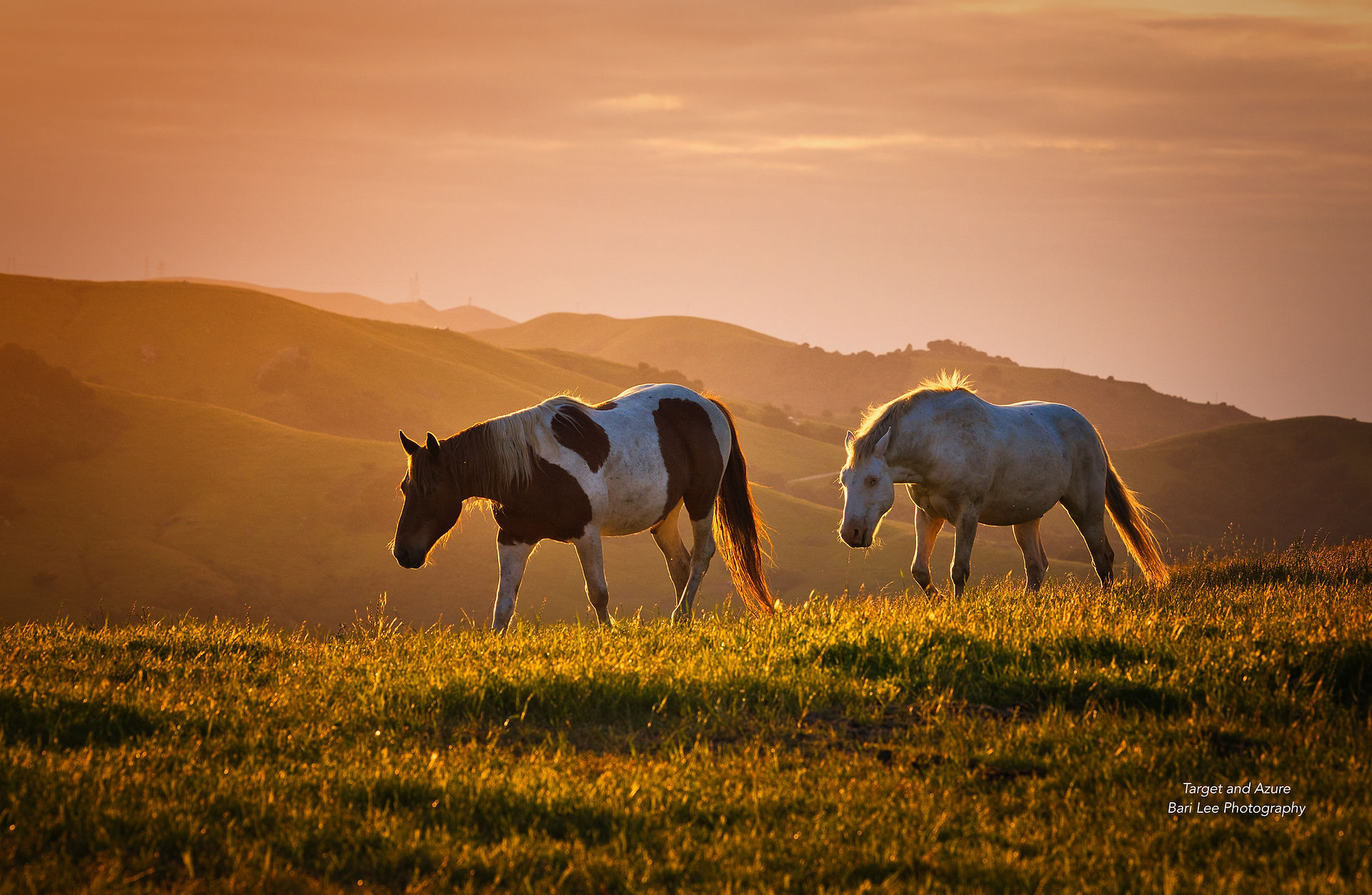
Return to Freedom’s American Wild Horse Sanctuary provides a forever home for wild horses and burros. RTF protects family and social bands for their lifetime. After the rescue is over, RTF needs your ongoing support to make this possible. Photo: Bari Lee

“I wanted to create a place where people of all ages could experience that horses live in herds…that these herds are made up of smaller family and bachelor bands who suffer immensely, just as we would, when ripped from their families, their freedom, and from everything they know,” Neda DeMayo.


While the majority of Americans are unaware that wild horses still roam some of the most desolate and remote areas in the West, for decades, the American mustang has been fighting for survival on the front lines of a battle over the use of precious natural resources—forage and water.


Long seen by ranchers as an invasive nuisance and competition with their livestock for forage and water, wild horses have suffered brutal persecution. In the 1950s and 1960s, the inhumane treatment they suffered was exposed.


For the past twenty-six years, RTF has been at the forefront of wild horse conservation, identifying and pioneering minimally-intrusive solutions at its sanctuary that can be implemented on the range for long-term herd management to keep wild horse and burro herds wild and free. As a solution focused organization, RTF collaborates with a broad range of stakeholders including advocates, animal welfare organizations, sanctuaries, land owners, diverse associations, agencies and legislators. RTF bases its work on guidance from leading scientists in genetics, ancient DNA research, proven safe and humane fertility control, and regenerative holistic land management.


A photograph of wild horses near a waterhole at Return to Freedom, American Wild Horse Conservation. equustyle.com
The waterhole. Return to Freedom uses regenerative holistic grazing practices at its sanctuary. By imitating natural herd movement of grazers when large predator populations were present, we can restore balance in our ecosystems. By managing under grazing and overgrazing, more water can be absorbed into the root systems- diverse native grasses return, waterholes are healthier, replenished and sustained throughout the seasons. Photo: Meg Frederick Photography

“True conservation is only possible when all stakeholders have a voice and a shared desire to protect a resource. Time has taught us that we conserve what we love, we love what we understand, we understand what we are taught.” Neda DeMayo

Conservation

Return to Freedom, Wild Horse Conservation's work focuses on three main areas:

  • Humane Fertility Control -Population management utilizing a non-hormonal reversible fertility control.  In 1999, RTF was the fourth project in the world to use fertility control on large populations of mares under the guidance of the Science and Conservation Center

  • Historical Herd Preservation- Conservation program to preserve the earliest strains of Spanish mustangs that are at risk of disappearing, such as the Choctaw Indian Pony, Colonial Spanish Mission Horses, early Sorria types as seen throughout various herds including the Sulphur Springs herd. These horses were the foundation of the American mustang and became more diverse as larger breeds came to North America and returned to a natural state over the past few hundred years

  • Regenerative Holistic Land Management


A woman taking photos of wild horses at Return to Freedom Wild Horse Sancturay in San Luis Obispo, California. equustyle.com
Return to Freedom hosts experiential programs and events in nature’s classroom for all ages. Wild horse photo safaris, herd immersion, tours, workshops and more! For more information: https://returntofreedom.org/visit/ Photo: Cathy Wallace

Sanctuary:

Return to Freedom’s American Wild Horse Sanctuary:

  • Intact Family & Bonded Bands-Keeps family and bachelor bands together, from the range to sanctuary or reuniting after capture

  • Wild Horses & Burros-Currently provides sanctuary for 500 wild horses and 50 burros

  • Senior & Special Needs-Currently maintains a senior population of 60 horses over the age of 27

  • Rescue-Has rescued over 2,000 horses independently and through collaborative efforts


Education:

Return to Freedom reaches hundreds of thousands of people through programs, events, multi-media and film.

  • Programs & Events-RTF hosts experiential learning programs at two of its locations, providing private tours, photo safaris, herd immersions, and a variety of equine workshops for hundreds of visitors of all ages each year

  • Herd Immersion & Observation-Visitors learn through sensitive observation in nature’s classroom

  • Regenerative Holistic Land Management-RTF’s natural herd and land management are the foundation of its educational initiatives

  • Volunteering-RTF has a volunteer program, including an “In Residence” option for volunteers who want to help at the sanctuary for an extended period

  • Native Species-RTF educates that the horse is native to North America


Advocacy:

Return to Freedom has developed a unique, nationally respected voice on policy issues by advocating for humane, science-based wild horse management alternatives rooted in its decades of hands-on experience with hundreds of wild horses.

  • Ending Roundups-RTF advocates for the redirection of funds spent on expensive and traumatic roundups toward viable and minimally intrusive alternatives that would enable wild horses and burros to remain on their rangelands

  • Fertility Control-RTF continues to tirelessly advocate for the use of non-hormonal, reversible, proven safe and humane fertility control on the range for wild horses and burros. Fertility control was initially mocked by the BLM and other stakeholders, but RTF persevered, advocating that slowing down—not ending—reproduction, was a viable alternative to endless roundups and warehousing tens of thousands of once wild and free horses and burros

  • Selective litigation

  • Ending Horse Slaughter-RTF is a leading voice in the fight to permanently ban horse slaughter in the United States as well as the export of American horses for slaughter


A small herd of wild horses grazing on a hillside at Return to Freedom, Wild Horse Conservation.  equustyle.com
Hart Mountain Herd. Photo: Cathy Wallace

“The BLM needs a proud vision for America’s mustangs,” says Celeste Carlisle, RTF biologist. “The BLM has the tools but needs to nourish a culture shift to achieve a non-lethal, multi-faceted approach to manage healthy herds on healthy rangelands across the West. The antiquated and traumatic capture and removal policies are treacherous, inhumane, and are not a long-term solution. The battle over the use of our public land grazing and water resources is not about how many livestock versus how many horses but rather how grazing is managed on the land.”


RTF has embraced holistic regenerative grazing practices at its sanctuary and considers these practices critical to addressing the impact from climate change and long-term solutions on the range.


“Mustangs have long been the scapegoats for the mismanagement of public land grazing,” explains DeMayo. “Whether grazing livestock or wild horses, if we implement holistic management practices, grazing mammals are part of the solution not the problem. At the sanctuary we have been able to take overgrazed and under-grazed areas and, in just 3 years, restore diversity in insects, wildlife, grasses, legumes, and increase the duration of water holes.”


In addition to its advocacy work, RTF continues to execute large-scale rescues to further its original mission of keeping family bands intact.


Most recently, in December 2023, in collaboration with colleague organizations,  RTF rescued 46 members of the Alpine herd that were removed from their home in the Apache National Forest in Arizona. The captured horses ended up at an auction in Bowie, Texas, where thousands of horses are purchased by kill buyers and sent to Mexico for slaughter.


Since arriving at RTF’s sanctuary in Lompoc, California in 2024, 11 Alpine foals have been born, bringing the total number rescued to 57. RTF is now responsible for the lifelong care of these magnificent animals, which is as costly as it is rewarding. Working collaboratively, in 2023- 2024, RTF also rescued 20 burros at risk of being sold for slaughter.


Sponsorships not only help offset the cost of these large-scale rescues, but also allow RTF to continue its mission of conserving America’s wild horses in the long run so that future generations will be able to see them running free on our public lands.


Please consider sponsoring a horse, burro, or herd. Sponsorships also make great gifts all year long!  With your support, these animals will be able to live out their lives as close to free as possible alongside their family bands.


If you are interested in visiting RTF, sign up for a tour, workshop or program.


To learn more about RTF, visit ReturnToFreedom.org.


THE ISSUE


Public pressure led to the passage of the Wild and Free-Roaming Horses and Burros Act at a time when herds were vanishing.


The 1971 law handed oversight of wild horses and burros mainly to the Bureau of Land Management (BLM). The agency set a maximum population target of 26,785 wild horses and burros — fewer than 1,500 more than when the law was enacted out of concern for their survival — on Herd Management Areas in 10 Western states.


The BLM operates under a mandate that it manages our public lands for “multiple uses.” These include other wildlife, energy extraction, recreation and the grazing of private livestock that greatly outnumber wild horses.


For decades, the agency has failed to control wild herd numbers by using helicopters to chase horses and burros into trap sites before shipping them away from their home ranges.


The BLM has chosen not to use a tool that Return to Freedom and a majority of wild horse advocates and other rangeland stakeholders now support: proven, safe and humane fertility control. Used right, it would slow reproduction.


The BLM says it will use fertility control, but only after it reaches its population targets. Population modeling by ecologists shows fertility control must be implemented immediately if capture-and-removal is to ever be phased out.


Over the past five years, the BLM removed 57,997 wild horses and burros from the range while treating and releasing with fertility control just 4,936.


In March, the BLM estimated 73,520 wild horses and burros still roamed the ranges that the agency manages.


Tragically, nearly as many—63,000 captured wild horses and burros—are being warehoused in overcrowded corrals or on leased pastures at an ever-growing cost to taxpayers of more than $109 million annually.


WILD HORSES ARE NATIVE TO NORTH AMERICA

Wild horses are a reintroduced native wildlife species. The horse originated in North America 53 million years ago and went through all its adaptations, including its last adaptation leaving the world the one toed horse, Equus Caballus, on this continent.  Over millions of years, in an ongoing migratory journey across the Bering Land Bridge, the horse travelled throughout Eurasia, across the Iranian Plateau and dispersed throughout the world.

DNA evidence shows that the horse remained in North America at least as recently as 5,000 years ago. How they disappeared — if, in fact, they ever actually became extinct here — is a mystery. When Cortez landed in Mexico in 1519, he brought horses from Spain. Others followed. From these reintroduced animals came the great numbers of wild horses that eventually changed the culture of the Plains Indians. The Spanish horses soon adapted to the same ecological niche their native relatives had once thrived in. Long before the early settlers pioneered the West, the wild horses were already there as a reintroduced, fully adapted wildlife species.


EquuStyle Art & Travel magazine thanks Neda DeMayo, Founder and President, Return to Freedom Wild Horse Conservation and Christina Tsirkas, writer and wild horse advocate for their comprehensive article, beautiful photographs by professional photographers, and the holistic regenerative grazing video.


All images copyright Return to Freedom, Wild Horse Conservation -all rights reserved. Cannot be reproduced for any purpose without permission from the professional photographers or Return to Freedom, Wild Horse Conservation.


Subscribe to get exclusive updates

Share via

Subscribe today and receive a quarterly email to inform you about the upcoming

digital issue of EquuStyle Art & Advocacy Magazine.

© Copyright Protected

EquuStyle Magazine ©2023-2026 EquuStyle.com All rights reserved.

Privacy Policy

bottom of page