top of page

Magazine Articles

#


From "Appalled" to Taking Action


EquuStyle: What inspired you to dedicate your life to equines, and what was the defining moment that led to the opening of Liberty Sanctuary?


Debra West:  I’ve loved horses much of my life but it wasn’t until I learned about the atrocities in the slaughter pipeline that I was truly “appalled” to action.  My husband and I had developed an infrastructure with horses in mind on a decent amount of land.


When I learned about horse slaughter, we knew we had to help and started rescuing precious souls from the pipeline, bringing them to Utah so that we could give them refuge and work to educate the public and our legislators. Once the horses are healthy and show curiosity for humans, we work to train them and find them forever homes.


A rescued wild mustang is being ridden by a horse trainer at Liberty Sanctuary in Utah.
One wild mustang is rescued from the slaughter pipeline and receives training at Liberty Sanctuary in Utah

Fighting Against Equine Slaughter


EquuStyle: Regarding your work with SAFEACT.org and other animal welfare groups, what does the SAFE Act aim to achieve, and why is federal legislation urgently needed now?


Debra West:  We built and launched SAFEACT.org back in 2024 and the campaign was responsible for sending over 10,000 letters to legislators from constituents in all 50 states demanding a ban on horse slaughter.  The unspeakably horrifying horse slaughter industry must be shut down. It’s simply unconscionable to think of people making money off of a horse’s back in this especially gruesome and unjust way.


Besides the obvious cruelty to animals, we have recently learned that the slaughter pipeline also gives cover to criminals involved in human, sex and drug trafficking. Related, the pipeline is responsible for spreading dangerous zoonotic and other infectious diseases that could be antibiotic resistant and very hard to treat. Most kill buyers are finding greater profits as horse traders, selling horses in the US but they are still using slaughter as a marketing tool and that’s atrocious.


The slaughter pipeline must close, horsemen will take greater responsibility, American horses will be absorbed into the community, and there should be more transparency and better conditions by traders on behalf of the horses in their care.  Slaughter numbers are up again this year but horses sent to slaughter represent .4% of all horses in the United States. There are homes in America for these .4% of the population. We meet with our legislators to try to develop solutions on behalf of America’s most vulnerable horses. In the end, I don’t care how the pipeline closes, just that it does close. 


The SAFE Act keeps getting locked up in the Agriculture Committee and may not be the best vehicle at this point. It’s now looking like the BUILD America 250 Act - H.R.8870 may lead the way for the horses in the House.


The U.S. House Transportation and Infrastructure Committee passed its five-year surface transportation reauthorization bill, which includes a bipartisan amendment led by U.S. Reps. Jeff Van Drew (R-N.J.) and Dina Titus (D-Nev.), joined by Reps. Tim Burchett (R-Tenn.) and Jimmy Patronis (R-Fla.), to prohibit the transportation of horses for slaughter for human consumption - this language echoes the critical language of the SAFE Act. The bill moves on to await consideration on the House floor now and it’s important we all continue to let our legislators know we oppose the slaughter of American horses and that we support H.R. 8870.


IN 1 MINUTE

YOU CAN HELP SAVE THOUSANDS OF HORSES

A few simple clicks will send your support to legislators urging them to ban the export of

American horses for slaughter by passing the Save America’s Forgotten Equines Act

in the 119th Congress (HR 8870)


Keep America’s Horses SAFE in the USA.


An Icon Sponsor of "The Lost Horses" Campaign


EquuStyle: How is Liberty Sanctuary using its platforms to energize "The Lost Horses" campaign in support of the SAFE Act?


Debra West:  Liberty Sanctuary has been an Icon Sponsor of the Lost Horses campaign since early on. We were also pleased to host the first Lost Horses event during the Sundance Film Festival and supported other events.  We helped with marketing in redesigning our platforms to support their messaging and even brought on YESCO, a national digital billboard company, to donate space to the Lost Horses. Liberty’s overall commitment in dollars and services was close to $90,000 in support of the Lost Horses campaign to help bring an end to horse slaughter.


The Lost Horses: The Campaign will change the way people think about horses.

EquuStyle: What are the most impactful, actionable steps our readers can take today to urge their representatives to support a ban on horse slaughter?


Debra West:  The best thing readers can do now is to contact their legislators in support of H.R.8870, the BUILD America 250 Act including the Van Drew-Titus Amendment which bans the export of American horses for slaughter for human consumption. We are updating SAFEACT.org to point constituents in that direction and they should also call the U.S. Capitol Switchboard at (202) 224-3121 to be connected to their congressional office.


It's important to realize that every citizen can make a difference by joining others in fighting against equine slaughter.


Proactive Partnership with Other Equine Groups


Woman gently rests forehead on a white horse in a Rescued Hearts documentary poster with award laurels and healing theme.
Rescued Hearts is an award-winning documentary directed by Dana Croschere and Krisanna Sexton that explores the miracles, mystery, and science of equine-assisted healing

EquuStyle: What results have you seen from teaming up with groups like Horses for Mental Health to host community screenings of films and lead post-film discussions, such as the documentary Rescued Hearts?


Debra West:  Whenever we can create effective campaigns that allow us to collaborate with professionals, the horses win.  The horses need us to have a big, inviting tent to allow others to join us, invite their friends, become educated and inspired. This leads to action.  It helps to exchange ideas with others in the industry and outside of it. I firmly believe you don’t have to be a horseman to appreciate America’s vulnerable horses and help fight for protections.


This is about freedom and justice above all – and most of us can relate to that. Horses have been synonymous with freedom and have been celebrated in art and culture in appreciation of those themes and their majesty. 


In collaboration with others, we were proud to have welcomed 300+ guests at the Rescued Hearts premiere in Park City during Mental Health Awareness Month in coordination with the Equellness Center, the Equine Empowerment Center and Horses For Mental Health.  We were thrilled to have so many come out to appreciate the horse-human connection and that’s a testament to the role horses play in our communities.


EquuStyle: Can you share a story about how partnering with organizations like 4-H to provide equine scholarships and mentoring programs has positively changed the life of a rescued horse? 


Debra West:  Max wasn’t a rescued horse – he was my own horse and a registered AQHA horse.  However, we do invite groups like 4-H, Girl Scouts, Boy Scouts, National Charity League, local high school students and others to come learn about rescuing horses and importantly about the slaughter pipeline. The aim is to create young advocates as we invite each group to meet the Liberty Herd.


I had one especially bright 4th grader tell me that we are doing good work and that she wants to help more! The engagement with the children often involves their parents and those adults can get further involved and take action.


Liberty was proud to award Tatum the Liberty Award For Equine Excellence
"She's a horse angel in every sense," said Tatum's mother Kelly, "and she [Debra West] was making a dream happen for my daughter."


Volunteers Play a Vital Role in Caring for Our Horses


EquuStyle: You have noted that community engagement and education are "absolutely critical." With over 75 volunteers assisting your organization, how do your events and educational outreach programs help foster better horsemanship within the community?


Debra West:  Our volunteers are critical to the care of our horses.  They are the most amazing and dedicated people I’ve come across who are all here for the horses 100%!  They are also Liberty ambassadors in the community. 


Our community outreach is also extended through our educational summer programs. We consistently offer 2 free clinics weekly to the community led by our trainer, Searra Brandt, as we want to help educate other local horsemen. We also work to invite other clinicians to visit and share knowledge – like Monty Roberts’ James Oliver and Wild West Taylor.  We believe sharpening our skills is also vital and we have studied the Liberty method with Carolyn Resnick’s Nan Zintsmaster and Gamilah Unbridled’s Patrick Sullivan recently.
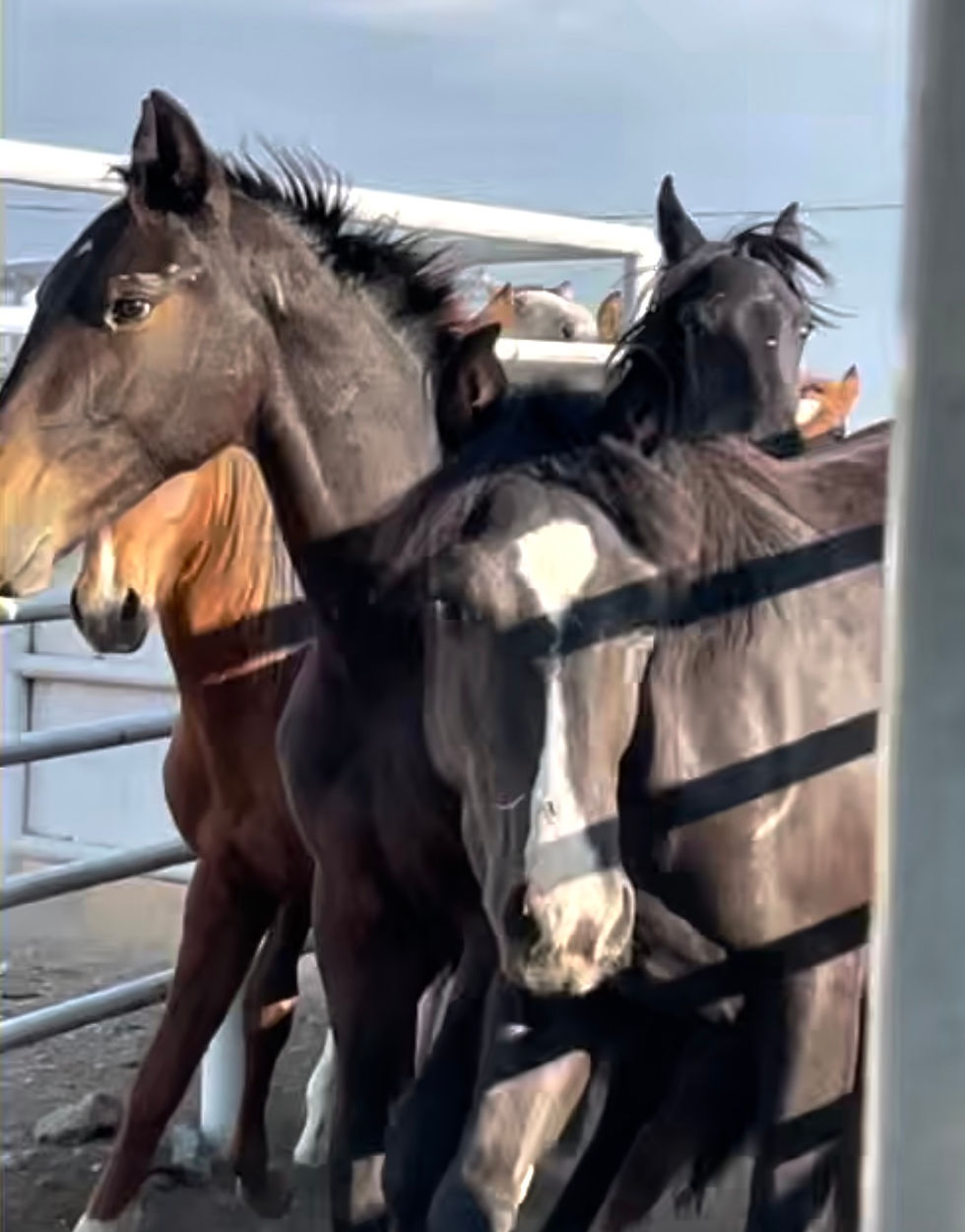
Rescued wild mustangs crowd a metal corral, including a black horse with a white blaze in front, under bright outdoor light. Liberty Sanctuary rescues and rehomes horses across Utah.
Horses rescued by Liberty Sanctuary from the slaughter pipeline
Over 80% of Americans are against horse slaughter – it’s time our legislators listened to their constituents and close these loopholes in protection of these American icons. 

Clearly, education about the slaughter pipeline is also very important.  Many people still don’t know the difference between slaughter and humane euthanasia. Many don’t know that over 92.3% of horses in the pipeline are young and healthy according to the USDA. When we bring these facts to light, we help the horses.  Over 80% of Americans are against horse slaughter – it’s time our legislators listened to their constituents and close these loopholes in protection of these American icons.  The more people know the facts and understand the better we can help make the world.


What Does the Future Hold for Liberty Sanctuary?


EquuStyle: Regarding the sanctuary's future, how do you balance the roles of volunteers, donors, and your adoption program to maintain operations? Additionally, could you elaborate on the challenges and importance of acquiring property with adequate water rights in the West? 


Debra West:  Great question and so timely!  These roles blend quite often. Our volunteers are our absolute strongest supporters. With just over 75 volunteers right now, our volunteers care about the Liberty Herd so much that they are amongst our most consistent donors and represent more than 70% of adoptions. We share the work we do online and more people seem to be drawn to the help the Liberty Herd and all of America’s most vulnerable horses through advocacy.


Regarding water in the west – it’s absolutely critical to sustaining operations – and it is prompting us to leave Utah for Colorado. Utah has been so supportive of Liberty Sanctuary and our volunteers here are incredible but we have made the decision to move to Colorado where land and water are more accessible. We are on 80 acres in Utah but only 1.5 acres of that is irrigated pasture and I think there are more sustainable options in Colorado.  We are excited for our next chapter in the state of Colorado and I’m dying to get the new wild horse license plate!


Halting the Slaughter of Horses and Burros


EquuStyle: What is the primary message you want readers to take away from your story?


Debra West:  Liberty believes the best way to help make progress for the horses is through organized collaboration with other groups; in the equine world and outside of it. This work is not about ego or who takes the lead. I’d happily be an engine at the back of a well-run train any day if it meant we were making progress for America’s most vulnerable horses. 


We know our key opposition is extremely well-funded and organized. We need that type of structure to educate the public and our legislators and truly affect change and restore wellbeing and dignity to our horses. I’d like for the public to know that there’s a place for everyone in our community and work. Whatever your talents are, the horses need you. They need us all! Reach out and we can discuss ways to work together!  There’s no talent or task too big or small. It all helps.


Humans are responsible for creating the pipeline and all of this mistreatment – it’s our duty as humans to make things right!


The next projects we would like to collaborate with others on include the Horse Heroes Collegiate Challenge to activate young voters on college campuses to engage in advocacy efforts and also a collaborative rewilding program based in Colorado to give wild horses an option to be rewilded instead of held in BLM holding facilities with no quality of life. We have passion for these projects and seek partners to help bring these to life. debra@libertysanctuary.org


All images Copyright Liberty Sanctuary-all rights reserved. Cannot be reproduced for any purpose without permission from Liberty Sanctuary.


  • Writer: Neda DeMayo & Christina Tsirkas
    Neda DeMayo & Christina Tsirkas
  • Sep 3, 2024
  • 7 min read

A photograph of Spirit, the Kiger mustang stallion who was the muse for the animation team for Dreamwork's 2002 animated film, "Spirit: Stallion of the Cimarron." equustyle.com
Spirit, the Kiger mustang stallion who was the muse for the animation team for Dreamwork's 2002 animated film, "Spirit: Stallion of the Cimarron." Now 29 years young, Spirit still enchants people of all ages from across the globe who visit him at Return to Freedom's American Wild Horse Sanctuary in Central Costal California. Photo: Ondrea Hidley

In 1997, Neda DeMayo founded Return to Freedom (RTF), a national non-profit wild horse conservation organization. In 1998, RTF opened a sanctuary in the rolling hills off California’s Central Coast to give back some of what these wild horses lost when captured. The sanctuary’s precedent-setting focus is in keeping rescued family bands of wild horses intact and educating the public about the diversity, lives, and challenges of these closely bonded sentient beings.


Wild horses enjoying their freedom at Return to Freedom's American Wild Horse Sancturay.  equustyle.com
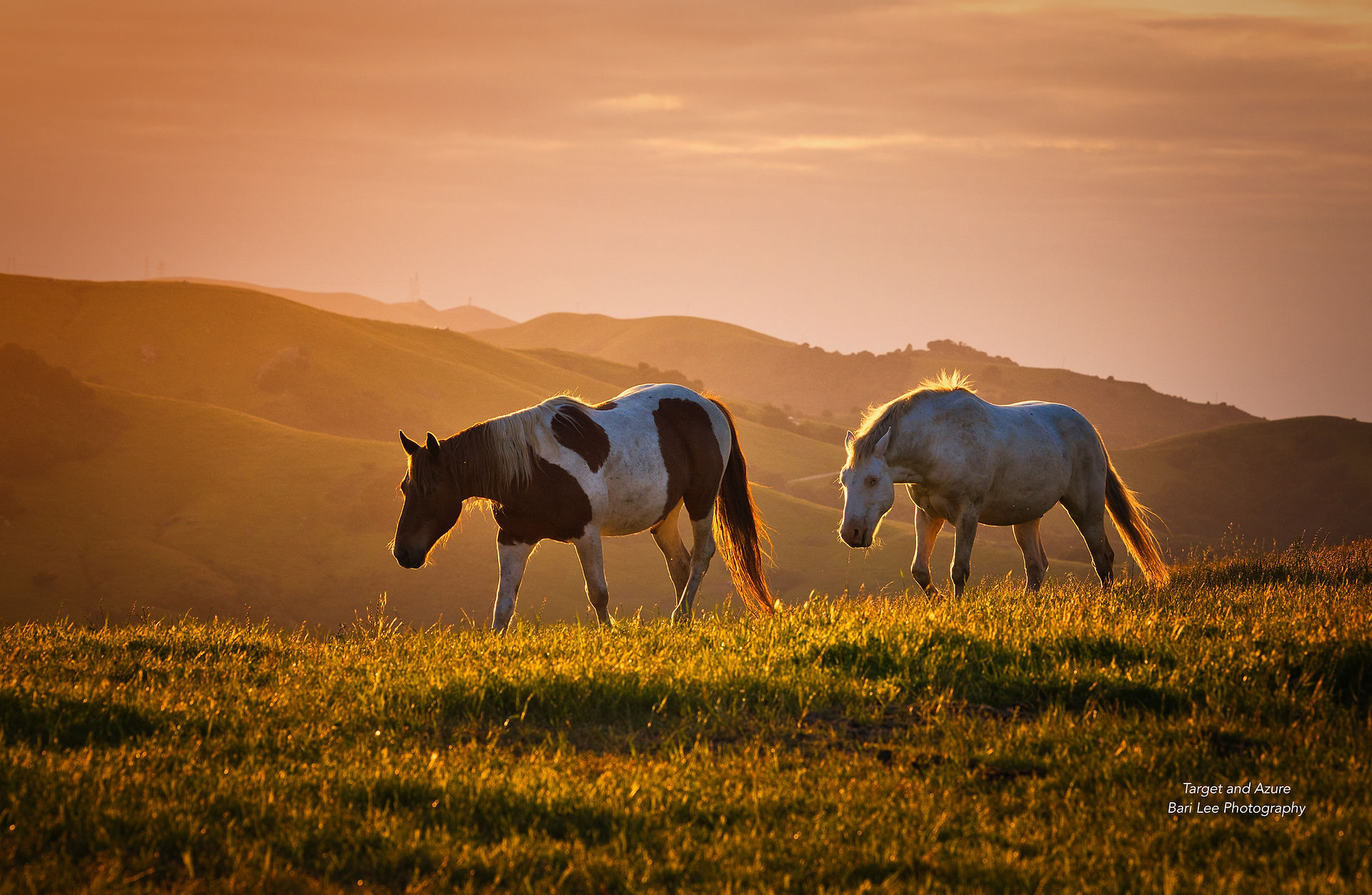
Return to Freedom’s American Wild Horse Sanctuary provides a forever home for wild horses and burros. RTF protects family and social bands for their lifetime. After the rescue is over, RTF needs your ongoing support to make this possible. Photo: Bari Lee

“I wanted to create a place where people of all ages could experience that horses live in herds…that these herds are made up of smaller family and bachelor bands who suffer immensely, just as we would, when ripped from their families, their freedom, and from everything they know,” Neda DeMayo.


While the majority of Americans are unaware that wild horses still roam some of the most desolate and remote areas in the West, for decades, the American mustang has been fighting for survival on the front lines of a battle over the use of precious natural resources—forage and water.


Long seen by ranchers as an invasive nuisance and competition with their livestock for forage and water, wild horses have suffered brutal persecution. In the 1950s and 1960s, the inhumane treatment they suffered was exposed.


For the past twenty-six years, RTF has been at the forefront of wild horse conservation, identifying and pioneering minimally-intrusive solutions at its sanctuary that can be implemented on the range for long-term herd management to keep wild horse and burro herds wild and free. As a solution focused organization, RTF collaborates with a broad range of stakeholders including advocates, animal welfare organizations, sanctuaries, land owners, diverse associations, agencies and legislators. RTF bases its work on guidance from leading scientists in genetics, ancient DNA research, proven safe and humane fertility control, and regenerative holistic land management.


A photograph of wild horses near a waterhole at Return to Freedom, American Wild Horse Conservation. equustyle.com
The waterhole. Return to Freedom uses regenerative holistic grazing practices at its sanctuary. By imitating natural herd movement of grazers when large predator populations were present, we can restore balance in our ecosystems. By managing under grazing and overgrazing, more water can be absorbed into the root systems- diverse native grasses return, waterholes are healthier, replenished and sustained throughout the seasons. Photo: Meg Frederick Photography

“True conservation is only possible when all stakeholders have a voice and a shared desire to protect a resource. Time has taught us that we conserve what we love, we love what we understand, we understand what we are taught.” Neda DeMayo

Conservation

Return to Freedom, Wild Horse Conservation's work focuses on three main areas:

  • Humane Fertility Control -Population management utilizing a non-hormonal reversible fertility control.  In 1999, RTF was the fourth project in the world to use fertility control on large populations of mares under the guidance of the Science and Conservation Center

  • Historical Herd Preservation- Conservation program to preserve the earliest strains of Spanish mustangs that are at risk of disappearing, such as the Choctaw Indian Pony, Colonial Spanish Mission Horses, early Sorria types as seen throughout various herds including the Sulphur Springs herd. These horses were the foundation of the American mustang and became more diverse as larger breeds came to North America and returned to a natural state over the past few hundred years

  • Regenerative Holistic Land Management


A woman taking photos of wild horses at Return to Freedom Wild Horse Sancturay in San Luis Obispo, California. equustyle.com
Return to Freedom hosts experiential programs and events in nature’s classroom for all ages. Wild horse photo safaris, herd immersion, tours, workshops and more! For more information: https://returntofreedom.org/visit/ Photo: Cathy Wallace

Sanctuary:

Return to Freedom’s American Wild Horse Sanctuary:

  • Intact Family & Bonded Bands-Keeps family and bachelor bands together, from the range to sanctuary or reuniting after capture

  • Wild Horses & Burros-Currently provides sanctuary for 500 wild horses and 50 burros

  • Senior & Special Needs-Currently maintains a senior population of 60 horses over the age of 27

  • Rescue-Has rescued over 2,000 horses independently and through collaborative efforts


Education:

Return to Freedom reaches hundreds of thousands of people through programs, events, multi-media and film.

  • Programs & Events-RTF hosts experiential learning programs at two of its locations, providing private tours, photo safaris, herd immersions, and a variety of equine workshops for hundreds of visitors of all ages each year

  • Herd Immersion & Observation-Visitors learn through sensitive observation in nature’s classroom

  • Regenerative Holistic Land Management-RTF’s natural herd and land management are the foundation of its educational initiatives

  • Volunteering-RTF has a volunteer program, including an “In Residence” option for volunteers who want to help at the sanctuary for an extended period

  • Native Species-RTF educates that the horse is native to North America


Advocacy:

Return to Freedom has developed a unique, nationally respected voice on policy issues by advocating for humane, science-based wild horse management alternatives rooted in its decades of hands-on experience with hundreds of wild horses.

  • Ending Roundups-RTF advocates for the redirection of funds spent on expensive and traumatic roundups toward viable and minimally intrusive alternatives that would enable wild horses and burros to remain on their rangelands

  • Fertility Control-RTF continues to tirelessly advocate for the use of non-hormonal, reversible, proven safe and humane fertility control on the range for wild horses and burros. Fertility control was initially mocked by the BLM and other stakeholders, but RTF persevered, advocating that slowing down—not ending—reproduction, was a viable alternative to endless roundups and warehousing tens of thousands of once wild and free horses and burros

  • Selective litigation

  • Ending Horse Slaughter-RTF is a leading voice in the fight to permanently ban horse slaughter in the United States as well as the export of American horses for slaughter


A small herd of wild horses grazing on a hillside at Return to Freedom, Wild Horse Conservation.  equustyle.com
Hart Mountain Herd. Photo: Cathy Wallace

“The BLM needs a proud vision for America’s mustangs,” says Celeste Carlisle, RTF biologist. “The BLM has the tools but needs to nourish a culture shift to achieve a non-lethal, multi-faceted approach to manage healthy herds on healthy rangelands across the West. The antiquated and traumatic capture and removal policies are treacherous, inhumane, and are not a long-term solution. The battle over the use of our public land grazing and water resources is not about how many livestock versus how many horses but rather how grazing is managed on the land.”


RTF has embraced holistic regenerative grazing practices at its sanctuary and considers these practices critical to addressing the impact from climate change and long-term solutions on the range.


“Mustangs have long been the scapegoats for the mismanagement of public land grazing,” explains DeMayo. “Whether grazing livestock or wild horses, if we implement holistic management practices, grazing mammals are part of the solution not the problem. At the sanctuary we have been able to take overgrazed and under-grazed areas and, in just 3 years, restore diversity in insects, wildlife, grasses, legumes, and increase the duration of water holes.”


In addition to its advocacy work, RTF continues to execute large-scale rescues to further its original mission of keeping family bands intact.


Most recently, in December 2023, in collaboration with colleague organizations,  RTF rescued 46 members of the Alpine herd that were removed from their home in the Apache National Forest in Arizona. The captured horses ended up at an auction in Bowie, Texas, where thousands of horses are purchased by kill buyers and sent to Mexico for slaughter.


Since arriving at RTF’s sanctuary in Lompoc, California in 2024, 11 Alpine foals have been born, bringing the total number rescued to 57. RTF is now responsible for the lifelong care of these magnificent animals, which is as costly as it is rewarding. Working collaboratively, in 2023- 2024, RTF also rescued 20 burros at risk of being sold for slaughter.


Sponsorships not only help offset the cost of these large-scale rescues, but also allow RTF to continue its mission of conserving America’s wild horses in the long run so that future generations will be able to see them running free on our public lands.


Please consider sponsoring a horse, burro, or herd. Sponsorships also make great gifts all year long!  With your support, these animals will be able to live out their lives as close to free as possible alongside their family bands.


If you are interested in visiting RTF, sign up for a tour, workshop or program.


To learn more about RTF, visit ReturnToFreedom.org.


THE ISSUE


Public pressure led to the passage of the Wild and Free-Roaming Horses and Burros Act at a time when herds were vanishing.


The 1971 law handed oversight of wild horses and burros mainly to the Bureau of Land Management (BLM). The agency set a maximum population target of 26,785 wild horses and burros — fewer than 1,500 more than when the law was enacted out of concern for their survival — on Herd Management Areas in 10 Western states.


The BLM operates under a mandate that it manages our public lands for “multiple uses.” These include other wildlife, energy extraction, recreation and the grazing of private livestock that greatly outnumber wild horses.


For decades, the agency has failed to control wild herd numbers by using helicopters to chase horses and burros into trap sites before shipping them away from their home ranges.


The BLM has chosen not to use a tool that Return to Freedom and a majority of wild horse advocates and other rangeland stakeholders now support: proven, safe and humane fertility control. Used right, it would slow reproduction.


The BLM says it will use fertility control, but only after it reaches its population targets. Population modeling by ecologists shows fertility control must be implemented immediately if capture-and-removal is to ever be phased out.


Over the past five years, the BLM removed 57,997 wild horses and burros from the range while treating and releasing with fertility control just 4,936.


In March, the BLM estimated 73,520 wild horses and burros still roamed the ranges that the agency manages.


Tragically, nearly as many—63,000 captured wild horses and burros—are being warehoused in overcrowded corrals or on leased pastures at an ever-growing cost to taxpayers of more than $109 million annually.


WILD HORSES ARE NATIVE TO NORTH AMERICA

Wild horses are a reintroduced native wildlife species. The horse originated in North America 53 million years ago and went through all its adaptations, including its last adaptation leaving the world the one toed horse, Equus Caballus, on this continent.  Over millions of years, in an ongoing migratory journey across the Bering Land Bridge, the horse travelled throughout Eurasia, across the Iranian Plateau and dispersed throughout the world.

DNA evidence shows that the horse remained in North America at least as recently as 5,000 years ago. How they disappeared — if, in fact, they ever actually became extinct here — is a mystery. When Cortez landed in Mexico in 1519, he brought horses from Spain. Others followed. From these reintroduced animals came the great numbers of wild horses that eventually changed the culture of the Plains Indians. The Spanish horses soon adapted to the same ecological niche their native relatives had once thrived in. Long before the early settlers pioneered the West, the wild horses were already there as a reintroduced, fully adapted wildlife species.


EquuStyle Art & Travel magazine thanks Neda DeMayo, Founder and President, Return to Freedom Wild Horse Conservation and Christina Tsirkas, writer and wild horse advocate for their comprehensive article, beautiful photographs by professional photographers, and the holistic regenerative grazing video.


All images copyright Return to Freedom, Wild Horse Conservation -all rights reserved. Cannot be reproduced for any purpose without permission from the professional photographers or Return to Freedom, Wild Horse Conservation.


Subscribe for equine art & advocacy

Subscribe today and receive a quarterly email to inform you about the upcoming

digital issue of EquuStyle Art & Advocacy Magazine.

Share via

© Copyright Protected

EquuStyle Magazine ©2023-2026 EquuStyle.com All rights reserved.

Privacy Policy

bottom of page