top of page

Magazine Articles

#


From "Appalled" to Taking Action


EquuStyle: What inspired you to dedicate your life to equines, and what was the defining moment that led to the opening of Liberty Sanctuary?


Debra West:  I’ve loved horses much of my life but it wasn’t until I learned about the atrocities in the slaughter pipeline that I was truly “appalled” to action.  My husband and I had developed an infrastructure with horses in mind on a decent amount of land.


When I learned about horse slaughter, we knew we had to help and started rescuing precious souls from the pipeline, bringing them to Utah so that we could give them refuge and work to educate the public and our legislators. Once the horses are healthy and show curiosity for humans, we work to train them and find them forever homes.


A rescued wild mustang is being ridden by a horse trainer at Liberty Sanctuary in Utah.
One wild mustang is rescued from the slaughter pipeline and receives training at Liberty Sanctuary in Utah

Fighting Against Equine Slaughter


EquuStyle: Regarding your work with SAFEACT.org and other animal welfare groups, what does the SAFE Act aim to achieve, and why is federal legislation urgently needed now?


Debra West:  We built and launched SAFEACT.org back in 2024 and the campaign was responsible for sending over 10,000 letters to legislators from constituents in all 50 states demanding a ban on horse slaughter.  The unspeakably horrifying horse slaughter industry must be shut down. It’s simply unconscionable to think of people making money off of a horse’s back in this especially gruesome and unjust way.


  • Trainer Kaia works with a wild mustang at Liberty Sanctuary
    Trainer Kaia works with a wild mustang at Liberty Sanctuary
  • Debra West with Scott and Shi
    Debra West with Scott and Shi

Besides the obvious cruelty to animals, we have recently learned that the slaughter pipeline also gives cover to criminals involved in human, sex and drug trafficking. Related, the pipeline is responsible for spreading dangerous zoonotic and other infectious diseases that could be antibiotic resistant and very hard to treat. Most kill buyers are finding greater profits as horse traders, selling horses in the US but they are still using slaughter as a marketing tool and that’s atrocious.


The slaughter pipeline must close, horsemen will take greater responsibility, American horses will be absorbed into the community, and there should be more transparency and better conditions by traders on behalf of the horses in their care.  Slaughter numbers are up again this year but horses sent to slaughter represent .4% of all horses in the United States. There are homes in America for these .4% of the population. We meet with our legislators to try to develop solutions on behalf of America’s most vulnerable horses. In the end, I don’t care how the pipeline closes, just that it does close. 


The SAFE Act keeps getting locked up in the Agriculture Committee and may not be the best vehicle at this point. It’s now looking like the BUILD America 250 Act - H.R.8870 may lead the way for the horses in the House.


The U.S. House Transportation and Infrastructure Committee passed its five-year surface transportation reauthorization bill, which includes a bipartisan amendment led by U.S. Reps. Jeff Van Drew (R-N.J.) and Dina Titus (D-Nev.), joined by Reps. Tim Burchett (R-Tenn.) and Jimmy Patronis (R-Fla.), to prohibit the transportation of horses for slaughter for human consumption - this language echoes the critical language of the SAFE Act. The bill moves on to await consideration on the House floor now and it’s important we all continue to let our legislators know we oppose the slaughter of American horses and that we support H.R. 8870.


IN 1 MINUTE

YOU CAN HELP SAVE THOUSANDS OF HORSES

A few simple clicks will send your support to legislators urging them to ban the export of

American horses for slaughter by passing the Save America’s Forgotten Equines Act

in the 119th Congress (HR 8870)


Keep America’s Horses SAFE in the USA.


An Icon Sponsor of "The Lost Horses" Campaign


EquuStyle: How is Liberty Sanctuary using its platforms to energize "The Lost Horses" campaign in support of the SAFE Act?


Debra West:  Liberty Sanctuary has been an Icon Sponsor of the Lost Horses campaign since early on. We were also pleased to host the first Lost Horses event during the Sundance Film Festival and supported other events.  We helped with marketing in redesigning our platforms to support their messaging and even brought on YESCO, a national digital billboard company, to donate space to the Lost Horses. Liberty’s overall commitment in dollars and services was close to $90,000 in support of the Lost Horses campaign to help bring an end to horse slaughter.


The Lost Horses: The Campaign will change the way people think about horses.

EquuStyle: What are the most impactful, actionable steps our readers can take today to urge their representatives to support a ban on horse slaughter?


Debra West:  The best thing readers can do now is to contact their legislators in support of H.R.8870, the BUILD America 250 Act including the Van Drew-Titus Amendment which bans the export of American horses for slaughter for human consumption. We are updating SAFEACT.org to point constituents in that direction and they should also call the U.S. Capitol Switchboard at (202) 224-3121 to be connected to their congressional office.


It's important to realize that every citizen can make a difference by joining others in fighting against equine slaughter.


Proactive Partnership with Other Equine Groups


Woman gently rests forehead on a white horse in a Rescued Hearts documentary poster with award laurels and healing theme.
Rescued Hearts is an award-winning documentary directed by Dana Croschere and Krisanna Sexton that explores the miracles, mystery, and science of equine-assisted healing

EquuStyle: What results have you seen from teaming up with groups like Horses for Mental Health to host community screenings of films and lead post-film discussions, such as the documentary Rescued Hearts?


Debra West:  Whenever we can create effective campaigns that allow us to collaborate with professionals, the horses win.  The horses need us to have a big, inviting tent to allow others to join us, invite their friends, become educated and inspired. This leads to action.  It helps to exchange ideas with others in the industry and outside of it. I firmly believe you don’t have to be a horseman to appreciate America’s vulnerable horses and help fight for protections.


This is about freedom and justice above all – and most of us can relate to that. Horses have been synonymous with freedom and have been celebrated in art and culture in appreciation of those themes and their majesty. 


In collaboration with others, we were proud to have welcomed 300+ guests at the Rescued Hearts premiere in Park City during Mental Health Awareness Month in coordination with the Equellness Center, the Equine Empowerment Center and Horses For Mental Health.  We were thrilled to have so many come out to appreciate the horse-human connection and that’s a testament to the role horses play in our communities.


EquuStyle: Can you share a story about how partnering with organizations like 4-H to provide equine scholarships and mentoring programs has positively changed the life of a rescued horse? 


Debra West:  Max wasn’t a rescued horse – he was my own horse and a registered AQHA horse.  However, we do invite groups like 4-H, Girl Scouts, Boy Scouts, National Charity League, local high school students and others to come learn about rescuing horses and importantly about the slaughter pipeline. The aim is to create young advocates as we invite each group to meet the Liberty Herd.


I had one especially bright 4th grader tell me that we are doing good work and that she wants to help more! The engagement with the children often involves their parents and those adults can get further involved and take action.


Liberty was proud to award Tatum the Liberty Award For Equine Excellence
"She's a horse angel in every sense," said Tatum's mother Kelly, "and she [Debra West] was making a dream happen for my daughter."


Volunteers Play a Vital Role in Caring for Our Horses


EquuStyle: You have noted that community engagement and education are "absolutely critical." With over 75 volunteers assisting your organization, how do your events and educational outreach programs help foster better horsemanship within the community?


Debra West:  Our volunteers are critical to the care of our horses.  They are the most amazing and dedicated people I’ve come across who are all here for the horses 100%!  They are also Liberty ambassadors in the community. 


Our community outreach is also extended through our educational summer programs. We consistently offer 2 free clinics weekly to the community led by our trainer, Searra Brandt, as we want to help educate other local horsemen. We also work to invite other clinicians to visit and share knowledge – like Monty Roberts’ James Oliver and Wild West Taylor.  We believe sharpening our skills is also vital and we have studied the Liberty method with Carolyn Resnick’s Nan Zintsmaster and Gamilah Unbridled’s Patrick Sullivan recently.
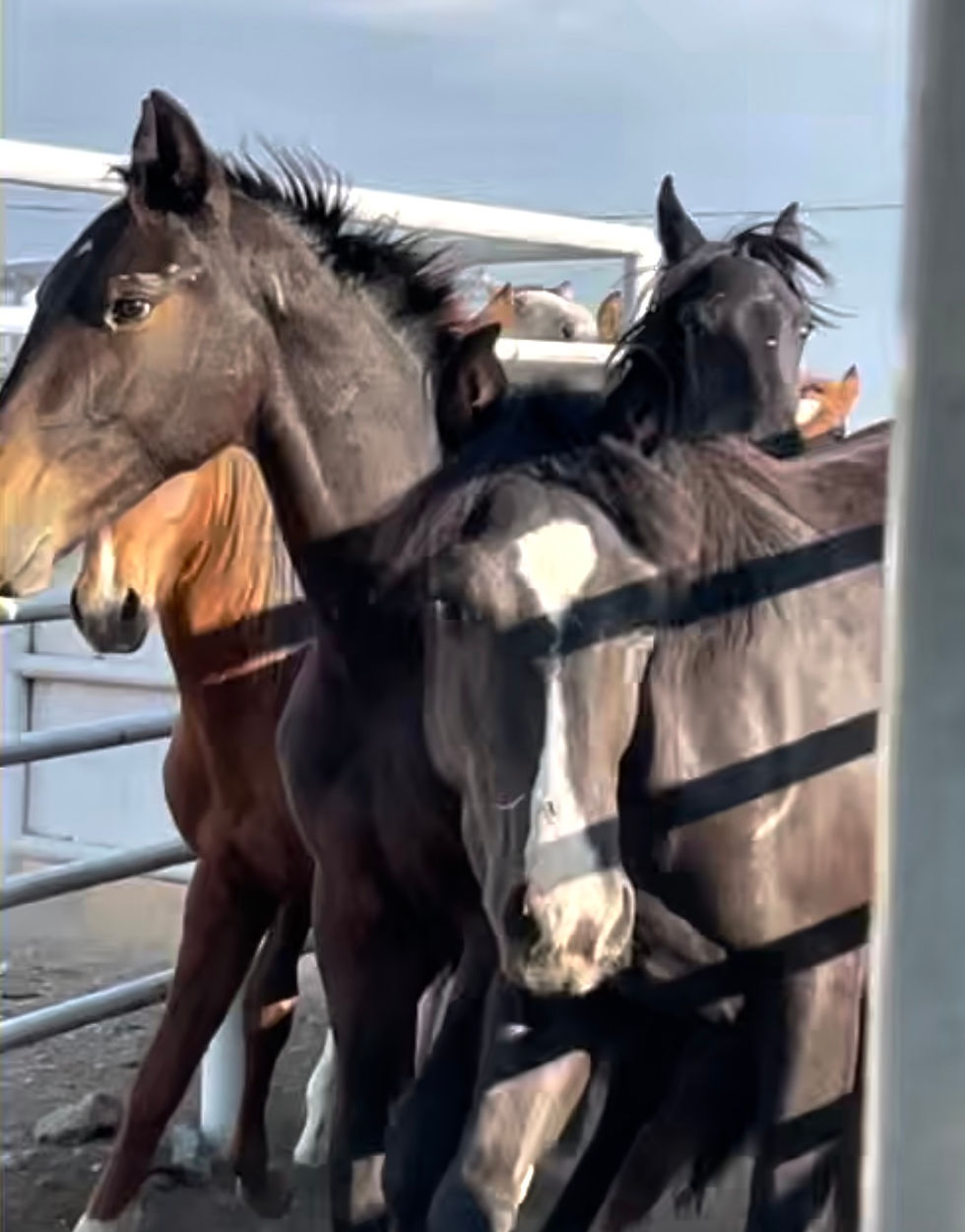
Rescued wild mustangs crowd a metal corral, including a black horse with a white blaze in front, under bright outdoor light. Liberty Sanctuary rescues and rehomes horses across Utah.
Horses rescued by Liberty Sanctuary from the slaughter pipeline
Over 80% of Americans are against horse slaughter – it’s time our legislators listened to their constituents and close these loopholes in protection of these American icons. 

Clearly, education about the slaughter pipeline is also very important.  Many people still don’t know the difference between slaughter and humane euthanasia. Many don’t know that over 92.3% of horses in the pipeline are young and healthy according to the USDA. When we bring these facts to light, we help the horses.  Over 80% of Americans are against horse slaughter – it’s time our legislators listened to their constituents and close these loopholes in protection of these American icons.  The more people know the facts and understand the better we can help make the world.


What Does the Future Hold for Liberty Sanctuary?


EquuStyle: Regarding the sanctuary's future, how do you balance the roles of volunteers, donors, and your adoption program to maintain operations? Additionally, could you elaborate on the challenges and importance of acquiring property with adequate water rights in the West? 


Debra West:  Great question and so timely!  These roles blend quite often. Our volunteers are our absolute strongest supporters. With just over 75 volunteers right now, our volunteers care about the Liberty Herd so much that they are amongst our most consistent donors and represent more than 70% of adoptions. We share the work we do online and more people seem to be drawn to the help the Liberty Herd and all of America’s most vulnerable horses through advocacy.


Regarding water in the west – it’s absolutely critical to sustaining operations – and it is prompting us to leave Utah for Colorado. Utah has been so supportive of Liberty Sanctuary and our volunteers here are incredible but we have made the decision to move to Colorado where land and water are more accessible. We are on 80 acres in Utah but only 1.5 acres of that is irrigated pasture and I think there are more sustainable options in Colorado.  We are excited for our next chapter in the state of Colorado and I’m dying to get the new wild horse license plate!


Halting the Slaughter of Horses and Burros


EquuStyle: What is the primary message you want readers to take away from your story?


Debra West:  Liberty believes the best way to help make progress for the horses is through organized collaboration with other groups; in the equine world and outside of it. This work is not about ego or who takes the lead. I’d happily be an engine at the back of a well-run train any day if it meant we were making progress for America’s most vulnerable horses. 


We know our key opposition is extremely well-funded and organized. We need that type of structure to educate the public and our legislators and truly affect change and restore wellbeing and dignity to our horses. I’d like for the public to know that there’s a place for everyone in our community and work. Whatever your talents are, the horses need you. They need us all! Reach out and we can discuss ways to work together!  There’s no talent or task too big or small. It all helps.


Humans are responsible for creating the pipeline and all of this mistreatment – it’s our duty as humans to make things right!


The next projects we would like to collaborate with others on include the Horse Heroes Collegiate Challenge to activate young voters on college campuses to engage in advocacy efforts and also a collaborative rewilding program based in Colorado to give wild horses an option to be rewilded instead of held in BLM holding facilities with no quality of life. We have passion for these projects and seek partners to help bring these to life. debra@libertysanctuary.org


All images Copyright Liberty Sanctuary-all rights reserved. Cannot be reproduced for any purpose without permission from Liberty Sanctuary.


Wild Beauty: Mustang Spirit of the West is a documentary on wild horses by award-winning filmmaker Ashley Avis.  wildbeautyfoundation.org  equustyle.com
Wild Beauty: Mustang Spirit of the West is a documentary on wild horses by award-winning filmmaker Ashley Avis.

EquuStyle: Were you a wild horse advocate before deciding to write, narrate, direct, edit, and produce the film “Wild Beauty: Mustang Spirit of the West?


Ashley Avis: I grew up with horses, an experience that truly helped shape the course of my life and career.  However, it wasn't until my late twenties that I discovered the plight of wild horses in the Western United States when I was brought aboard to write and direct a reimagining of Black Beauty, which was released by Disney in 2020. 


In being tasked with modernizing Anna Sewell's iconic classic, which inspired my great love of horses as a child - I wanted to honor the spirit of what she had crafted.  Few people know Black Beauty was not written as a children's book - it was an animal welfare plea for the horses of Anna's time in the late 1800s.  And so, in researching modern-day issues horses are facing today, I began reading about the roundups, the cruelty, the corruption, and the startling inhumanity. 


That is what moved me, along with my husband and producing partner Edward Winters, to embark on Wild Beauty: Mustang Spirit of the West.  That independent documentary took five passionate years to craft.


  • A cinematic still of a wild stallion during the filming of Wild Beauty: Mustang Spirit to the West.  equustyle.com
    A still of a wild stallion
  • A cinematic still of the tenderness between three wild horses during the filming of Wild Beauty: Mustang Spirit to the West.  equustyle.com
    Tenderness of wild horses
  • A cinematic still of a closeup of a wild horse head during the filming of Wild Beauty: Mustang Spirit to the West.  equustyle.com
    Closeup of a wild horse head
  • A cinematic still of wild horses on the move during the filming of Wild Beauty: Mustang Spirit to the West.  equustyle.com
    Wild horses on the move

EquuStyle:  What motivated you to make the film?


Ashley Avis: Originally, we went out to capture footage of wild horses in their natural habitat, so that we could bring authenticity to our narrative film, Black Beauty.  Ed and I raised a little bit of money to embark on that first trip to Utah, Wyoming, and Nevada - experiencing the extraordinary beauty of wild horses on the range, along with our first roundup.


The devastating Bureau of Land Management operation was on the Triple B Complex in Nevada.  I will never forget hiking with our heavy camera gear to the top of a mountain, while the BLM officials (several with guns) informed us we couldn't put up umbrellas in the 100-degree heat because it would "scare the horses."  Mind you, those poor mustangs were miles away from us, being chased at eye level by dueling helicopters. We were horrified.


A cinematic still of wild horses on the move during the filming of Wild Beauty: Mustang Spirit to the West.  equustyle.com
Wild horses on the move

What struck me about that day, as a former journalist, was that the agency had clearly hidden the "trap site" (the metal corrals where they stampede and capture the horses) so that the public, along with our film crew, could not see what was happening.  Trap sites are often where the injuries often happen, as horses break their legs and necks trying to escape, or get back to their families.  


After witnessing that roundup and realizing the antiquation and brutality of it - we wanted to know why.  We soon came to understand that wild horses were being eradicated by the federal government in deference to the commercial livestock industry.  A battle over land and powerful special interests.  We realized at that point we had to keep going, we had to create a second film - a Blackfish for wild horses.


EquuStyle:  What were some of the greatest challenges that you had to overcome to get the film funded and produced?


Ashley Avis: The greatest challenge besides raising the money, which is always hard - surrounded access. The BLM officials eventually got wind of what we were doing, and they did not want us documenting roundup cruelty, or the fact that BLM officials kill healthy horses for senseless reasons - those they deem blind, arthritic, or have a club foot.  The agency officials we came into contact with were deceptive, they routinely blocked the trapsites from our view, in one instance they even forced us away from shelter during a thunderstorm, making us stand out on the open range in the rain as we filmed.  They routined and flippantly denied our Constitutional rights as journalists. 


A cinematic still of a young wild foal enjoying freedom during the filming of Wild Beauty: Mustang Spirit to the West.  equustyle.com
A young wild foal enjoying freedom

The other great challenge was sadness.  As a horsewoman, witnessing these atrocities befall innocent wild horses; pregnant mares, newborn foals, and the brave stallions trying to protect them - was very difficult to bear.  However, my emotions were of course nothing compared to what they went through.


EquuStyle:  What were the conditions like during the filming?


Ashley Avis: A great deal of our Wild Beauty journey was truly spectacular - and I encourage everyone to get out and see the American West. 


Our crew drove over 20,000 miles over thirteen different states, and diverse landscapes.  The rich forests of Oregon, the crimson rock moonscapes in Arizona, the sagebrush seas of Nevada.  We had a tiny crew of five - it was myself, my husband/producing partner Ed, my younger brother/producer Richard Avis, our cinematographer Kai Krause, and a camera assistant.  My parents even joined us on one trip - while my Mom cooked food for the crew out of the back seat of their rental car.  It was a family affair.


  • A cinematic still of two young wild foals enjoying freedom during the filming of Wild Beauty: Mustang Spirit to the West.  equustyle.com
    Two young wild foals
  • A cinematic still of a wild horse in the afternoon glow during the filming of Wild Beauty: Mustang Spirit to the West.  equustyle.com
    Wild horse afternoon glow
  • A cinematic still of a two wild stallions sparring during the filming of Wild Beauty: Mustang Spirit to the West.  equustyle.com
    Wild stallions sparring
  • Ashley Avis with wild horsesA cinematic still of Ashley Avis with wild horses during the filming of Wild Beauty: Mustang Spirit to the West.  equustyle.com
    Ashley Avis with wild horses

There were the darker moments as well, such as visiting the holding facilities where wild horses are warehoused like livestock.  These places are often cramped, dirt pens where there is no room to roam, or gallop.  The closely bonded families are separated, and you hear them cry for each other.  Sometimes there is not even shelter from the elements - heat or rain.  I have seen these government facilities flooded with rain and muck.  The BLM doesn't post photos like those on social media.  But that is the truth behind how they 'humanely manage' our federally protected national icons after a roundup.  


And most people find this shocking - our tax-dollars are paying for it.  The BLM's budget to 'manage' wild horses, which is largely spent on costly roundups and holding - is over 150 million dollars a year.


EquuStyle:  Did you or your film crew consider giving up when armed BLM staff were aggressive with you during the filming?


Ashley Avis: Never.  The more injustice we saw, the bolder we became.


EquuStyle:  What part of the film is most disturbing to you?


Ashley Avis: That's a hard question.  My gut reaction was when we went undercover in Texas, into the slaughter pipeline - covertly filming as wild horses and burros got auctioned off to kill buyers.  I desperately wished in that moment I had millions of dollars - I would have rescued them all.  


But I think the most disturbing part of filming Wild Beauty was seeing the horses we had come to know, after they had been subjected to a roundup. 


A cinematic still of two wild horses showing affection during the filming of Wild Beauty: Mustang Spirit to the West.  equustyle.com
Write members of Congress to protect wild horses

The herd we became closest to were the Onaqui horses in Utah.  We featured them in Black Beauty and got to spend years visiting them.  In the controversial roundup of 2021, my heart shattered as we watched those horses chased by the helicopters.  They ended up in a dirty, half-flooded holding facility - their once resplendent coats caked with mud, water halfway up their knees.  It broke my heart.  If you look into the eyes of a free wild horse, it stirs a sense of inexplicable joy and wild in you.  To then take in the same, clouded gaze of a horse who has been stripped of its family and freedom - you will be haunted for the rest of your life.


EquuStyle:  What part of the film is most hopeful to you?


Ashley Avis: Oh, so much.  Seeing the families in the wild.  Witnessing a filly grow up to become a lead mare, or watching a stallion engaged in a battle - then soon after striding over to gently nuzzle his sleeping foal with exquisite tenderness.  Those were the moments that made being out on the range so special, while also reminding us what was at stake in their protection.  And it brings me joy to be able to share that with people around the world.


The children also inspire hope.  Before the roundup of the Onaqui, we launched a campaign called "I Stand With WIld Horses" - encouraging young people to write letters to their Members of Congress, or to the President.  Suddenly hundreds of people were posting to social media, holding up signs with those words, tagging their lawmakers.  It was incredible.  When we arrived at a rally in Salt Lake City in Utah - there it was again on the Capitol steps "I Stand With Wild Horses."


I think there is great hope to be found in the next generation speaking out on behalf of our world in Wild Beauty.


Ashley Avis and the award-winning documentary Wild Beauty: Mustang Spirit to the West.  equustyle.com
Wild Beauty: Mustang Spirit to the West

EquuStyle:  How have viewers of the film responded?


Ashley Avis: It has been overwhelming to witness how audiences have responded, particularly in theater where you can really feel that emotion surge.  There are instances of joy, levity, and laughter - along with horror, anger, and a profound sense of injustice.


It moves me to tears when people walk out of the film angry - but with passion.  And they say things like, "I didn't know this was happening.  This is wrong.  What can I do to help?"


EquuStyle:  After watching the film, what action or actions do you want viewers to take?


Ashley Avis: Awareness is key.  We must urge our Members of Congress to take action and to stop the brutality and corruption against wild horses and burros, before we lose them completely.  This is a fight over land and special interests, and wild horses have been caught in the middle.


We are asking people to become educated by visiting www.wildbeautyfoundation.org - and to make calls to their Representatives, urging them to co-sponsor The Wild Horse and Burro Protection Act (H.R. 3656) which if passed, would end the use of antiquated helicopters in the roundups - helping to curtail this cruelty.


EquuStyle:  How have wild horse photographers and advocates Kimerlee Curyl, Carol Walker, and Sandy Sisti used their influence on social media to promote the film?


Ashley Avis: I often stay, particularly to children - storytelling has great responsibility.  We are all storytellers, so what are we choosing to put out into the world?


There is such rich storytelling in art and wildlife photography.  The stunning work of Kimerlee Curyl, Sandy Sisti, and Carol Walker is so affecting - each image is a glimpse into a world, into a story.  And these extraordinary women don't stop there - they are also tireless in their advocacy.  They use their artistic gifts and social media platforms to bring wild horses to new audiences to inspire change. 


Before I met Kimerlee Curyl back in 2017, I was so moved by her photography that her images became references to how I wanted to cinematically explore framing "Beauty" in our feature film Black Beauty.  She is very inspiring to me.


EquuStyle:  Have horse rescues and sanctuaries been approached to promote the film to their supporters?


Ashley Avis: We have spread the word far and wide, encouraging everyone to share the film, and to get the message out not only to the equine audience - but to a global audience.  We also provide links to the documentary free of charge for educational purposes - to schools, universities, and other groups. 


EquuStyle:  Are any other organizations helping with the marketing and promotion of the film?


Ashley Avis: The long-term ripple effect Wild Beauty has is something we will never fully know - so many people and organizations around the world have shared it.  We are appreciative to every one of them, because it is teamwork that will ultimately inspire change.


Noted collaborators during the years it took to create Wild Beauty were Western Watersheds Project and The Cloud Foundation.


EquuStyle:  In what ways has the film impacted the mission of Wild Beauty Foundation?


Ashley Avis: In every way imaginable.  Black Beauty led to Wild Beauty, which led to our first rescue of thirteen horses (any horsewoman will understand me when I joke... I promised my husband I would start with one...).  Those "Lucky 13" inspired the creation of the foundation, which led to using our platform as filmmakers to shed a spotlight on the issue.  Things only got bigger, and as The Wild Beauty Foundation became a voice in the space - we soon found ourselves on the way to Congress.


Our mission as a nonprofit is to raise awareness that inspires fundamental change to protect the horses of our time, through film, education, rescue, and advocacy.


EquuStyle:  Have you noticed an increase in the number of youth and adults seeking information about how to advocate for wild horses?


Ashley Avis: I am blown away by the messages I receive - not only from adults, but from children around the world who want to know what they can do to help.  I recently hand-delivered about fifty postcards from kids to individual Members of Congress when I visited Washington D.C. in April.  The impact those letters have is incredible - their sincerity cuts through the political noise and inspires lawmakers to listen.


A cinematic still of a wild paint horse during the filming of Wild Beauty: Mustang Spirit to the West.  equustyle.com
Take action to protect America’s vanishing wild horses

EquuStyle:  Do you think your recent meeting on Capitol Hill was productive? Did you accomplish the goals you set beforehand?


Ashley Avis: Nothing moves very quickly in Washington, which is the hard truth.  However, I do feel we successfully launched a pretty large boulder down the bureaucratic mountain during our most recent trip, this time screening portions of Wild Beauty within the United States Capitol.


We were lucky this past April to have Oscar-nominated actress Diane Lane alongside us.  Diane saw the documentary and asked how she could help.  Her presence opened so many doors, and we added several new co-sponsors to a bill we are fighting for.  We have such incredible champions now - notably Rep. Dina Titus (D-NV) who is the sponsor of The Wild Horse and Burro Protection Act, Rep. Steve Cohen (D-TN), Rep. Brian Fitzpatrick (D-PA), among others.


EquuStyle:  H.R.3656 - Wild Horse and Burro Protection Act of 2023 was introduced in the House on May 24, 2023. What can citizens do to influence the passage of this vital legislation?


Ashley Avis: Awareness.  So many people, including horse people, simply do not know this is happening. 


I would say, after four trips to Washington D.C. in the past three years - perhaps half the Members of Congress we have met with know anything about the roundups, and if they have heard of them - they rarely know about the brutality.  Your calls and emails to help educate their staff do make a difference.  So please, if you're moved by this article - make that call, send that note, visit istandwithwildhorses.org to share your thoughts using our automated form.  Please be moved to act.


EquuStyle:  Why do you think politicians are reluctant to pass legislation to stop cruel helicopter and fixed aircraft roundups of wild horses?


Ashley Avis: The deep pockets and ceaseless lobbying by the livestock industry - which is determined to eradicate wild horses from their rightful habitat in favor of commercial cattle and sheep grazing.  The helicopter roundups are also a business.  The contractors are awarded hundreds of thousands, if not millions of dollars to do this work - and they certainly don't want to lose that money train.  The most awarded contractor by the BLM has been paid over thirty million dollars.  


We are up against several powerful opponents.  But we are not going away.  


EquuStyle:  After learning more about the motivations behind the BLM, livestock ranchers, politicians, and other critics of wild horses, do you believe wild horses have a chance to remain on public lands?


Ashley Avis: I do.  The BLM is, unfortunately, doing a great job of deceiving the media, whether it's telling stories out on the range that are not based on fact or science, or putting out news stories that state wild horses are overpopulated, degrading the rangeland, etc.  They use this 'reasoning' as false justification to remove a few hundred federally protected wild horses, before releasing thousands of cattle and sheep to graze on precisely the same land.  According to the BLM's own data, livestock are the leading reason for rangeland degradation at figures over 70% - but they don't tell the press that. 


I cannot imagine a world in which we lose nature.  I am encouraged by the public outcry that has resulted in part from Wild Beauty being available to a global audience - and I do believe we will change this.  But to be successful, we need to band together and fight.


EquuStyle:  What are the Wild Beauty Foundation’s current and future strategies to advocate for protecting and preserving America’s wild horses?


Ashley Avis: Currently, we are working hard on the passage of significant legislation to protect wild horses, while planning our next Washington D.C. event.  For the future, we are developing a video curriculum for children in schools called "Wild Horse Week," and constructing a plan to grow our efforts at the foundation.  If you can help in any way, let us know!


Subscribe for equine art & advocacy

Subscribe today and receive a quarterly email to inform you about the upcoming

digital issue of EquuStyle Art & Advocacy Magazine.

Share via

© Copyright Protected

EquuStyle Magazine ©2023-2026 EquuStyle.com All rights reserved.

Privacy Policy

bottom of page