top of page

Magazine Articles

#


From "Appalled" to Taking Action


EquuStyle: What inspired you to dedicate your life to equines, and what was the defining moment that led to the opening of Liberty Sanctuary?


Debra West:  I’ve loved horses much of my life but it wasn’t until I learned about the atrocities in the slaughter pipeline that I was truly “appalled” to action.  My husband and I had developed an infrastructure with horses in mind on a decent amount of land.


When I learned about horse slaughter, we knew we had to help and started rescuing precious souls from the pipeline, bringing them to Utah so that we could give them refuge and work to educate the public and our legislators. Once the horses are healthy and show curiosity for humans, we work to train them and find them forever homes.


A rescued wild mustang is being ridden by a horse trainer at Liberty Sanctuary in Utah.
One wild mustang is rescued from the slaughter pipeline and receives training at Liberty Sanctuary in Utah

Fighting Against Equine Slaughter


EquuStyle: Regarding your work with SAFEACT.org and other animal welfare groups, what does the SAFE Act aim to achieve, and why is federal legislation urgently needed now?


Debra West:  We built and launched SAFEACT.org back in 2024 and the campaign was responsible for sending over 10,000 letters to legislators from constituents in all 50 states demanding a ban on horse slaughter.  The unspeakably horrifying horse slaughter industry must be shut down. It’s simply unconscionable to think of people making money off of a horse’s back in this especially gruesome and unjust way.


  • Trainer Kaia works with a wild mustang at Liberty Sanctuary
    Trainer Kaia works with a wild mustang at Liberty Sanctuary
  • Debra West with Scott and Shi
    Debra West with Scott and Shi

Besides the obvious cruelty to animals, we have recently learned that the slaughter pipeline also gives cover to criminals involved in human, sex and drug trafficking. Related, the pipeline is responsible for spreading dangerous zoonotic and other infectious diseases that could be antibiotic resistant and very hard to treat. Most kill buyers are finding greater profits as horse traders, selling horses in the US but they are still using slaughter as a marketing tool and that’s atrocious.


The slaughter pipeline must close, horsemen will take greater responsibility, American horses will be absorbed into the community, and there should be more transparency and better conditions by traders on behalf of the horses in their care.  Slaughter numbers are up again this year but horses sent to slaughter represent .4% of all horses in the United States. There are homes in America for these .4% of the population. We meet with our legislators to try to develop solutions on behalf of America’s most vulnerable horses. In the end, I don’t care how the pipeline closes, just that it does close. 


The SAFE Act keeps getting locked up in the Agriculture Committee and may not be the best vehicle at this point. It’s now looking like the BUILD America 250 Act - H.R.8870 may lead the way for the horses in the House.


The U.S. House Transportation and Infrastructure Committee passed its five-year surface transportation reauthorization bill, which includes a bipartisan amendment led by U.S. Reps. Jeff Van Drew (R-N.J.) and Dina Titus (D-Nev.), joined by Reps. Tim Burchett (R-Tenn.) and Jimmy Patronis (R-Fla.), to prohibit the transportation of horses for slaughter for human consumption - this language echoes the critical language of the SAFE Act. The bill moves on to await consideration on the House floor now and it’s important we all continue to let our legislators know we oppose the slaughter of American horses and that we support H.R. 8870.


IN 1 MINUTE

YOU CAN HELP SAVE THOUSANDS OF HORSES

A few simple clicks will send your support to legislators urging them to ban the export of

American horses for slaughter by passing the Save America’s Forgotten Equines Act

in the 119th Congress (HR 8870)


Keep America’s Horses SAFE in the USA.


An Icon Sponsor of "The Lost Horses" Campaign


EquuStyle: How is Liberty Sanctuary using its platforms to energize "The Lost Horses" campaign in support of the SAFE Act?


Debra West:  Liberty Sanctuary has been an Icon Sponsor of the Lost Horses campaign since early on. We were also pleased to host the first Lost Horses event during the Sundance Film Festival and supported other events.  We helped with marketing in redesigning our platforms to support their messaging and even brought on YESCO, a national digital billboard company, to donate space to the Lost Horses. Liberty’s overall commitment in dollars and services was close to $90,000 in support of the Lost Horses campaign to help bring an end to horse slaughter.


The Lost Horses: The Campaign will change the way people think about horses.

EquuStyle: What are the most impactful, actionable steps our readers can take today to urge their representatives to support a ban on horse slaughter?


Debra West:  The best thing readers can do now is to contact their legislators in support of H.R.8870, the BUILD America 250 Act including the Van Drew-Titus Amendment which bans the export of American horses for slaughter for human consumption. We are updating SAFEACT.org to point constituents in that direction and they should also call the U.S. Capitol Switchboard at (202) 224-3121 to be connected to their congressional office.


It's important to realize that every citizen can make a difference by joining others in fighting against equine slaughter.


Proactive Partnership with Other Equine Groups


Woman gently rests forehead on a white horse in a Rescued Hearts documentary poster with award laurels and healing theme.
Rescued Hearts is an award-winning documentary directed by Dana Croschere and Krisanna Sexton that explores the miracles, mystery, and science of equine-assisted healing

EquuStyle: What results have you seen from teaming up with groups like Horses for Mental Health to host community screenings of films and lead post-film discussions, such as the documentary Rescued Hearts?


Debra West:  Whenever we can create effective campaigns that allow us to collaborate with professionals, the horses win.  The horses need us to have a big, inviting tent to allow others to join us, invite their friends, become educated and inspired. This leads to action.  It helps to exchange ideas with others in the industry and outside of it. I firmly believe you don’t have to be a horseman to appreciate America’s vulnerable horses and help fight for protections.


This is about freedom and justice above all – and most of us can relate to that. Horses have been synonymous with freedom and have been celebrated in art and culture in appreciation of those themes and their majesty. 


In collaboration with others, we were proud to have welcomed 300+ guests at the Rescued Hearts premiere in Park City during Mental Health Awareness Month in coordination with the Equellness Center, the Equine Empowerment Center and Horses For Mental Health.  We were thrilled to have so many come out to appreciate the horse-human connection and that’s a testament to the role horses play in our communities.


EquuStyle: Can you share a story about how partnering with organizations like 4-H to provide equine scholarships and mentoring programs has positively changed the life of a rescued horse? 


Debra West:  Max wasn’t a rescued horse – he was my own horse and a registered AQHA horse.  However, we do invite groups like 4-H, Girl Scouts, Boy Scouts, National Charity League, local high school students and others to come learn about rescuing horses and importantly about the slaughter pipeline. The aim is to create young advocates as we invite each group to meet the Liberty Herd.


I had one especially bright 4th grader tell me that we are doing good work and that she wants to help more! The engagement with the children often involves their parents and those adults can get further involved and take action.


Liberty was proud to award Tatum the Liberty Award For Equine Excellence
"She's a horse angel in every sense," said Tatum's mother Kelly, "and she [Debra West] was making a dream happen for my daughter."


Volunteers Play a Vital Role in Caring for Our Horses


EquuStyle: You have noted that community engagement and education are "absolutely critical." With over 75 volunteers assisting your organization, how do your events and educational outreach programs help foster better horsemanship within the community?


Debra West:  Our volunteers are critical to the care of our horses.  They are the most amazing and dedicated people I’ve come across who are all here for the horses 100%!  They are also Liberty ambassadors in the community. 


Our community outreach is also extended through our educational summer programs. We consistently offer 2 free clinics weekly to the community led by our trainer, Searra Brandt, as we want to help educate other local horsemen. We also work to invite other clinicians to visit and share knowledge – like Monty Roberts’ James Oliver and Wild West Taylor.  We believe sharpening our skills is also vital and we have studied the Liberty method with Carolyn Resnick’s Nan Zintsmaster and Gamilah Unbridled’s Patrick Sullivan recently.
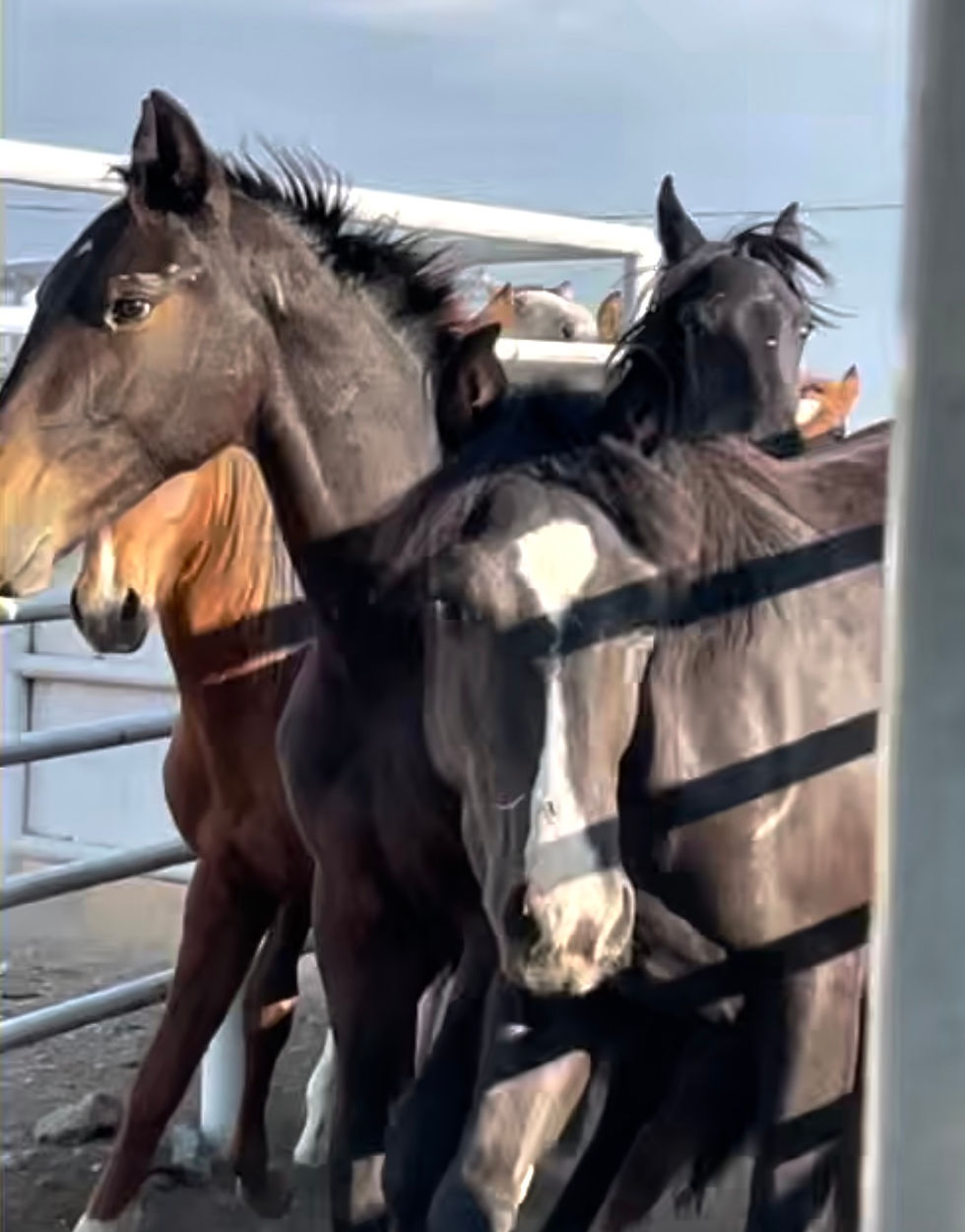
Rescued wild mustangs crowd a metal corral, including a black horse with a white blaze in front, under bright outdoor light. Liberty Sanctuary rescues and rehomes horses across Utah.
Horses rescued by Liberty Sanctuary from the slaughter pipeline
Over 80% of Americans are against horse slaughter – it’s time our legislators listened to their constituents and close these loopholes in protection of these American icons. 

Clearly, education about the slaughter pipeline is also very important.  Many people still don’t know the difference between slaughter and humane euthanasia. Many don’t know that over 92.3% of horses in the pipeline are young and healthy according to the USDA. When we bring these facts to light, we help the horses.  Over 80% of Americans are against horse slaughter – it’s time our legislators listened to their constituents and close these loopholes in protection of these American icons.  The more people know the facts and understand the better we can help make the world.


What Does the Future Hold for Liberty Sanctuary?


EquuStyle: Regarding the sanctuary's future, how do you balance the roles of volunteers, donors, and your adoption program to maintain operations? Additionally, could you elaborate on the challenges and importance of acquiring property with adequate water rights in the West? 


Debra West:  Great question and so timely!  These roles blend quite often. Our volunteers are our absolute strongest supporters. With just over 75 volunteers right now, our volunteers care about the Liberty Herd so much that they are amongst our most consistent donors and represent more than 70% of adoptions. We share the work we do online and more people seem to be drawn to the help the Liberty Herd and all of America’s most vulnerable horses through advocacy.


Regarding water in the west – it’s absolutely critical to sustaining operations – and it is prompting us to leave Utah for Colorado. Utah has been so supportive of Liberty Sanctuary and our volunteers here are incredible but we have made the decision to move to Colorado where land and water are more accessible. We are on 80 acres in Utah but only 1.5 acres of that is irrigated pasture and I think there are more sustainable options in Colorado.  We are excited for our next chapter in the state of Colorado and I’m dying to get the new wild horse license plate!


Halting the Slaughter of Horses and Burros


EquuStyle: What is the primary message you want readers to take away from your story?


Debra West:  Liberty believes the best way to help make progress for the horses is through organized collaboration with other groups; in the equine world and outside of it. This work is not about ego or who takes the lead. I’d happily be an engine at the back of a well-run train any day if it meant we were making progress for America’s most vulnerable horses. 


We know our key opposition is extremely well-funded and organized. We need that type of structure to educate the public and our legislators and truly affect change and restore wellbeing and dignity to our horses. I’d like for the public to know that there’s a place for everyone in our community and work. Whatever your talents are, the horses need you. They need us all! Reach out and we can discuss ways to work together!  There’s no talent or task too big or small. It all helps.


Humans are responsible for creating the pipeline and all of this mistreatment – it’s our duty as humans to make things right!


The next projects we would like to collaborate with others on include the Horse Heroes Collegiate Challenge to activate young voters on college campuses to engage in advocacy efforts and also a collaborative rewilding program based in Colorado to give wild horses an option to be rewilded instead of held in BLM holding facilities with no quality of life. We have passion for these projects and seek partners to help bring these to life. debra@libertysanctuary.org


All images Copyright Liberty Sanctuary-all rights reserved. Cannot be reproduced for any purpose without permission from Liberty Sanctuary.


A rare interview with one of the world's top fine art equine photographers.


Grey horse with flowing blonde mane in profile against a dark background, creating a serene and graceful mood.
"Unicorn" is a dramatic image of a Lusitano stallion taken in southern France.

Where are you from and how does that affect your work?


I grew up all over the west. My dad was a geologist for an oil company, and we moved constantly. 18 homes by the time I was 18. Very nomadic lifestyle, which is probably why I relate so well to the American wild horses… nomadic by nature. Because of all the moving, I became a loner at a pretty

early age. I am sure this has affected my work in many ways. I work best alone. In fact, when I was doing advertising photography, I would go back into the studio after everyone went home at night, and that’s usually when I did my best work. I get distracted when other people are watching and expecting me to perform, to the point where I can’t really focus.


Three black horses run with flowing manes against a dark background, conveying a sense of speed and freedom.
"3 Brothers" captures Merens breed horses running in a pasture in the Pyrenees region of southern France.

Who are your biggest artistic influences?


That’s a hard one. There are not specific artists or photographers that I get inspiration from. Rather, I think it is an accumulation of everything I have seen, read, or heard throughout my life that has informed my artistic sensibilities. I also get a lot of inspiration from nature, and being

immersed in nature. I think all good art imitates nature in some way. We live in a very technical world and spend an inordinate amount of time in front of a computer screen or a phone. I think all the technology dampens creativity, and sometimes the best way to connect with our creative self is to unplug from all the technology and sit in silence so we can actually hear ourselves.


Three horses, two black and one white with flowing mane, nuzzle in a warm, sunlit setting, conveying a sense of calm and unity.
"3 Stallions" is an exquisite image of three young stallions in Spain.

How has your style changed over time?


It’s always a process. When I started doing advertising work, I was all over the map. I did fashion, food, technology, architecture, still life, catalog work, special effects, landscapes, because I didn’t really know who I was and had not defined my creative voice yet. I experimented a lot. I am completely self-trained in photography, and never went to school. I tried by doing, and by making a lot of mistakes, and learning what NOT to do. Over time, my personal style developed, but it took 20 years to find that. I spent years emulating the popular photographers, only to realize this was not me, and it was not coming from within. What I ultimately came to learn was that I had a deep appreciation for lighting.


Brown horse gallops gracefully across a dimly lit sandy arena, mane flowing. Dramatic lighting highlights its powerful form against a dark background.
"Luminous" is an image that perfectly illustrates the goal of photographing "the light falling onto the horse"

When I teach workshops, I tell people that they are not photographing a horse, they are photographing the light falling onto the horse. It takes a fundamental shift in understanding to really grasp that concept, but it is all about lighting. Photographers start with a black canvas, and we add light. We literally “paint” with light. After 20 years of studio photography, I learned how to “see” light. I am always looking for the light, so to speak. After I shifted my focus to horses, I realized I could take 20 years of experience in lighting and apply it to something I truly loved.


When is your favorite time of day to photograph horses?


Late afternoon, for sure. Magic hour. The last hour of sunlight is the best. In fact, in that late afternoon light, it is hard to take a “bad” photograph.


What motivates you to continue photographing horses?


I just love horses. I was burned out after 20 years of advertising work. I had lost myself after trying to be so many things and trying to please so many people. It’s a long story for another time, but when I started spending time with horses, they showed me a way back to my authentic self, and that was a huge gift to me. My work, I believe, continues to be an “homage: to the horse". I showed my true self to the horses, and in return, they shared with me their true essence, and that is what I try to convey through my work.


How do you define success as a fine art equine photographer?


When I was doing commercial work, it was constant marketing and it always felt like pushing a boulder uphill. When I started working with horses and started building a body of work with my equine photography, doors would open in front of me without much effort. The sense of struggle was gone. The 4 books I have published all came with little effort. When I started teaching workshops, I created them and people signed up, and it’s been going strong even efter 20 years of doing them. I think “success” is being able to do what you love and also make a living at it, without having to commercialize it or change it to fit someone else’s desire. I have a dream job. I travel the world photographing some of the world’s most beautiful horses, in some very beautiful places, and I get paid for it !!!


What have critics and collectors said about your work?


That’s an odd question. People that collect my work do so because it speaks to them on some level, and they love the work. I don’t think I have any critics, and if I do, I don’t really care what they think. At one point in my life, I would do whatever I could to please them, but not anymore. I know who I am, and I know my work has value. If someone does not like it, they do not have to look at it!


Why do you offer workshops and how do you benefit or find meaning from sharing your artistic mastery with other aspiring equine photographers?


Horses a book by Tony Stromberg fine art equine photographer

After my first book was published, along with calendars, people started to ask me if I would do workshops, so I thought “why not”. I started doing a few in my hometown of Santa Fe, and it just grew from there. I am happy to share my photographic experience. It gives me joy to see people learning what I have to offer them, and I love to watch them grow artistically, and to find their own voice with their equine photography. They come to me because we all have a shared love of horses and photography and want to share our vision with the world. What’s not to like?


To learn more about upcoming workshops with Tony Stromberg click on the button below. And, be sure to visit Tony Stromberg's website and follow him on Facebook and Instagram.


This article was originally published in the premiere Winter 2023 issue of EquuStyle Magazine. All images Copyright Tony Stromberg Photography -all rights reserved. Cannot be reproduced for any purpose without permission from Tony Stromberg Photography.


In the picturesque landscape of Colorado, Richard Rodriguez embarks on a heartfelt artistic journey that combines his passion for horses with a commitment to capturing the essence of rescued horses that have suffered traumas.


An accomplished architect, Richard Rodriguez made the bold decision to follow his heart to become a full-time artist after after completing an enriching program at the Art Students League of Denver. His background in architecture gives him a distinctive viewpoint on form, space, and structure, which he now channels into his art. Employing brushes, palette knives, scrapers, and squeegees with oil paints, Richard crafts abstract shapes blended with realism on canvas or hardwood panels.

"In my paintings, I navigate the space between memories and dreams. Lines within the artworks represent the creases found in vintage photographs."

Richard contends, "Horses have often carried symbolic weight representing power, speed, strength, and even freedom. Yet in modern art they’ve appeared less frequently." For him it is essential to revitalize the portrayal of horses, especially within the context of equine fine art. By showcasing their grace and strength, he hopes to remind viewers of these creatures' longstanding significance and the stories they tell.


An oil painting titled "In Balance" by Richard Rodriguez of three brown rescued horses standing close together against an abstract, colorful background. They're facing slightly different directions.
"IN BALANCE" 36 x 48 OIL BY RICHARD RODRIGUEZ

At the Phippen Museum's 51st Annual Western Art Show and Sale, Richard Rodriguez was honored to be awarded the George Phippen Memorial Foundation Award for his 36 x 48 oil painting titled "In Balance."


A Personal Connection to Rescue


Richard's bond with horses is deeply personal. He adopted two of his three of his horses from the Colorado Horse Rescue (CHR). Possessing a profound admiration and affection for horses, Richard felt compelled to investigate the potential of capturing their essence through the lens of modern art.


While exploring the concept of using the rescued horses at CHR as subjects in his new body of work, Richard found himself wondering — "Does a horse that has been through the traumatic process of rescue lose its symbolic power to inspire?” This question not only reflects on the horses’ past hardships but also emphasizes their potential for transformation and the beauty they can embody in the present.


He also considered, "Can I capture the essence of these horses in their new surroundings and return their natural dignity through modern painting?" 


On a bright afternoon, Richard visited his friend Megan Goheen at Colorado Horse Rescue. The peaceful setting of CHR served as the perfect backdrop for his artistic exploration. This serene environment not only provided him with a picturesque landscape to inspire his creativity but also allowed him to immerse himself in the profound stories of the rescued horses that called this place home.

Abstract painting of a brown and white horse with a black mane on a textured background with the title "Painted" by fine artist and advocate Richard Rodriguez. Neutral tones with splashes of red and black.
"Painted" Oil on Canvas 8" x 8"

"Does a horse that has been through the traumatic process of rescue lose its symbolic power to inspire?”

Richard spent time observing, taking photos, and silently bond with the herd. Instead of brokenness, he found resilience. Instead of despair, he saw peace. Horses of various ages, breeds, and backgrounds were finding safety, comfort, and strength in each other.


Observing the horses interact was enlightening. Each group represented unique relationships, showcasing how the horses comforted each other as they adapted to their new lives. Regardless of breed or age, these animals found joy in simple moments of play, eating, and resting together. Creating art becomes an act of recognition, with each piece serving as a tribute to their ability to inspire and uplift.


  • "Shadows" is an oil painting of three rescued horses in the shadow of a structure by fine artist Richard Rodriguez.
    "Shadows" Oil on Canvas 12 x 24 x .25

"Shadows" Oil on Canvas 12" x 24"


Creating a Visual Legacy


With newfound inspiration from that day, Richard set out to create a vibrant body of work. His goal extends beyond simply painting horses; he strives to convey the emotional journeys he witnessed. His art serves as a reminder that, while the past may shape their experiences, it does not define their worth or potential for joy. Each brushstroke expresses the dignity, spirit, and beauty of these remarkable animals.


His deep engagement with the rescued horses enabled him to infuse each canvas with authenticity and depth, ensuring that each piece resonates with the viewer on multiple levels.


Richard understands that equine fine art has the potential to reshape public perceptions of rescue horses, presenting them as symbols of hope and strength. By sharing their stories, he hopes to foster a culture in which every horse is honored and offered the chance to thrive.


Stories of Rescue on Canvas: Artist Richard Rodriguez Paints Colorado Horse Rescue’s Horses

Honoring the Spirit of Rescue Horses


In this recent collaboration with Colorado Horse Rescue, Richard has created a dramatic series of paintings that acknowledge the vibrant lives of these horses today rather than just their past traumas. This perspective is crucial, as these works shift the narrative from one of suffering to one of resilience and vitality. Ultimately, Richard’s artistic vision is not just about depicting horses; it is about celebrating the vibrant lives they lead today, reminding us all of the beauty that can emerge from adversity.


"Copper Patina is an oil painting by artist and equine advocate Richard Rodriguez of a brown horse walking with its reflection below. Abstract pastel background with green, white, and pink hues. Energetic mood.
"Copper Patina" Oil on Canvas 36" x 24"

Throughout this collection, he captures the essence of their spirit, showcasing their playful nature, their grace in movement, and the bond they share with humans and their environment. Richard aspires for his work to resonate with advocates for horse rescue and collectors of equine fine art alike. By weaving the stories of each horse into his art, he reinforces the notion that every life holds value—regardless of past experiences.


In exhibitions and galleries, Richard’s works invite audiences to reflect on their own perceptions of horses and, by extension, all animals. He hopes to inspire a greater appreciation for the emotional lives of these beings, fostering empathy and encouraging a more humane approach to how society views and treats them.


Future Aspirations


Richard envisions his artistic journey as more than an individual project; it’s a movement aimed at raising awareness about the importance of rescue horses. Many of these horses carry emotional scars, yet those very scars tell powerful stories of resilience and survival.


By sharing these narratives through his art, Richard invites viewers to empathize with the horses' journeys. Each painting serves as a powerful reminder of the collective effort required by advocates to improve the quality of life for these majestic animals.


Final Thoughts on Richard Rodriguez's Mission


In a world often oblivious to the struggles behind closed doors, Richard’s mission provides a fresh perspective filled with hope. By portraying the essence of rescue horses, he preserves their stories and transforms them into symbols of strength and resilience. It is vital that we collectively honor these animals, ensuring that each horse is valued and given a chance to thrive, regardless of its history.


Art Shows & Events


COLORADO GOVERNOR'S ART SHOW

5/3/2025 - 6/14/2025

Loveland Museum

503 N Lincoln AveLoveland, Colorado 80537


PHIPPEN MUSEUM WESTERN ART 51ST ANNUAL SHOW & SALE 

5/24/2025 - 5/26/2025

120 S. Cortez Street

Prescott, Arizona


BROADMOOR ART EXPERIENCE - Live Painting and Sculpting

7/19/2025 - 7/20/2025

Broadmoor

Hotel1 Lake Ave.

Colorado Springs, Colorado 80906


ART ASSOCIATION OF JACKSON ARTS FESTIVAL

7/26/2025 - 7/28/2025

240 S Glenwood St,

Jackson, WY 83001


THE CAWDREY GALLERY

Opening Night Reception: 8/7/2025  

206 Lupfer Avenue Unit 102

Whitefish, MT 59937


ARTS STUDENTS LEAGUE OF DENVER -SUMMER ART MARKET

8/24/2025 - 8/25/2025

200 Grant St.

Denver, CO 80203

Tickets go on sale August 1. Purchase tickets in advance to save time at entry day-of.


ST LOUIS ART FAIR

9/05/2025 - 9/07/2025

225 S Meramec Ave #105

Clayton, MO 63105


COORS WESTERN ART "YOUNG GUNS ART SHOW"

12/18/2025

National Western Complex

4655 N. Humbolt St.

Denver, CO 80216


All images Copyright Richard Rodriguez and rmrstudio.net -all rights reserved. Cannot be reproduced for any purpose without permission from Richard Rodriguez and rmrstudio.net


Subscribe for equine art & advocacy

Subscribe today and receive a quarterly email to inform you about the upcoming

digital issue of EquuStyle Art & Advocacy Magazine.

Share via

© Copyright Protected

EquuStyle Magazine ©2023-2026 EquuStyle.com All rights reserved.

Privacy Policy

bottom of page