top of page

Magazine Articles

EquuStyle: When did you first become interested in photographing wild horses? What sparked that passion for you? 


Sandy Sharkey: In my early twenties, I was on a trail ride in Alberta’s Rocky Mountains near Banff.  One afternoon, I was lying on my back in an alpine meadow, my trail horse contentedly munching grass beside me.  Suddenly, everything shook- and I jumped up, convinced that I was experiencing an earthquake.  It wasn’t an earthquake.  It was a herd of wild horses, galloping past me on a rocky ridge.  It was over as quickly as it began- and the wild horses disappeared into a forest.  But it was one of the most beautiful things I’d ever seen. 


Wild Alberta Mountain Horses is the title of a photograph by wild horse photographer and advocate Sandy Sharkey as featured in the Fall 2025 issue of EquuStyle Magazine at equustyle.com
Wild mountain horses traverse the rugged landscape of the Alberta Rocky Mountains, showcasing their strength and resilience amidst the natural beauty of Canada.
At that time, I had no idea that wild horses existed.  My life was forever changed.  I needed to experience wild horses again and again, to capture their essence with my camera, and to share their stories of free spirited resilience.

 EquuStyle: What personal connection do you feel to the wild horses you photograph, and how does this influence your work? 


Sandy Sharkey: I think the most ‘free spirited’ time of our lives, is when we are kids-  before the wide ranging demands of society take root.  Over time, that free spirit of youth is diminished under the weight of responsibility.  When I’m with wild horses, I feel like that 8 year old kid again.  Wild horses are symbolic of freedom, embodying an unabashed free spirit that exists in all of us. 


"Utah Wild Mare and Stallion" is the title of a photograph by wild horse photographer and advocate Sandy Sharkey as featured in the Fall 2025 issue of EquuStyle Magazine at equustyle.com
A wild mare and stallion share a tender moment on the vast plains of Utah, embodying the spirit of freedom and companionship.

In many ways, connecting with wild horses can reconnect the adventurous soul that we’ve buried through adulthood.  Someone once told me, ‘it’s not how you feel about someone, it’s how you feel about yourself when you’re with that person’.  The same applies to wild horses.  When I’m with these magnificent animals, the awakening of my heart and soul influences my photographic work in a visceral way. 


If one of my images captures the free spirit of a wild horse, creating a beautiful connection between human and horse-  this is much more important to me than a technically perfect photo.  


 EquuStyle: Could you share a memorable encounter with a wild horse that deeply impacted you? 


Sandy Sharkey: There are so many to choose from.  But one encounter stands out. In the spring of 2018, I was photographing wild horses in Utah’s Onaqui range.  One morning, I saw this huge cloud of dust rolling across the desert floor like a scene from ‘Wile E. Coyote and the Roadrunner’.  The trail of dust was created by one scrappy, smallish wild buckskin stallion known as ‘Buck’.  He was covered in battle scars and several wounds were fresh, but nothing stopped him.  Buck was determined to steal the mares from every stallion in sight. 


"Battle Scarred Onaqui Stallion known as Buck" is the title of a photograph by wild horse photographer and advocate Sandy Sharkey as featured in the Fall 2025 issue of EquuStyle Magazine at equustyle.com
Majestic and resilient, Buck the battle-scarred Onaqui stallion strides across the rugged landscape, embodying the untamed spirit of the wild.

He wasn’t successful that day, and I’m not sure that he was ever successful, but the huge spirit from this small package embodied persistence, true grit, and wild spirit; everything we love about wild horses.  Buck is my horse hero.


 EquuStyle: What initially drew you into wild horse advocacy? 


Sandy Sharkey: When I first started photographing wild horses, it wasn’t long before I began to learn about the challenges they face.  I couldn’t continue to share photos of beautiful wild horses without speaking out and raising awareness about the atrocities of wild horse roundups and the slaughter pipeline. 


"Utah Fiery Boy"  is the title of a photograph by wild horse photographer and advocate Sandy Sharkey as featured in the Fall 2025 issue of EquuStyle Magazine at equustyle.com
"Utah Fiery Boy" is the title of a wild and free, Onaqui stallion rearing majestically against a backdrop of the rugged Utah landscape.

Along with photographic storytelling, I began to host wild horse retreats and trips to other wild horse areas in the world.  When we see mankind’s treatment of wild horses, and how it differs depending on geographic location, we can better understand and help shape a future where wild horses are protected and respected. 


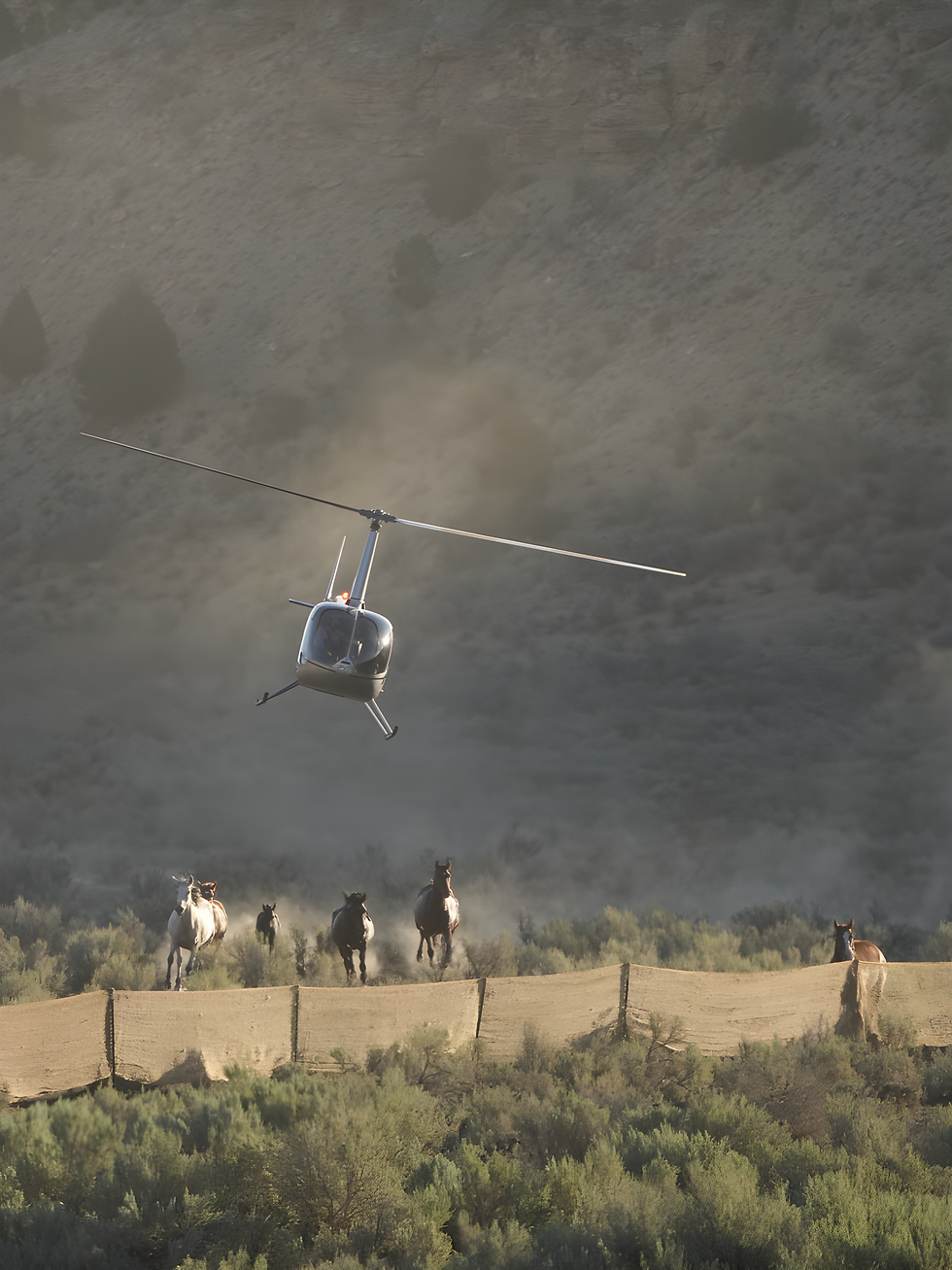
In the American west, thousands of mustangs have been rounded up by helicopters and removed by the U.S. government, in deference to the demands of public lands ranchers.  The system is broken and the government is resistant to working for meaningful change. 


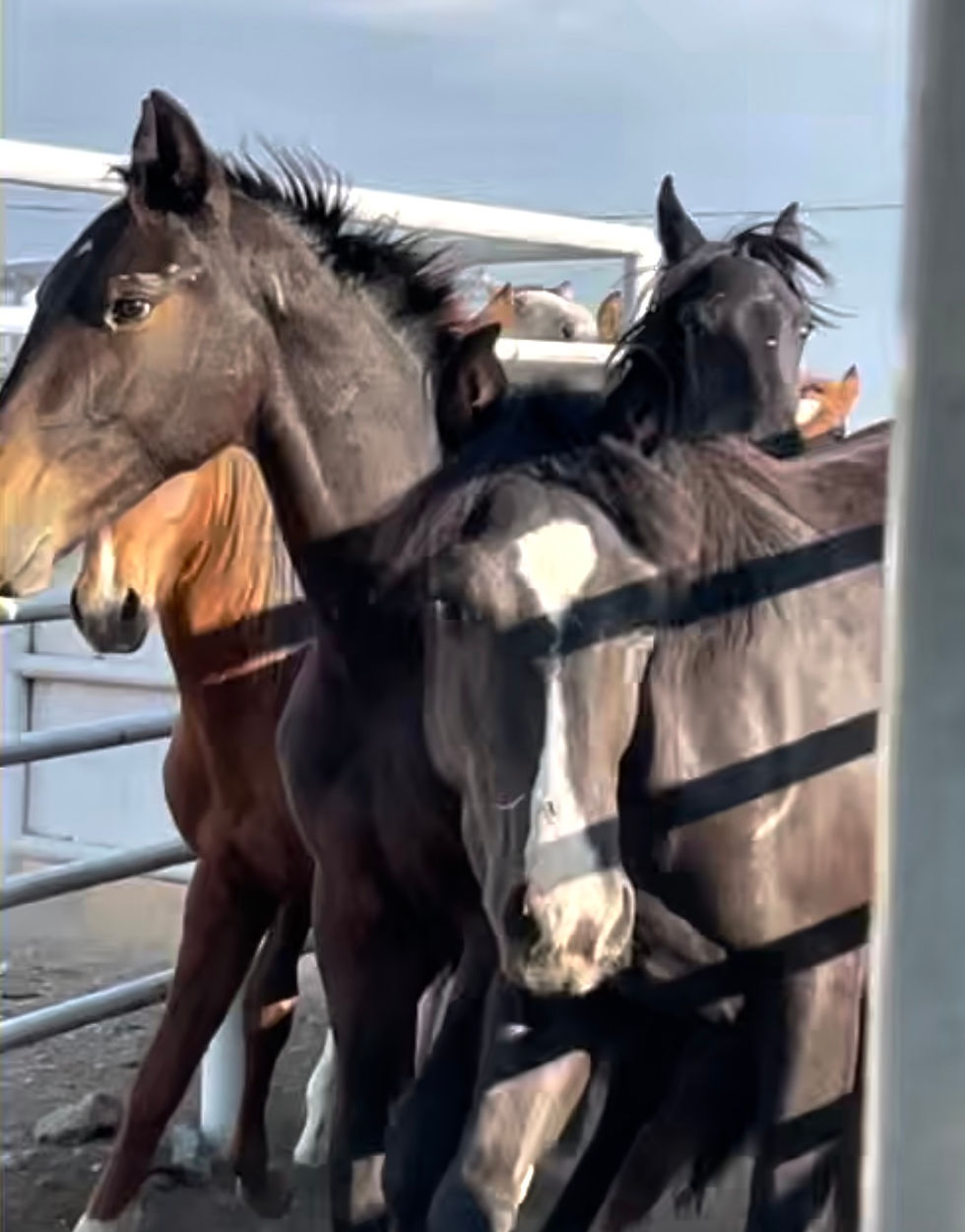
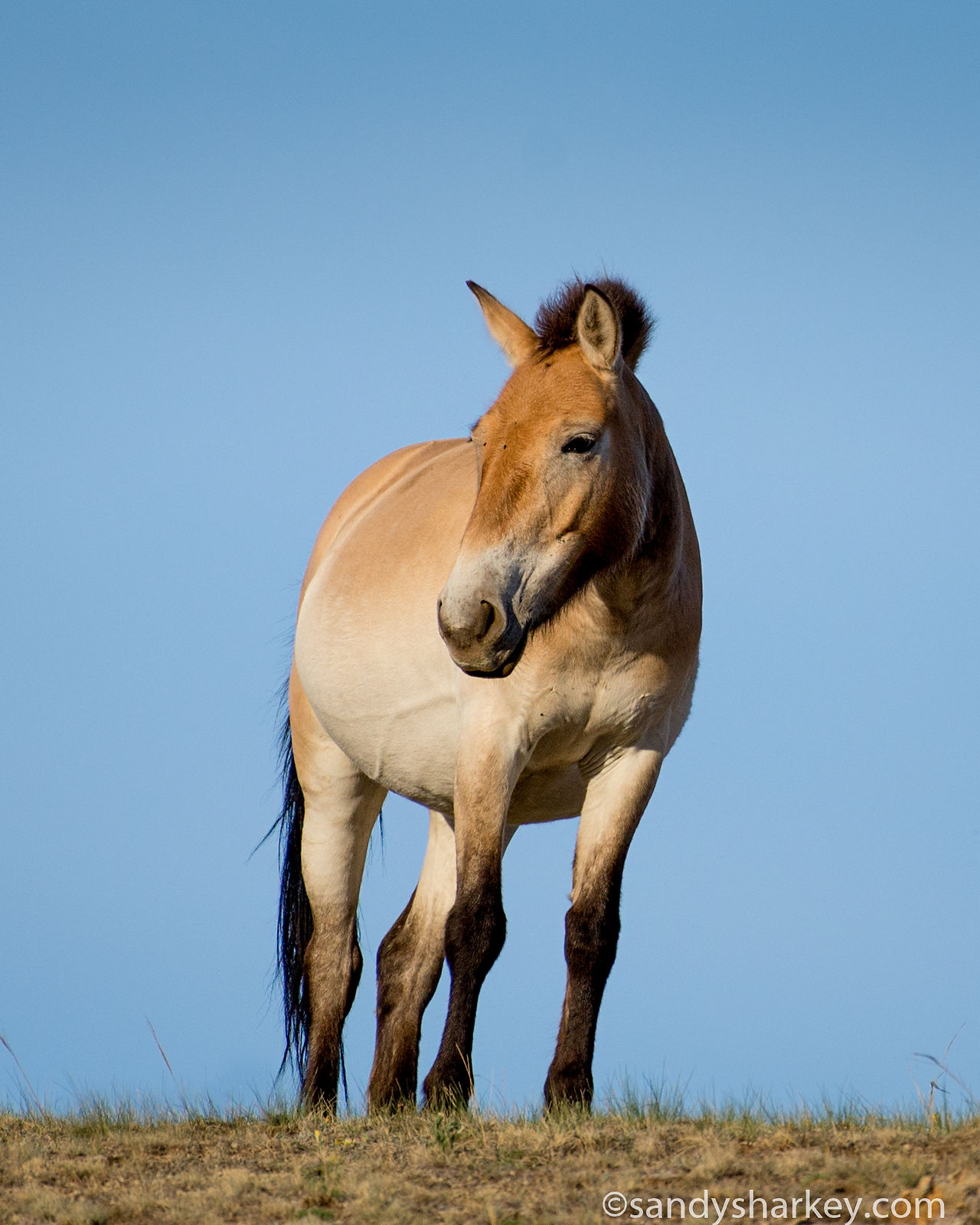
There are over 60,000 wild horses languishing in holding facilities.  In contrast, cattle ranchers in northern Portugal are accepting of the ‘Garrano’ wild horses.  In Chilean Patagonia, wild horses known as ‘Baguales’ are also revered, and have become a draw for adventurers.  In Mongolia, Przewalski’s horses were extinct from the wild, but due to a successful captive breeding program, they once again roam the Mongolian steppes. 


The wild horses of Canada’s remote Sable Island are 100 percent protected, living wild and free with zero interference from mankind.   We have much to learn regarding mankind’s complex relationships with wild horses.

 EquuStyle: How do you believe your images help to shift perceptions and garner support for wild horses? 


Sandy Sharkey: My goal on social media is to have my wild horse images pack a one-two punch.  Hopefully someone is emotionally drawn into a photo, whether it’s a wild horse portrait, a wild horse family band or an action shot-  and they stick around long enough to read the text that goes along with it. 


My posts can include hard-hitting calls to action-  or they can be sweet or humorous.  I try to mix it up as much as possible, because different people respond to different things.


 EquuStyle: What are some of the biggest misconceptions about wild horses that you aim to dispel through your advocacy? 


Sandy Sharkey: Wild horses are sentient, intelligent, family oriented animals that have earned the right to exist peacefully on the landscape.  Those who profit from usage of public lands have created a false narrative about wild horses being a strain on the ecosystem.  Nothing could be further from the truth. 


Unfortunately the wild horse has become the scapegoat for rangeland damage caused by human activities, particularly public lands ranching.  My wild horse advocacy is rooted in dispelling the false narrative wrongly promoted by special interest groups.


 EquuStyle: As a speaker, when addressing audiences, what are the key messages you strive to convey about wild horses? 


Sandy Sharkey: It starts with instilling the knowledge that wild horses actually EXIST.  I shouldn’t be surprised that most people don’t know that wild horses live in wild spaces around the world.  I had no idea myself-  until that eye opening encounter in the Alberta wilderness so many years ago. 

As a speaker, I always begin by assuming that I’m introducing the wonder of wild horses to someone for the first time.  Following that, my role is to convey wild horses’ precarious relationships with humans, and how we can work together to elicit positive change. 

 EquuStyle: How do you engage and inspire individuals who may have little prior knowledge or connection to these animals? 


Sandy Sharkey: I try to engage people in a way that they can relate.  Storytelling is immensely important.  For example, to wild horses, family is everything.  When wild horse families are ripped apart by tragic helicopter roundups, the stallions, mares and foals desperately call out to each other after being indiscriminately packed into livestock trailers and separated forever.  We can’t begin to imagine the heartbreak.  But we can certainly relate to our own family relationships, and reflect on the tragedy of being separated from a loved one.  


A photograph of a "Wyoming Wild Horse Family" by wild horse photographer and advocate Sandy Sharkey as featured in the Fall 2025 issue of EquuStyle Magazine at equustyle.com.
"Wyoming Wild Family"


EquuStyle: Do you have a story about how your images of wild horses or a speaking engagement directly impacted wild horse conservation or policy?


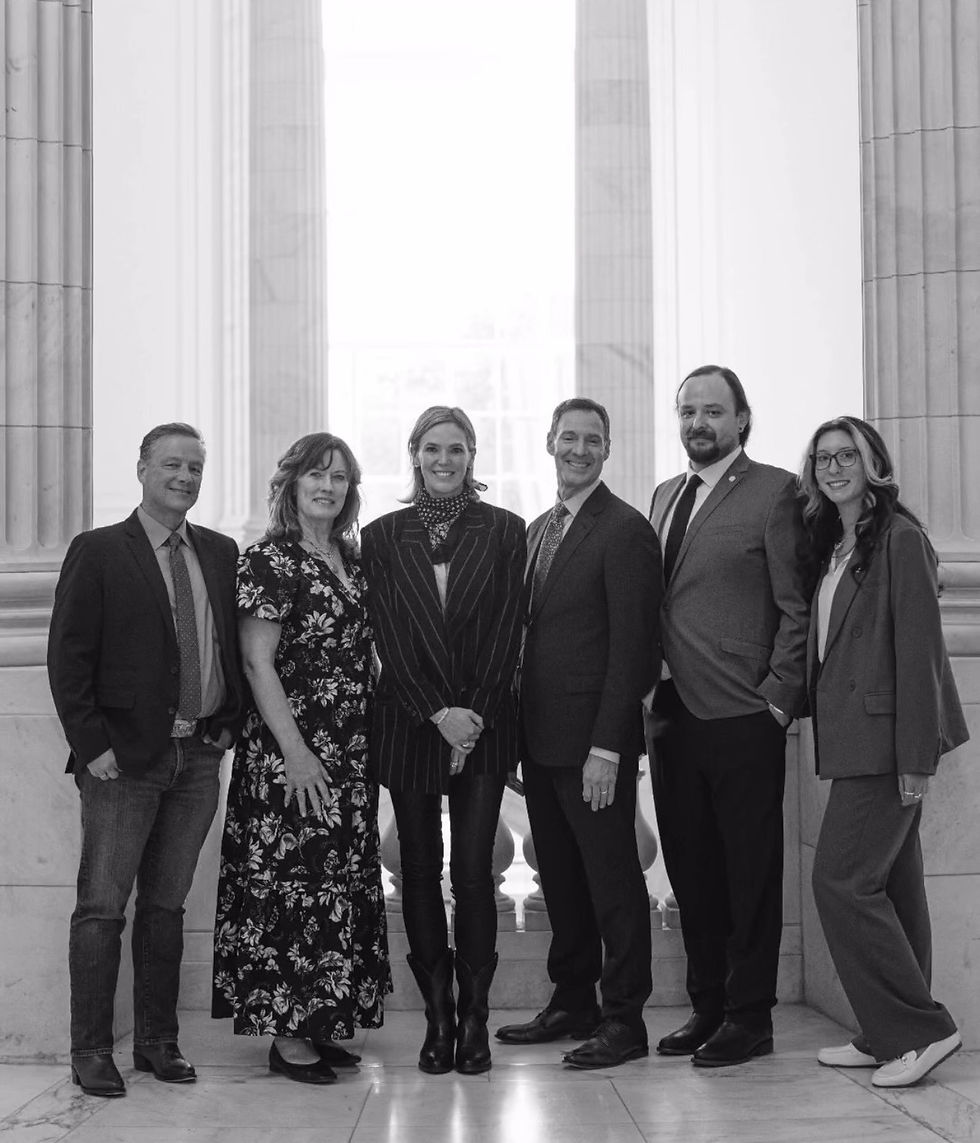
Sandy Sharkey: In 2023, I was honored to speak at the Wild Horse Conference in Washington DC.  My presentation was titled ‘Storytelling for Change’.  Stories connect us all, and it’s the most powerful way to invoke positive change. 


A photograph of an Alberta Wild Stallion known as 'Maverick' by wild horse photographer and advocate Sandy Sharkey as featured in the Fall 2025 issue of EquuStyle Magazine at equustyle.com.
Alberta Wild Stallion known as 'Maverick'

To help save wild horses, it’s important for people to have an emotional connection.  Strong storytelling can move mountains.  I love grassroots campaigns powered by the human heart.  I created the hashtag ‘#ButImJustOnePersonSaid300MillionPeople’ to encourage people to listen to wild horse stories and feel moved to act.  Every single voice is a megaphone.  


EquuStyle: Who are some individuals who have inspired you in your journey as a photographer and advocate? 


Sandy Sharkey: There are far too many to mention, and I would likely miss someone!  Over the years I’ve been fortunate to work with outstanding people who have dedicated their lives to wild horses.  I’ve stood shoulder-to-shoulder on wild horse ranges with advocates that know the herds and the individual horses, from birth to adulthood to death from old age (it’s always a unique gift when a horse lives wild and free for his/her entire life, which speaks volumes about the high odds of being captured long before that day). 


I’m inspired by the photographers, the writers, the organizers of webinars and rallies, the creators of film and music, and everyone who works tirelessly to ensure that wild horses will run free for generations to come.  And to the members of the public who don’t look the other way-  taking the time to make phone calls, write letters and share posts.  In many ways, they are my greatest source of inspiration.   


 EquuStyle: What inspired you to guide photography tours of wild horses on Sable Island? 


Sandy Sharkey: I want the world to know that a place actually exists, where wild horses are 100 percent protected.  Located 180 miles from Halifax Nova Scotia in the Atlantic Ocean, the grassy dunes of Sable Island are home to approximately 500 wild horses.  Here, they are free to form family bands, give birth, watch their foals grow, and share lifelong bonds with each other, with zero interference from mankind.  The horses are managed by mother nature, living an existence in harmony with the sea.  


Being on Sable Island not only feeds our soul, it restores our hope that one day, all wild horses will be as revered and respected as the wild horses that have survived on this crescent-shaped island for over 350 years.  We must never give up hope.


 EquuStyle: For those interested in supporting wild horse protection, what concrete actions would you recommend they take?


Sandy Sharkey: It’s a good idea to follow wild horse organizations that provide excellent background information, along with current news and suggested calls to action. Here are some respected sources:


It’s important to contact your legislators and ask for humane reform regarding the treatment of wild horses.  Elected officials can’t ignore an army of voices. 


And while the fight to save wild horses is in the category of ‘David vs Goliath’, I prefer to look at it this way: WE are not David, WE are Goliath.  Thankfully, those with empathy and compassion greatly outnumber those who profit from public lands and want the wild horses eliminated.  We just need to stay together and raise our voices. 


Remember: #ButI’mJustOnePersonSaid300MillionPeople 


Wild horses in a grassy field, text reads "But I'm just ONE person," "300 MILLION people," "saveourwildhorses.net."
Elected officials can’t ignore an army of voices.


All images Copyright Sandy Sharkey Photography-all rights reserved. Cannot be reproduced for any purpose without permission from Sandy Sharkey and Sandy Sharkey Photography.


Updated: Jun 10, 2024

Sandy Sisti advocates for the innate wildness of all animals and their need to be free


A photograph by wild horse photographer and advocate Sandy Sisti of the wild mustang stallion, Mesquite, surveys the grand landscape of McCullough Peaks Herd Management Area outside Cody, Wyoming
"The Black Stallion" The wild mustang stallion, Mesquite, surveys the grand landscape of McCullough Peaks Herd Management Area outside Cody, Wyoming

EquuStyle:  What is it about wild horses that captivates you?


Sandy Sisti: Initially, I was taken in by their beauty. All horses are beautiful, but there’s just something about the wild ones. No matter how many times I see wild horse herds gallop past, their beauty alone never fails to bring me to tears. Once I began spending time with wild horses, I found that it was their toughness and their incredible ability to survive in the toughest of circumstances that really captured my heart.


EquuStyle:  Can you describe what it’s like to spend time wild horses?


Sandy Sisti: There’s nothing quite like spending time with wild horses. I find the experience to be very peaceful. When I’m upset about something, spending time with wild horses always makes me feel better. They really do have a calming influence. Most wild horses in Wyoming live in areas that are difficult to access, so you’re usually alone with the horses and I really enjoy that type of solitude.


A photograph by wild horse photographer and advocate Sandy Sisti of a cute little colt was born in early September 2021 to the mare, Theya, and her band Stallion, Tahlequah. Like all newborns, he barely left his mother’s side, but that will change as he gets older.
"Lean on Me" This cute little colt was born in early September 2021 to the mare, Theya, and her band Stallion, Tahlequah.

EquuStyle:  How did you come up with name of Wild at Heart Images?


Sandy Sisti: I always liked the phrase “wild at heart”, especially after reading Tennessee Williams “A Prayer for the Wild at Heart…” while in college. To me it captures the idea of wanting to do something out of the norm, something that isn’t expected of you. The phrase also reminds me of the innate wildness of all animals and their need to be free. Now that I’m focused on wild horse photography and advocacy, the name really seems to fit.


EquuStyle:  How did growing up on Long Island influence your craft?


Sandy Sisti: Although there wasn’t much wildlife where I grew up, I always had a camera in hand and photographed whatever animals were around. This included our family pets, along with butterflies, birds, small mammals, and the turtles that frequented our local ponds. Once I started driving, Heckscher State Park and Jamaica Bay Wildlife Refuge were two of my favorite spots for photographing whitetail deer and birds. Although I didn’t go there often, the Bronx Zoo was my favorite place to visit as it exposed me to nature and wildlife that I would never see in my neighborhood.


EquuStyle:  Did you grow up with or around horses?


Sandy Sisti: Unfortunately, I didn’t grow up around horses, but was always crazy about them. I grew up in suburban Long Island, and there weren’t many, if any, horses in the area. My best friend attended horse camp one summer, but my mom wouldn’t allow me to go with her because she was worried that I’d get injured. I did finally start riding, but not until I was an adult.


A photograph by Sandy Sisti wild horse photographer and advocate of when you hear the sound of whinnying and thundering hooves and see a cloud of dust appear on the horizon, you know a herd of horses is galloping past.
"Summer Thunder" When you hear the sound of whinnying and thundering hooves and see a cloud of dust appear on the horizon, you know a herd of horses is galloping past.

EquuStyle:  Did you ever formally study photography? If so, where? 


Sandy Sisti: I never formally studied photography, but always considered photography one of my favorite hobbies, even as a child. When I was attending SUNY Stony Brook as an undergraduate, I was a fine art major (drawing, painting) before switching my major to Biology/Biochemistry. After working in the sciences for many years, I returned to the fine art field as a photographer.


EquuStyle:  How was your professional career impacted after being published in National Geographic and National Geographic Kids magazines?


Sandy Sisti: At the time of these publications, I was mainly focused on wildlife photography in the Greater Yellowstone Ecosystem. Being featured by National Geographic helped me to become more well known as a photographer and led to more clients using my work for print publications.


EquuStyle:  What was your experience like when you were honored by The Smithsonian for your image “Surveying the Kingdom”?


Sandy Sisti: It was an incredible honor for my work to be recognized alongside many of the nature and wildlife photographers I looked up to at the time. I visited the Smithsonian a few years prior to receiving this award and made a point to see the Nature’s Best Photography/Windland Smith Rice International Awards exhibit. Even then, I never thought a picture I had taken would ever hang in the Smithsonian. It’s still unbelievable when I think about it.


"Battle at Red Rock" is a photograph by Sandy Sisti wild horse photographer and advocate. The pinto stallion, TNT Dynamite, lunges at band stallion, Kiamichi, as they near the edge of a steep cliff.
"Battle at Red Rock" The pinto stallion, TNT Dynamite, lunges at band stallion, Kiamichi, as they near the edge of a steep cliff.

EquuStyle:  Which creative individuals have most influenced your work?


Sandy Sisti: When I began pursuing photography seriously, I focused mainly on wildlife photography. At that time, world-renowned nature and wildlife photographer, Thomas D. Mangelsen, was my greatest influence. I studied his style and incredible body of work and was really taken with his images of grizzly bears. Grizzly bears became my favorite subject, as well, and I spent more than ten years focused on bears, as well as, the other megafauna living in the Greater Yellowstone Ecosystem.


At the same time, I was also photographing the McCullough Peaks wild horses, who would eventually become the main focus of my photography. The incredibly talented and internationally recognized horse photographer, Carol Walker, was a big influence on my photographic work with wild horses. Over the years, Carol became a cherished friend. These days, I continue to look up to Carol, not only in her work as an amazing artist, but as a powerful and unwavering advocate for wild horses.


"Black Beauty"  is a photograph by Sandy Sisti wild horse photographer and advocate. Frigid temperatures and frozen fog make foraging difficult for the horses in winter. This mare, known as Black Beauty, kept busy hunting for dried grasses under the deep snow.
"Black Beauty" Frigid temperatures and frozen fog make foraging difficult for the horses in winter.

EquuStyle:  Do you have a safe distance that you maintain when photographing wild horses? 


Sandy Sisti: The requirement at McCullough Peaks is to stay at least 300 feet from the wild horse herds, and I do my best to comply with that. I usually don’t get any closer than 100 feet to any other of the more approachable wild horses. Many of the wild horses in Wyoming, run off when they hear a vehicle approach, so I photograph them from my vehicle or from a great distance with a super telephoto lens.


EquuStyle:  Have you ever found yourself in a precarious situation with a wild horse?


Sandy Sisti: In all the years I’ve been photographing wild horses, I’ve never found myself in a precarious situation.


EquuStyle:  Why is advocating for wild horses important to you?


Sandy Sisti: If we don’t continue to advocate for wild horses, in time there will be no more wild horses on our public lands, only livestock. This year, the Bureau of Land Management (BLM) plans to remove more than 10,000 wild horses from public land with the majority of these horses moved to long-term holding facilities where they will live out the rest of their lives.


"Thunder and Lightning" is  a photograph by Sandy Sisti wild horse photographer and advocate. Lead mare, Taboo, guides her band to a nearby draw as a fast-moving thunderstorm hits the range.
"Thunder and Lightning" Lead mare, Taboo, guides her band to a nearby draw as a fast-moving thunderstorm hits the range.

Currently there are more than 60,000 once wild horses stockpiled in long-term holding. If the BLM has their way, this eradication of wild horses will continue. I don’t want to live in a world without wild horses and I know I’m not alone. That’s why I continue to advocate for them.


EquuStyle:  Do you believe social media posts are effective for changing the hearts and minds of people about the need to protect wild horses? 


Sandy Sisti: Social media is a very effective tool to help educate people about the plight of our wild horses. The majority of Americans have never seen wild horses and many don’t even know they exist.


Through the use of social media, we can inform people about the BLM’s terrible mismanagement of our wild horses. In time, many of these people will begin to care about the wild horses and some may eventually become advocates. I’ve seen this happen many times thanks to social media.


 "God of Thunder" is a photograph by Sandy Sisti wild horse photographer and advocate. The stallion, Thor, postures towards a rival stallion intent on stealing his mare, Shakira.
"God of Thunder" The stallion, Thor, postures towards a rival stallion intent on stealing his mare, Shakira.

EquuStyle: How has your influence on social media helped with fundraising and motivating people to take action?


Sandy Sisti: I believe that the more people learn about the McCullough Peaks wild horses, the more they care about them.


Sharing stories and photos of these horses on social media gets people involved in their lives and over time they develop a real affection for them. The deep feelings people have for the McCullough Peaks wild horses motivates them to want to help them when they can, with donations, petition writing, etc. Many people who contact me about the McCullough Peaks wild horses have never seen them, but they know everything about them and care about them just as much as I do. Without social media, I don’t think this could happen.


EquuStyle: What would you like people to know about the McCullough Peaks wild Mustangs?


Sandy Sisti: The McCullough Peaks herd is a small population of wild horses that have been effectively managed with PZP immunocontraceptive vaccine since 2011.  Thanks to the use of PZP, their average yearly population growth rate has held at 2% for the last ten years. Because of this, there had been no roundups since a 2013 bait trapping operation where 20 young horses were removed.


"Ice Dancer" is a photograph by Sandy Sisti wild horse photographer and advocate. Graceful as a dancer, the black stallion, Chippewa, makes his way through the fresh snow early on a December morning.
"Ice Dancer" Graceful as a dancer, the black stallion, Chippewa, makes his way through the fresh snow early on a December morning.

During the winter of 2023/2024, the BLM initiated a bait trapping operation at McCullough Peaks and permanently removed 40 horses aged from 4 months to 15 years. During the removal of these horses, nursing foals were taken from their mothers, families were torn apart, bloodlines were expunged and horses were injured. One horse, a yearling filly named “Kat Ballou” died from acute head trauma after running into the side of a holding pen while in the care of the BLM.


Now, more than two months after the conclusion of the bait trapping, the McCullough Peaks horses are still in disarray after the traumatic removal of their longtime family members. Although I’m heartbroken about what happened at McCullough Peaks, this happens every time the BLM rounds up and removes wild horses from their rangeland homes. The BLM destroys the horse’s families and the tight bonds that have been formed over many years of living together. In time, the McCullough Peaks wild horses will adjust as best they can to their new circumstances, but we can’t forget what happened to them as we continue our fight for not only the McCullough Peaks herd, but all the wild horses

.

EquuStyle: Are there particular horses in the McCullough Peaks herd that you have come to know and they recognize you?


Sandy Sisti: I’ve spent thousands of hours with the McCullough Peaks wild horses in the 15 years I’ve been observing and photographing them. I don’t only photograph the horses when I visit, but I talk to them too. Because I’m an almost constant fixture on the range, I believe that many of the horses recognize my voice and scent. It would only seem natural that they would.


A photograph by Sandy Sisti wild horse photographer and advocate of "Stormborne. The stallion, Washakie, rears up to protect his newly acquired family from curious bachelor stallions.
"Stormborne" The stallion, Washakie, rears up to protect his newly acquired family from curious bachelor stallions.

EquuStyle: What do you believe is the best way for people to advocate for wild horses?


Sandy Sisti: One of the best ways to advocate for wild horses is to contact your U.S. Representative and U.S. Senators to inform them about the plight of our wild horses. The only way to truly protect our wild horses is for Congress to enact new legislation to protect wild horses and limit the grazing of private livestock on public lands.


Freedom for Wild Horses with Carol Walker Podcast

Saving the McCullough Peaks Herd: Interview with Sandy Sisti


All images Copyright Sandy Sisti and Wild at Heart Images -all rights reserved. Cannot be reproduced for any purpose without permission from Sandy Sisti and Wild at Heart Images.


Updated: Jun 10, 2024

How Moving to the West and Wild Horses Have Influenced Her Paintings


An oil painting of three wild horses with a large thundercloud and storm approaching by award-winning wildlife and wild horse painter Melody DeBenedicitis.
High Plains Glory 24" x 30" Oil on Gallery Wrap

EquuStyle: Where did you move from? And, how does living in the West affect your work? 


Melody DeBenedictis: I grew up in Florida, and from there made my way up to South Carolina, North Carolina in the mountains and a short time in the Tennessee mountains before making my move west. The landscape of the west is incredibly inspiring by its vastness. The smells, the sights, the sounds… it's an incredible experience that keeps drawing you in to the wild.


An oil painting of mountain lion perched on a limb of a tree by award-winning wildlife and wild horse artist Melody DeBenedicitis.
Tree Hugger 36" x 48" Oil on Canvas

EquuStyle: How would you describe yourself as an artist?


Melody DeBenedictis: I have been called prolific. I would say that I am disciplined and motivated.  Having two galleries teaches a great discipline to just paint. I used to wait for this euphoric high, and would be up for days straight painting.  As I had a retail gallery, early on it taught me the value of discipline.  Even if I wasn’t ‘feeling it’…I learned over those early years, that if I would just ‘show up’ at the canvas, whether I felt it or not, the creative would come as the brush hit the canvas. It's been a liberating experience to know that as I show up, so does the creativity within.  The motivation, that comes from the work itself, knowing the work is created in hopes of bringing positive change as each painting tells the story of our wild land, wildlife and the wild mustang.


EquuStyle: How do you hope to evolve as an artist? 


Melody DeBenedictis: Constantly growing in skill level. My work has come a long way over these 14 years. I paint on an average of 5 or 6 days a week. I have purposely not used aids, such as grids or projectors in my work. I have desired to continually push my skill level, working from eye to hand to canvas.


I have a greater understanding of the art industry itself, though that is constant ebb and flow, and am always learning. Staying flexible is essential to success. If we become rigid as an artist, it can limit our growth creatively and from a business perspective. I always say, ‘I don’t want to be famous, I just want to be rich’.  Obviously I am not there yet, Lol…  it takes money to do great exploits.  Can I be happy if I don’t reach a level of fame, of course, but I paint to bring change. So of course the money would give me a greater ability to ‘give’ in ways that I would love to help in so many ways.


An oil painting of a small band of wild horses drinking from a pond by award-winning wildlife and wild horse painter Melody DeBenedicitis.
At Copper Pond 30" x 30" Oil on Canvas

EquuStyle: Which artists have influenced your work the most?


Melody DeBenedictis: There have been many, but over the last few years, I would say Mark Maggiori has captured my attention, as he has many others. His work is amazing and he has reached a level of ‘fame’ in his work that gives him the freedom to do what he desires to do around his business and his work. 

I think when musicians, artists, other creatives reach a level of fame, opportunities open to drive the direction they want to move in. Art is fickle, so pleasing your audience while staying true to ourselves in our craft is always a challenge. As I watch other artists, it's not just the work they create, or the skill level of their craft, but I watch to learn. To learn how to be a better business person along with constantly working to increase my creative skill level.


An oil painting of a wild stallion in front of a large thundercloud by award-winning wildlife and wild horse painter Melody DeBenedicitis.
Wide Open Wild 24"x 30" Oil on Canvas

EquuStyle: What is it about the West that most informs your paintings?


Melody DeBenedictis: Well, obviously wild mustangs are foremost. The grandeur and size of our western frontier is always desirable to paint the landscape as much as the wild mustang and wildlife. Light play is a huge factor in creating compelling art. 


Composition is next on my list. And, I love color.  When you travel across the west, it’s the diversity of the range that is moving. You have the desert, the plains, the mountains, the big skies above. Depending on the season, it literally comes alive; even the smallest rainfall can bring vivid life to the landscape.


I would hope that my work showcases the beauty of our western landscape, and the wild that call it home. I feel extremely fortunate that I get to do what I do, see what I see, experience what I experience, and then come back to the studio and recreate those experiences on canvas to share with the general public, giving them the opportunity to enjoy the wild in their own home.


EquuStyle: Where will you be traveling to take reference photos or paint on location during the coming months?


Melody DeBenedicitis: We’re in conversation about that even now, lol.  I am looking to go north into Wyoming and perhaps up into Montana before shooting back down home into Colorado. There are several roundups of wild mustangs which are very disruptive to herds, family bands and even the land itself, the timing of planning may be interrupted depending on where we choose to travel. That conversation is on to make some decisions on where to go.


An oil painting of a rearing wild stallion by award-winning wildlife and wild horse painter Melody DeBenedicitis.
Storm A Comin" 30" x 40" Oil on Canvas

EquuStyle: Are there particular wild horses that you have come to know and enjoy painting?  


Melody DeBenedicitis: I love the Sand Wash Basin of Colorado, of course because that was my first introduction to wild mustangs and to wild lands. But Wyoming, the Dakotas, areas of New Mexico, Nevada are also favorites on my list of favorites.


EquuStyle: What is the story behind “Meteor, Stallion of the Sand Wash”?


Melody DeBenedicitis: Meteor has a special place on the basin as he is the only of his color. After losing ‘Picasso’ who was known worldwide, it will be interesting to see which stallion is next to reach the acclaim that Picasso did.


Meteor has a beautiful color and countenance on the range.  He remains a bachelor stallion at present, it will be fun watching as he continues to mature to see how he does as a stallion with his own band of mares. To date, he seems content running  as a bachelor with his guy friends, lol.


EquuStyle: How has the work of wild horse advocates, such as Ginger Kathrens of The Cloud Foundation and wild horse photographer and advocate Carol J. Walker impacted your work?


Melody DeBenedicitis: We can learn a lot from them. They have been in the field a very long time. Ginger is a wealth of information as she has dealt with the BLM (Bureau of Land Management) for years.  Her documentation of herds and input is invaluable for the preservation of our wild herds. 


Carol , I met early on as well and have a great respect for the work she does, keeping the public informed and showcasing the beauty of our wild mustangs and the land. There are so many out there doing their part to make a difference. Supporting the work of advocacy is an important part of bringing positive change. In a way photographers and painters are the ‘eyes’ of what is currently happening on the range as they spend so much time out there. They know the herds, they see the landscape, they are the "catalog" of keeping a record of our wildlands in a way that the BLM doesn’t have the staff to do.


EquuStyle: How are you promoting your wild horse paintings as a “bridge” to educate the public about the plight of America’s vanishing wild horses? 


Melody DeBenedicitis: The raw beauty of "wild" compels people to want to know more. Traveling, doing shows, events, having a galleries…wild horses are not a "hard sell". Few people know much about wild mustangs.  The paintings are my way of "introducing" them to the public. The stories always come as folks ask questions.


There is a lot of propaganda out there, it's one of the biggest reasons I started traveling myself, I wanted to know first hand about the dynamics that surround the plight of our wild lands and the wild mustangs. It’s a politically driven issue that doesn’t have one solution to the diversity of issues that surround our wild mustangs and burros. It will take compromise on both sides to find solutions to assure wild mustangs, burros, wildlife, and the land itself can flourish. The demand of competitive industry on our landscape is fierce, it will take a willingness on both sides to bring sustainable resolutions to preserve the land and the wild.


EquuStyle: What is most important for people and collectors to know about you and your work?


Melody DeBenedicitis: I am convinced that Art can bring change. Art is a form that from its beginnings has always told a story. Art is timeless. I am committed to being one of those artists with a passion to make a difference on behalf of our wild lands and those that call them home.


The importance of preserving our wild places is essential.  To lose the land and the wild would be a loss that cannot be described.  Sanctuaries and preserves are great to have, but the element of "wild" doesn’t exist there like the true wild. Once animals no longer have the social dynamics of "family" etc. between them, they are changed. It's important to recognize "wild" and do our very best to preserve it as it is with as little intervention as possible.


A small wild horse family gathered at a watering hole and drinking together by wildlife and wild mustang artist Melody DeBenedictis.
Bays And Blues 30" x 40" Oil on Gallery Wrap available at https://www.melodydebenedictis.com


EXHIBITION/AWARDS:

2011 MUSTANG MAKEOVER, FORT COLLINS CO

2011 EXTREME MUSTANG MAKEOVER, FORT WORTH TX

2012 MUSTANG MAKEOVER, WY

2011 CHERRY BLOSSOM GALLERY SHOW, CO

2012 SPIRIT OF THE WILD HORSE SHOW, SANTA FE NM

2012 LOVELL MUSTANG DAYS, WY

2012 TERRITORIAL DAYS, NM

2012 STABLES GALLERY “HORSES” SHOW, TAOS NM

2013 WILD HORSE ART SHOW, MAYBELL AND CRAIG CO

2014 LAS VEGAS NM STUDIO TOUR

2015 THUNDERING HOOVES, BEVERLY HILLS CA

2015 THUNDERING HOOVES, TX

2016 THUNDERING HOOVES, MARFA TX

2016 THUNDERING HOOVES, SANTA FE NM

2016 CELEBRATING THE HORSE SHOW, SANTA FE NM

2016 LAS VEGAS ARTS COUNCIL STUDIO TOUR NM

2018 ANGEL FIRE STUDIO TOUR NM

2018 ANGEL FIRE ART UP NM, SECOND PLACE AWARD

2019 THUNDERING HOOVES, FORT DAVIS TX

2019 EQUUS FILM AND ART FEST, SEDONA AZ

2019 WILD MUSTANG SHOW, LIVERMORE CO

2020 SANGRE ART GUILD WESTCLIFFE, FIRST PLACE

2020 EQUUS FILM AND ART FEST, WINNER

2021 EQUUS FILM AND ART FEST, WINNIE WINNER

2022 EQUUS FILM AND ART FEST, RUNNER UP

2022 SANGRE ART GUILD WESTCLIFFE, SPECIAL AWARD

2022 EQUUS FILM AND ART FEST, HONORABLE MENTION AWARD

2022 SANGRE ART GUILD WESTCLIFFE, PEOPLE’S CHOICE AWARD

2022 SANGRE ART GUILD WESTCLIFFE, FIRST PLACE AWARD

2022 EQUUS FILM FESTIVAL, WINNIE WINNER

2022 SANGRE ART GUILD WESTCLIFFE, FIRST PLACE AWARD

2022 VALLEY HARVEST SHOW, BECKWITH RANCH, WESTCLIFFE

2022 SANGRE ART GUILD WESTCLIFFE, SECOND PLACE AWARD

2023 ROCKY MOUNTAIN HORSE EXPO, DENVER CO

2023 COWGIRL GATHERING FORT WORTH STOCKYARDS

2023 MUSTANG SUMMIT, EQUUS FILM AND ART FEST, SECOND PLACE AWARD

2024 365 ART&COLOR ONLINE EXHIBITION/COMPETITION, ARTIST RECOGNITION


OTHER OUTSIDE ACKNOWLEDGMENTS:

"THEIR LAST RIDE” DOCUMENTARY FILM 2016


MEMBERSHIPS:

PRO MEMBER "CGA"- COWGIRL ARTISTS OF AMERICA ASSOCIATE MEMBER "WAOW"- WOMEN ARTISTS OF THE WEST ASSOCIATE MEMBER SANGRES ART GUILD, WESTCLIFFE CO


PAST GALLERY REPRESENTATION:

2012 GRAND TETON GALLERY, JACKSON HOLE WY

2012 CREATIVE SPIRITS GALLERY, FORT COLLINS CO

2014 THOMAS GALLERY, TAOS NM

2016 RUNNING HORSES STUDIO, LAS VEGAS NM

2023 MELODY DEBENEDICTIS FINE ART GALLERY, WESTCLIFFE CO


All images Copyright Melody DeBenedictis -all rights reserved. Cannot be reproduced for any purpose without permission from Melody DeBenedictis.


Subscribe to get exclusive updates

Subscribe today and receive a quarterly email to inform you about the upcoming

digital issue of EquuStyle Art & Advocacy Magazine.

Share via

© Copyright Protected

EquuStyle Magazine ©2023-2025 EquuStyle.com All rights reserved.

Privacy Policy

bottom of page