top of page

Magazine Articles

EquuStyle: When did you first become interested in photographing wild horses? What sparked that passion for you? 


Sandy Sharkey: In my early twenties, I was on a trail ride in Alberta’s Rocky Mountains near Banff.  One afternoon, I was lying on my back in an alpine meadow, my trail horse contentedly munching grass beside me.  Suddenly, everything shook- and I jumped up, convinced that I was experiencing an earthquake.  It wasn’t an earthquake.  It was a herd of wild horses, galloping past me on a rocky ridge.  It was over as quickly as it began- and the wild horses disappeared into a forest.  But it was one of the most beautiful things I’d ever seen. 


Wild Alberta Mountain Horses is the title of a photograph by wild horse photographer and advocate Sandy Sharkey as featured in the Fall 2025 issue of EquuStyle Magazine at equustyle.com
Wild mountain horses traverse the rugged landscape of the Alberta Rocky Mountains, showcasing their strength and resilience amidst the natural beauty of Canada.
At that time, I had no idea that wild horses existed.  My life was forever changed.  I needed to experience wild horses again and again, to capture their essence with my camera, and to share their stories of free spirited resilience.

 EquuStyle: What personal connection do you feel to the wild horses you photograph, and how does this influence your work? 


Sandy Sharkey: I think the most ‘free spirited’ time of our lives, is when we are kids-  before the wide ranging demands of society take root.  Over time, that free spirit of youth is diminished under the weight of responsibility.  When I’m with wild horses, I feel like that 8 year old kid again.  Wild horses are symbolic of freedom, embodying an unabashed free spirit that exists in all of us. 


"Utah Wild Mare and Stallion" is the title of a photograph by wild horse photographer and advocate Sandy Sharkey as featured in the Fall 2025 issue of EquuStyle Magazine at equustyle.com
A wild mare and stallion share a tender moment on the vast plains of Utah, embodying the spirit of freedom and companionship.

In many ways, connecting with wild horses can reconnect the adventurous soul that we’ve buried through adulthood.  Someone once told me, ‘it’s not how you feel about someone, it’s how you feel about yourself when you’re with that person’.  The same applies to wild horses.  When I’m with these magnificent animals, the awakening of my heart and soul influences my photographic work in a visceral way. 


If one of my images captures the free spirit of a wild horse, creating a beautiful connection between human and horse-  this is much more important to me than a technically perfect photo.  


 EquuStyle: Could you share a memorable encounter with a wild horse that deeply impacted you? 


Sandy Sharkey: There are so many to choose from.  But one encounter stands out. In the spring of 2018, I was photographing wild horses in Utah’s Onaqui range.  One morning, I saw this huge cloud of dust rolling across the desert floor like a scene from ‘Wile E. Coyote and the Roadrunner’.  The trail of dust was created by one scrappy, smallish wild buckskin stallion known as ‘Buck’.  He was covered in battle scars and several wounds were fresh, but nothing stopped him.  Buck was determined to steal the mares from every stallion in sight. 


"Battle Scarred Onaqui Stallion known as Buck" is the title of a photograph by wild horse photographer and advocate Sandy Sharkey as featured in the Fall 2025 issue of EquuStyle Magazine at equustyle.com
Majestic and resilient, Buck the battle-scarred Onaqui stallion strides across the rugged landscape, embodying the untamed spirit of the wild.

He wasn’t successful that day, and I’m not sure that he was ever successful, but the huge spirit from this small package embodied persistence, true grit, and wild spirit; everything we love about wild horses.  Buck is my horse hero.


 EquuStyle: What initially drew you into wild horse advocacy? 


Sandy Sharkey: When I first started photographing wild horses, it wasn’t long before I began to learn about the challenges they face.  I couldn’t continue to share photos of beautiful wild horses without speaking out and raising awareness about the atrocities of wild horse roundups and the slaughter pipeline. 


"Utah Fiery Boy"  is the title of a photograph by wild horse photographer and advocate Sandy Sharkey as featured in the Fall 2025 issue of EquuStyle Magazine at equustyle.com
"Utah Fiery Boy" is the title of a wild and free, Onaqui stallion rearing majestically against a backdrop of the rugged Utah landscape.

Along with photographic storytelling, I began to host wild horse retreats and trips to other wild horse areas in the world.  When we see mankind’s treatment of wild horses, and how it differs depending on geographic location, we can better understand and help shape a future where wild horses are protected and respected. 


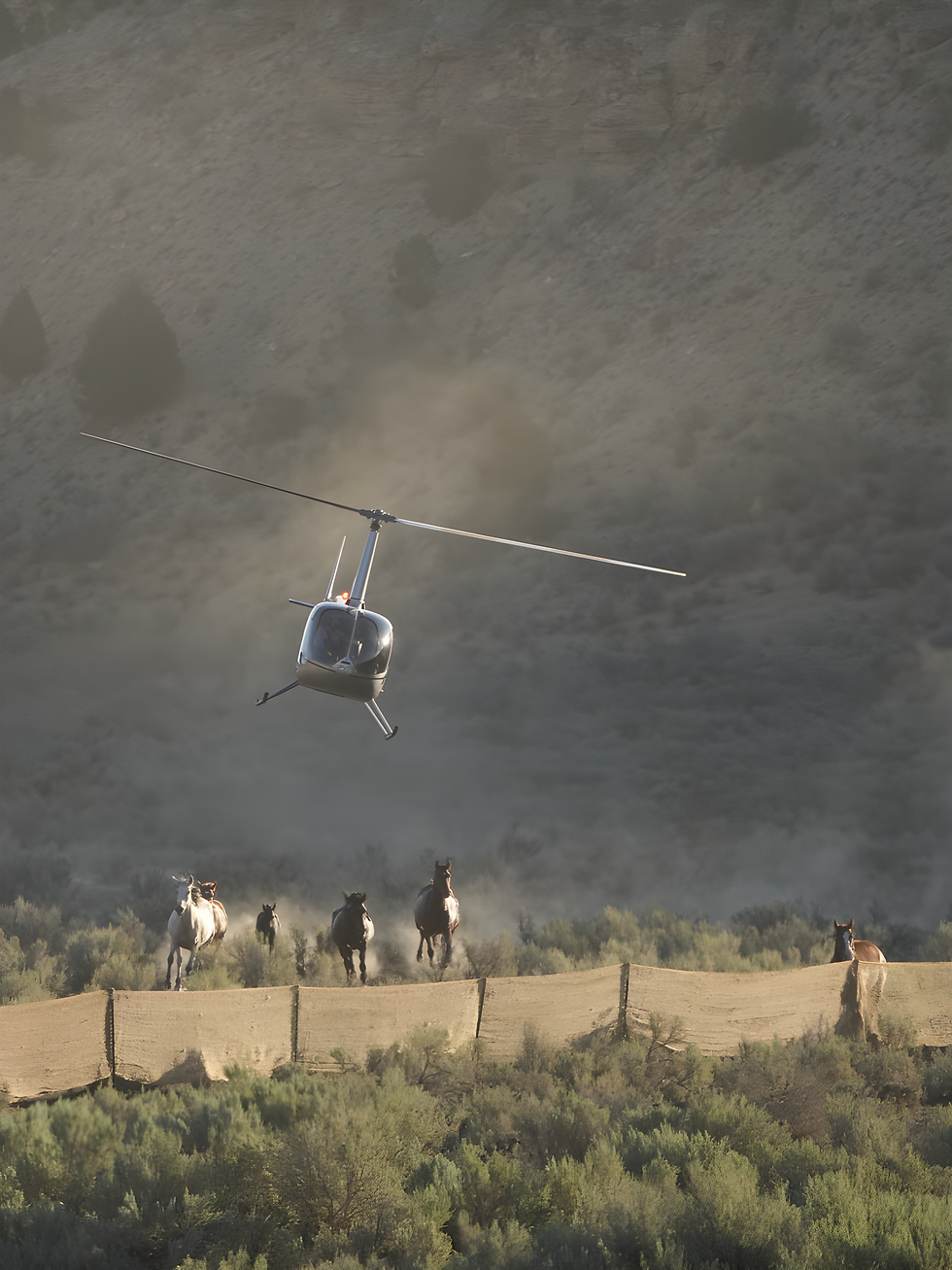
In the American west, thousands of mustangs have been rounded up by helicopters and removed by the U.S. government, in deference to the demands of public lands ranchers.  The system is broken and the government is resistant to working for meaningful change. 


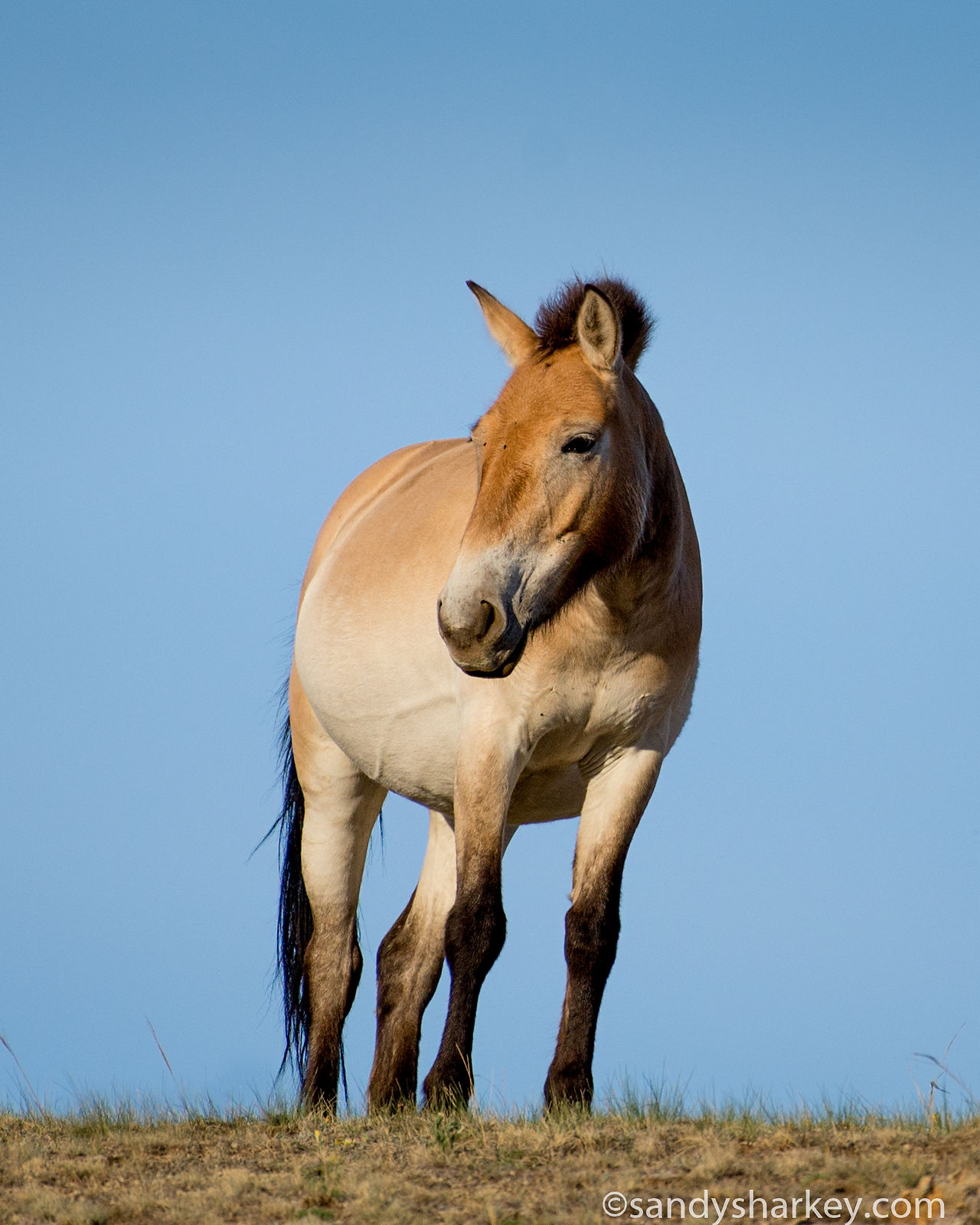
There are over 60,000 wild horses languishing in holding facilities.  In contrast, cattle ranchers in northern Portugal are accepting of the ‘Garrano’ wild horses.  In Chilean Patagonia, wild horses known as ‘Baguales’ are also revered, and have become a draw for adventurers.  In Mongolia, Przewalski’s horses were extinct from the wild, but due to a successful captive breeding program, they once again roam the Mongolian steppes. 


The wild horses of Canada’s remote Sable Island are 100 percent protected, living wild and free with zero interference from mankind.   We have much to learn regarding mankind’s complex relationships with wild horses.

 EquuStyle: How do you believe your images help to shift perceptions and garner support for wild horses? 


Sandy Sharkey: My goal on social media is to have my wild horse images pack a one-two punch.  Hopefully someone is emotionally drawn into a photo, whether it’s a wild horse portrait, a wild horse family band or an action shot-  and they stick around long enough to read the text that goes along with it. 


My posts can include hard-hitting calls to action-  or they can be sweet or humorous.  I try to mix it up as much as possible, because different people respond to different things.


 EquuStyle: What are some of the biggest misconceptions about wild horses that you aim to dispel through your advocacy? 


Sandy Sharkey: Wild horses are sentient, intelligent, family oriented animals that have earned the right to exist peacefully on the landscape.  Those who profit from usage of public lands have created a false narrative about wild horses being a strain on the ecosystem.  Nothing could be further from the truth. 


Unfortunately the wild horse has become the scapegoat for rangeland damage caused by human activities, particularly public lands ranching.  My wild horse advocacy is rooted in dispelling the false narrative wrongly promoted by special interest groups.


 EquuStyle: As a speaker, when addressing audiences, what are the key messages you strive to convey about wild horses? 


Sandy Sharkey: It starts with instilling the knowledge that wild horses actually EXIST.  I shouldn’t be surprised that most people don’t know that wild horses live in wild spaces around the world.  I had no idea myself-  until that eye opening encounter in the Alberta wilderness so many years ago. 

As a speaker, I always begin by assuming that I’m introducing the wonder of wild horses to someone for the first time.  Following that, my role is to convey wild horses’ precarious relationships with humans, and how we can work together to elicit positive change. 

 EquuStyle: How do you engage and inspire individuals who may have little prior knowledge or connection to these animals? 


Sandy Sharkey: I try to engage people in a way that they can relate.  Storytelling is immensely important.  For example, to wild horses, family is everything.  When wild horse families are ripped apart by tragic helicopter roundups, the stallions, mares and foals desperately call out to each other after being indiscriminately packed into livestock trailers and separated forever.  We can’t begin to imagine the heartbreak.  But we can certainly relate to our own family relationships, and reflect on the tragedy of being separated from a loved one.  


A photograph of a "Wyoming Wild Horse Family" by wild horse photographer and advocate Sandy Sharkey as featured in the Fall 2025 issue of EquuStyle Magazine at equustyle.com.
"Wyoming Wild Family"


EquuStyle: Do you have a story about how your images of wild horses or a speaking engagement directly impacted wild horse conservation or policy?


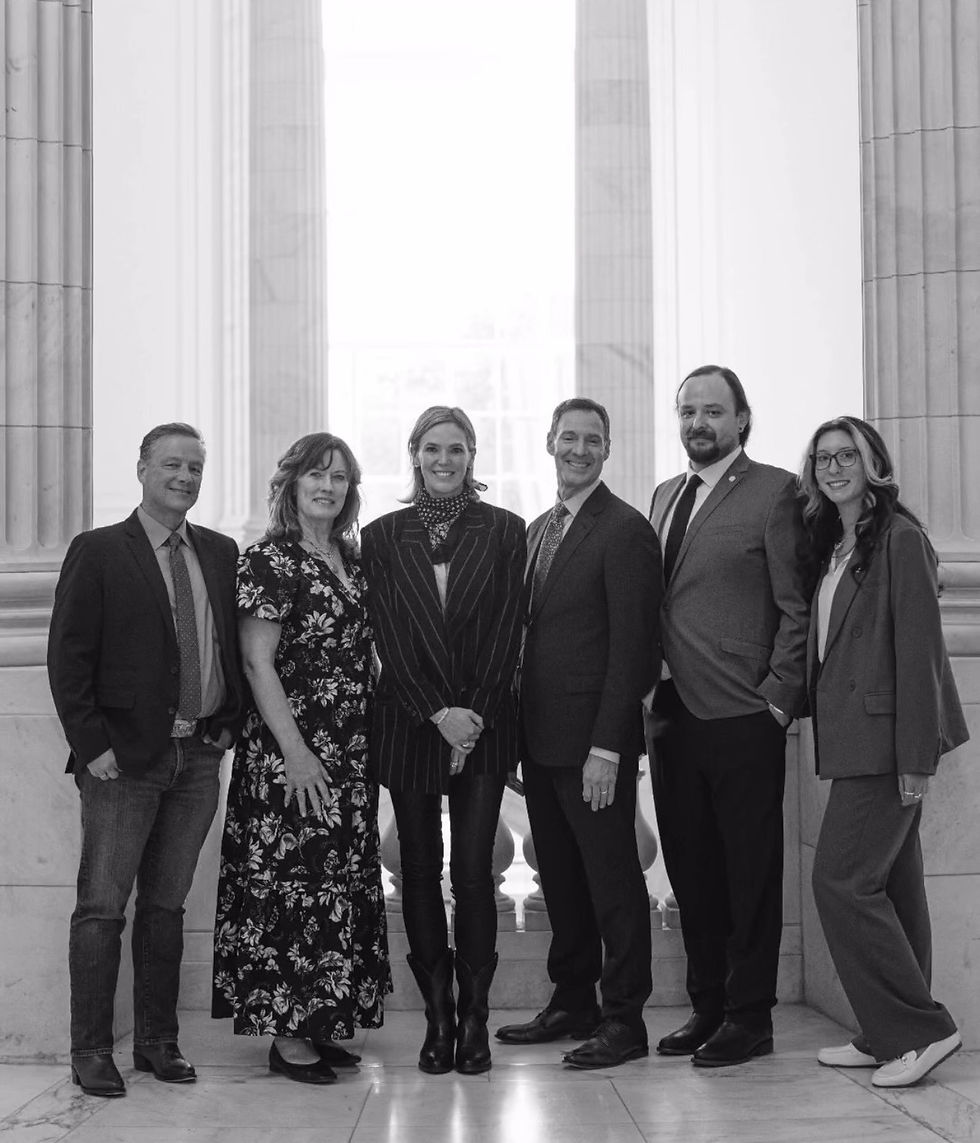
Sandy Sharkey: In 2023, I was honored to speak at the Wild Horse Conference in Washington DC.  My presentation was titled ‘Storytelling for Change’.  Stories connect us all, and it’s the most powerful way to invoke positive change. 


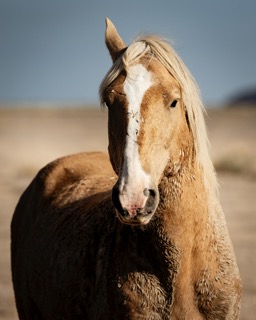
A photograph of an Alberta Wild Stallion known as 'Maverick' by wild horse photographer and advocate Sandy Sharkey as featured in the Fall 2025 issue of EquuStyle Magazine at equustyle.com.
Alberta Wild Stallion known as 'Maverick'

To help save wild horses, it’s important for people to have an emotional connection.  Strong storytelling can move mountains.  I love grassroots campaigns powered by the human heart.  I created the hashtag ‘#ButImJustOnePersonSaid300MillionPeople’ to encourage people to listen to wild horse stories and feel moved to act.  Every single voice is a megaphone.  


EquuStyle: Who are some individuals who have inspired you in your journey as a photographer and advocate? 


Sandy Sharkey: There are far too many to mention, and I would likely miss someone!  Over the years I’ve been fortunate to work with outstanding people who have dedicated their lives to wild horses.  I’ve stood shoulder-to-shoulder on wild horse ranges with advocates that know the herds and the individual horses, from birth to adulthood to death from old age (it’s always a unique gift when a horse lives wild and free for his/her entire life, which speaks volumes about the high odds of being captured long before that day). 


I’m inspired by the photographers, the writers, the organizers of webinars and rallies, the creators of film and music, and everyone who works tirelessly to ensure that wild horses will run free for generations to come.  And to the members of the public who don’t look the other way-  taking the time to make phone calls, write letters and share posts.  In many ways, they are my greatest source of inspiration.   


 EquuStyle: What inspired you to guide photography tours of wild horses on Sable Island? 


Sandy Sharkey: I want the world to know that a place actually exists, where wild horses are 100 percent protected.  Located 180 miles from Halifax Nova Scotia in the Atlantic Ocean, the grassy dunes of Sable Island are home to approximately 500 wild horses.  Here, they are free to form family bands, give birth, watch their foals grow, and share lifelong bonds with each other, with zero interference from mankind.  The horses are managed by mother nature, living an existence in harmony with the sea.  


Being on Sable Island not only feeds our soul, it restores our hope that one day, all wild horses will be as revered and respected as the wild horses that have survived on this crescent-shaped island for over 350 years.  We must never give up hope.


 EquuStyle: For those interested in supporting wild horse protection, what concrete actions would you recommend they take?


Sandy Sharkey: It’s a good idea to follow wild horse organizations that provide excellent background information, along with current news and suggested calls to action. Here are some respected sources:


It’s important to contact your legislators and ask for humane reform regarding the treatment of wild horses.  Elected officials can’t ignore an army of voices. 


And while the fight to save wild horses is in the category of ‘David vs Goliath’, I prefer to look at it this way: WE are not David, WE are Goliath.  Thankfully, those with empathy and compassion greatly outnumber those who profit from public lands and want the wild horses eliminated.  We just need to stay together and raise our voices. 


Remember: #ButI’mJustOnePersonSaid300MillionPeople 


Wild horses in a grassy field, text reads "But I'm just ONE person," "300 MILLION people," "saveourwildhorses.net."
Elected officials can’t ignore an army of voices.


All images Copyright Sandy Sharkey Photography-all rights reserved. Cannot be reproduced for any purpose without permission from Sandy Sharkey and Sandy Sharkey Photography.


Updated: 6 days ago


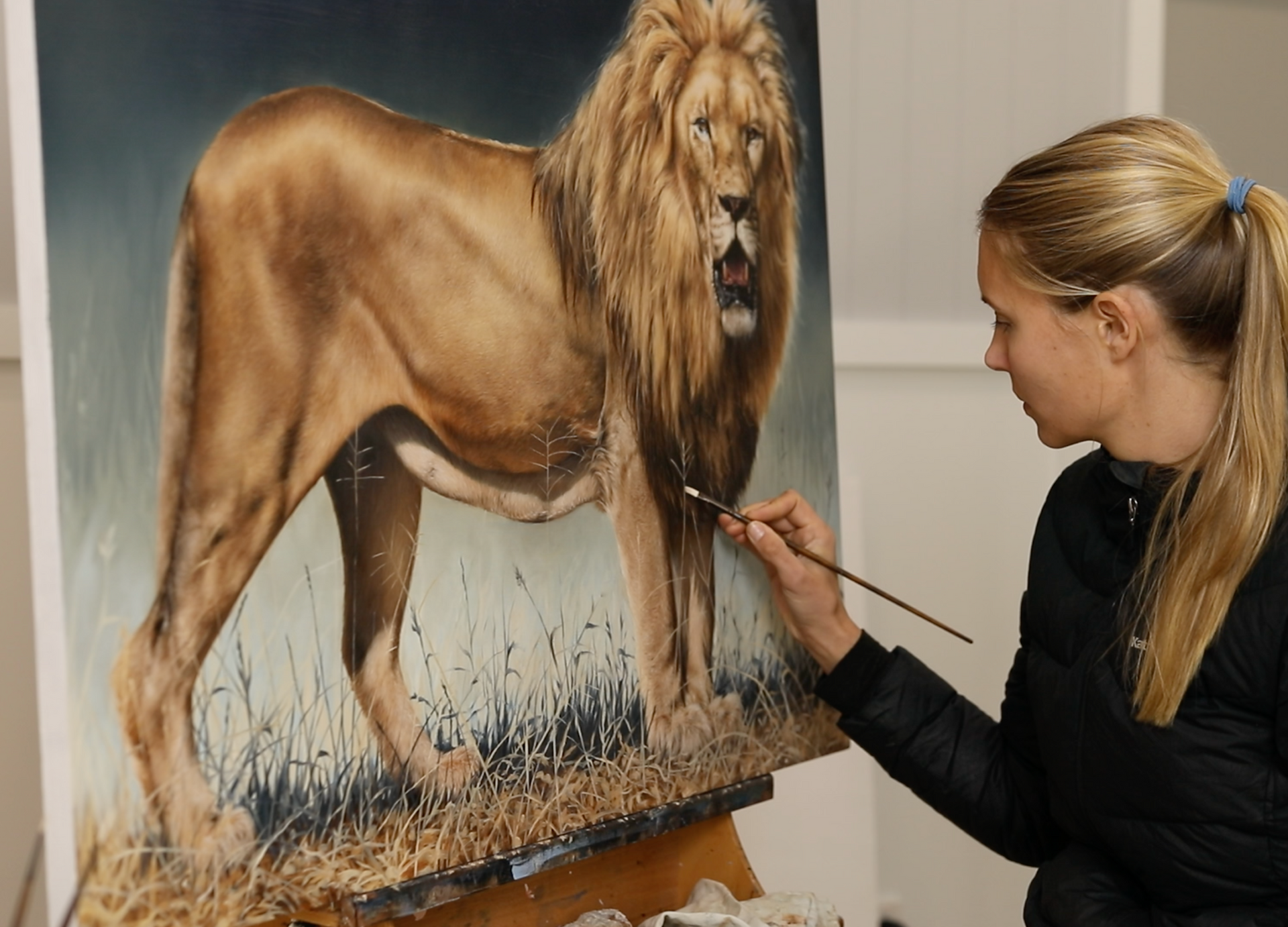
A photograph of Carla Grace painting a large horse portrait titled "Envision" with oil on linen. equustyle.com
Painting "Envision" Oil on Linen 110cm x 130cm

EquuStyle: As an internationally-acclaimed, award-winning, realistic wildlife artist, can you share the story of your artistic journey?


Carla Grace: I have been on an artistic journey my whole life without realising it. I never wanted to become an artist, but once I started studying at university, I quickly realised that I didn’t want to do anything else.


In hindsight, I began my career at 14 when I sold my first painting and won a major school art prize. I spent many years throughout my childhood in different parts of Africa, which is where my passion for wildlife came from. We were living in Zambia when I started to earnestly pursue my skillset in pencil portraits, doing commissions for pocket money from the age of 17. I even had a waiting list at that age, and so figured I would end up doing something with my skills eventually.


I trained myself hard in those early years, often staying home when others were out being social. Even during university, where I studied fine art for two years before dropping out, I was doing art on the side for extra cash. When I dropped out of uni and moved to Australia at age 23, I dedicated myself to setting up my art business and pursing it as a full time career. It then took me 4 years to make that a reality as I slowly transitioned away from a supplementary full-time job, to doing more and more art, until finally it was my full-time career.


EquuStyle: Which piece are you most proud of, and what’s the story behind it?


Carla Grace: I am most proud of a very large scale painting of flamingos I did in 2023, and a large scale white on white painting of a horse entangled in fabric completed at the start of this year. Both of these pieces are significant in that they were made up from many different images which otherwise could not be captured in nature. I took my concepts for both pieces past reality, instead making a slightly fantasy, and slightly surreal composition. This is stronger in the horse painting than it is in the flamingo piece. I am proud to say my flamingos are now being displayed in a Museum in Wisconsin, USA.


EquuStyle: Can you describe your painting process, from the initial idea to the finished piece?


Carla Grace: My painting process begins with an idea. I always see the painting I want to create in my mind before I source imagery to support it. This is why my paintings often require many different images stitched together to make up the whole composition.


Once I have found images, or created images to make up all the different parts of the painting, I will put them together in procreate, on my Ipad. This digital representation of the painting needs to happen in order for me to see the ideas come together fully. Some elements I don’t need to see, but the overall structure needs to be realistic before I start committing it to the painting. Once I am happy with the composition on the iPad, I will begin my sketch on the canvas and let the process go from there. I have begun limiting myself to two passes of paint only. This means that I cram as much detail in each application of paint, but then force myself to walk away after the second one is complete. This means that my paintings are becoming more and more unrefined, and painterly.


I have a tendency to paint to perfection, but don’t want to continue in this way because I want to do what a camera cannot do - and that is create texture and expressive marks with my paint.


EquuStyle: You work with both oil and acrylic, sometimes on the same painting. What effect are you seeking to achieve when using the two mediums together?


Carla Grace: Acrylic is my speed medium, and so I tend to use acrylic for paintings that are required under a deadline, or that are smaller in scale. I will use acrylic for the base tones of the painting which is usually a very quick and basic application of paint to tone and block in sections of the painting. I am then able to begin working with oil paint on top of the acrylic base tones straight away, rather than waiting a full day for the base layers to become touch dry - which is what needs to happen if I used oil paint from the start. Acrylic also tends to be a lot more sharp in finish, where as oil paint has a higher blend ability and therefore I am able to create soft focus details a lot easier than if I did it with acrylic paint. Oil paint is much easier to work with (in my opinion) than acrylic paint for the larger scale paintings, which is why I will favour oil paint for those rather than acrylic.


EquuStyle: How do you approach the use of color in your work?


Carla Grace: I am self taught in all areas, so my colour theory is a little lacking. This makes me feel like I approach my use of colour with a lot of guesswork rather than accurate theory and understanding. Because of this, I have made colour theory my focus to understand and use as an asset to my process. Despite this, my colours always tend to be a little more neutral rather than saturated, leaning closer to what is accurate in nature.


EquuStyle: How do you approach the use of light and shadow in your paintings?


Light and shadow is everything in my work. Contrast and steep representation of value is key to my work. Just in the change between the values I am able to alter the colours to the point where they become vibrant - despite being over all very neutral. Contrast is one of my favourite ways to convey intensity and drama. Even the lack of contrast, when used correctly such as in my white on white painting of a horse, can convey something very powerful. So I approach it with care, and ensure that I get that part of each painting absolutely perfect.


Professional, realistic wildlife artist, Carla Grace, shares her talent and techniques with artists through online tutorials. carlagraceart.com EquuStyle Art & Travel Magazine
Full Horse Portrait in oil paint tutorial

EquuStyle: You offer several hyper-detailed tutorials in oil, acrylic, or both paints on your website. Why are you motivated to share your creative process with artists around the world?


Carla Grace: When I began my career in earnest, I chose wildlife not only because of my connection to the animals I grew up with in Africa, but because I noticed a severe lack of wildlife artists represented in the timeline of art history.


There seems to be a huge gap between the artists who paint wildlife, and artists who paint everything else, and that could be due to many different factors such as vision, conceptual power and overall artist value, but I saw a lot of good artists making good wildlife paintings - not masterful ones. A lot of this is because no one really teaches wildlife artists how to become better. There isn’t very little in the way of intermediate and advanced courses that teach artists how to paint with more skill and run a better practice. So I decided that when I got to the stage in my career that other artists were asking me to teach them, I would do just that. Since I have a lot of content on my platform, I have chosen to create a subscription based access offer, rather than sell tutorial individually - this makes it much more accessible to more artists.


Ultimately, It is my hope that wildlife art as a whole will get better, and start to make an impact in the timeline of art history. Hopefully I can start that process by showing other artists how to level up their game and become masters in their craft.


EquuStyle: What inspired you to create the tutorials “Full Horse Portrait in Oil Paint” and a “Horse Portrait Acrylic Mini Painting”?


Carla Grace: All of my tutorials on my platform are requested by the students who learn through me. Somewhere along the way artists have requested a horse tutorial and so I have created that for them. There is a lot more available in my exclusive content sections for those who are subscribed to my platform on a monthly basis, in addition to the individual tutorials. Horses can also be really hard to paint, especially if you have no idea where to start and how to achieve the simple effects of short hair and the long mane. Seeing how someone else dose it step by step is incredibly helpful.


EquuStyle: How do you balance your artistic creativity with the business side of being an artist?


This is a really challenging aspect of the practice. The business side is a full time job, and the artist side is also a full time job. Being in control of both aspects is almost impossible. It gets to a point where you need to delegate some jobs because otherwise you suddenly realise its been days since you last painted.


I am currently building my dream studio, and the balance between building it all myself, painting and running my business is full on. I am lucky that I love the business side of being an artist, and that I have a husband who now works with me. He helps me with alot of the admin and running of my online tutorial platform.


EquuStyle: Can you discuss a time when creating art helped you through a difficult period in your life?


Carla Grace: There have been times through out my life where being an artist has been the core of what has made things difficult. The insecurity of income and lack of guarantee in sales can cause significant stress. However, even though the industry can be hard to navigate sometimes, I find myself overwhelmingly grateful that I am able to do this full time.


Knowing that I can do what I love every day, and that collectors all over the world love my work get me through every rough patch. Since it is my daily job, I don’t usually make art for the fun of it anymore, so often I have to take a break from the studio when life gets too stressful, such as when my father in law passed away. I didn’t turn to art to work through the grief, even though many artists naturally would do that. This is something that has become a consistent theme, the more art I do for work, the less I do of it for fun. I have become ok with this over the years, and instead will focus on painting with my kids for the fun of it, teaching them and seeing the joy it gives them. I have found this to be more therapeutic and fulfilling during the difficult periods.


A photograph of Carla Grace Award-winning wildlife artist. EquuStyle Art & Travel Magazine equustyle.com carlagrace.com
Carla Grace Award-winning Wildlife Artist

EquuStyle: Given many of the environmental and wildlife crises around the world, what role do you think your art has in society?


Carla Grace: I want people to feel the animal through my work and experience creatures like they wouldn’t otherwise be able to. I want each painting to create a closeness between the viewer and the animal, and to feel like it could draw breath at any moment.


There is a process of immortalisation when something is committed to paint. I feel like it is incredibly respectful to recreate anything with care and true to life details.


As the artist, I am looking at the animals with much more intensity that I ever could in passing. Im taking in every detail and every imperfection that makes them the way they are. It’s more than what can be achieved in a photo. A painting takes a 2 dimensional surface and turns it into something that requires the very best of both the creator and her subject to succeed.


EquuStyle: How do you hope your art will impact viewers on a deeper level?


Carla Grace: I hope that my work inspires awe, that it takes the viewers breath away. From my classic range of wildlife portraiture, I hope that the viewer feels a kinship with the animal. This connection comes from the pure beauty of the animal itself and my technical ability to create it on the canvas.


My signature range is focused on creating a narrative, and I add elements that are intended to provoke a response based on the viewers individual understanding, for example, “Skin to Skin” has been known to provoke both admiration and disgust. Both responses to the painting are a success because it is the reasons behind the response that I am most interested in. If a painting can provoke an emotional response, while still being stunning in its own right then I have succeeded as an artist.


Subscribe to get exclusive updates

Subscribe today and receive a quarterly email to inform you about the upcoming

digital issue of EquuStyle Art & Advocacy Magazine.

Share via

© Copyright Protected

EquuStyle Magazine ©2023-2025 EquuStyle.com All rights reserved.

Privacy Policy

bottom of page