top of page

Magazine Articles

A wild horse does not pose for the camera. It decides whether to allow a human presence at all.


That quiet truth sits at the center of Kimerlee Curyl’s work. Her images of American mustangs are not staged portraits or romantic props against a western sky. They are records of living animals, shaped by family bonds, weather, fear, curiosity, and hard-won freedom on public lands.


Curyl has built a reputation as both an artist and an advocate because she treats wild horses as individuals. Her photographs invite people to look longer, past the familiar symbol of the mustang, and toward the real animals affected by policy decisions, land use conflicts, and public misunderstanding.


Her mission is simple to say and difficult to carry out: help protect wild mustangs by making them visible, valued, and impossible to dismiss.


Two wild horses nuzzle together in a monochrome outdoor portrait against a bright sky.  Image by award-winning photographer and wild horse advocate Kimerlee Curyl.
Wild horses are most powerful when seen as part of their home range.

A camera became a bridge to the wild horse world


EquuStyle: What initially drew you to wild horses and inspired you to focus your photography on them?


Kimerlee Curyl: After wanting a horse my entire life and finally having one as an adult, I was

working with a trainer in what was coined “natural horsemanship.” It was often mentioned that “in the wild,” a horse would behave or respond a certain way. And while I wasn’t necessarily questioning that, I felt this pull to see them for myself—to be immersed in their world, watch their behaviors, and draw upon my own instincts and intuitions about them.


And from that very first visit, my heart was on fire. It lit me up like nothing in my life had before. I didn't know exactly what was happening yet, but I knew my life had just changed. Everything I had been doing was about to take a 180.


Why wild mustangs need more than admiration


EquuStyle: How has your understanding of wild horses evolved over the two decades of your work?


Kimerlee Curyl: Wild horses are pure, raw, and simple when it comes down to it. Their basic needs are freedom, family, and forage. As a horsewoman, this understanding has completely influenced my interactions, my thoughts, and my approach to being with horses.


Now, mind you, it’s been 22 years, so nothing was ever learned overnight. But one of the things I’ve come to understand is that while some horses can be what we would call dominant, dominance is never what they are looking for. Sadly, much of the horse world still follows this outdated theory. Horses are looking for a leader—someone their highly intelligent and incredibly sensitive nervous systems instinctively trust and will follow. Horses feel the difference between the two before any physical interaction has taken place. It is an intuition I am completely in awe of.


Their connection to the grounded land beneath them, and to the energy and emotional elements of the air around them, is so deeply intertwined with who they are. Mother Nature could not have composed a better symphony, in my opinion.


Two wild horses nuzzle close together in a sepia-toned close-up, one dark-maned and one pale. Monochromatic image by award-winning photographer and wild horse advocate Kimerlee Curyl.
Family bonds are central to how wild horse bands survive.

Wild horse photography that makes an impact


EquuStyle: What techniques do you use to capture the emotion and spirit of wild horses in your photography?


Kimerlee Curyl: Patience. Something I am not innately gifted with. It has certainly been one of the many gifts, and lessons they have given me.


You simply cannot contrive a moment to happen in the wild, especially with these highly sensitive creatures. There is no hiding in the bushes and waiting to get the shot. You really need to feel, to know and understand their behavior. These creatures can feel a fly land on their back; sneaking around them makes them uneasy and tense. They know you are there, and that won’t be a shot most collectors are looking for.


I truly believe you have to know your subject, not just love them. Horses are easy to love and admire for their glorious beauty, strength, and grace, but knowing them takes a lot more than a few hours behind a camera with them while adjusting your f-stops.


I have loved and been obsessed with horses my entire life, but in the summer of 2003, that love I had for them shifted. They took me out of a dark place and everything became completely about them. And to this day, I’m still learning, watching, and listening to the beautifully complex ways of the horse. They are so completely fascinating.


For me, that is where the real magic happens—not in trying to create a moment, but in being present enough, patient enough, and knowledgeable enough to recognize it when—or right before—it unfolds.


The mustang as an individual, not just an icon


EquuStyle: How do you balance artistic expression with the need for advocacy in your work?


Kimerlee Curyl: For me, they have never really been separate, the two merged so seamlessly.


I fell in love with wild horses long before I fully understood the complexities of what was happening to them. In the beginning, I simply wanted to be there—to witness them, to understand them, and to photograph what I was seeing and feeling. But the more time I spent with them, the more I learned what was happening to them, I realized that loving something also comes with a responsibility to protect it.


I’ve always believed that art has the ability to reach people in a way that facts and statistics cannot. “Art has a voice” is a phrase that came to me very early in my career, and I’ve carried it with me ever since. A photograph can impact you in an instant. It makes you feel something. And feeling something is often the beginning of caring—and when you care, you are more likely to take action.


I don't want my work to feel like a lecture, or for every photograph to carry a heavy message. Over the years, my images have naturally become another form of advocacy. I realized I had the ability to bring these horses into people's homes and lives in a way that could create a deeper connection to them. For me, that connection is where inspiring change happens and the real power of art lies.


My goal has never been to simply show people what wild horses look like. It is to give them a glimpse of what they feel like—their relationships, their individuality, their freedom, their tenderness, their raw power. If I can create that connection through my work, then I have an opportunity to give them a voice beyond the boundaries of the wild places where I photograph them.


Advocacy, to me, isn't about making every photograph a statement. The most powerful thing I can do is simply let horses be seen for who they are. Beauty opens the door. Connection keeps it open. And once someone cares, conversations are sparked, people want to know more, and ultimately, they in turn help protect what they have come to love. At least that is my hope.


Close-up view of a wild mustang with wind moving through its mane. Monochromatic image by award-winning photographer and wild horse advocate Kimerlee Curyl.
A single horse can carry the whole story of wildness and survival.

Protecting wild horses is a complicated issue


EquuStyle: What are the biggest challenges facing wild horses today? And, how can individuals help?


Kimerlee Curyl: The biggest challenge wild horses have faced—and continue to face—is human greed competing with their right to remain on the public lands they call home. The details run deep, long, and, frankly, are exhausting.


Wild horses are removed from public lands for a variety of reasons, including livestock grazing, oil and gas development, and other competing uses of their habitat. Much of the conflict comes down to how we choose to manage and prioritize our public lands. Federal grazing permits allow livestock to use public lands at rates far below what comparable private grazing would cost, while American taxpayers subsidize much of the management and infrastructure associated with these uses.


And this is where the wild horse issue becomes much bigger than wild horses. It is about who has access to our public lands, who benefits from them, and whose interests are being prioritized. Wild horses are often portrayed as the problem, when in reality they are competing for space on lands that belong to all of us.


That is, of course, a very condensed explanation of an incredibly complicated issue and it is frustrating for me to have to repeat the same concerns after more than two decades of watching it unfold.


The good news is that awareness has grown tremendously since I first became involved. There are more organizations doing important work, more people asking questions, and more resources available for individuals who want to understand the issue and use their voices.


And that is where I believe individuals can make a difference. Educate yourself. Follow organizations doing credible work on the ground. Contact your elected representatives and the agencies responsible for managing these lands. Submit public comments when decisions affecting wild horses are open for input. Support the organizations fighting for humane, science-based management.


I hear it all the time: “But I do call. I do write. I do submit comments, and nothing happens.” And I understand that frustration. But I also want people to understand that exhaustion is part of the problem. Special interests and the federal government can rely on people becoming overwhelmed, frustrated, and eventually silent. Please don't mistake the lack of immediate results for a lack of impact.


I believe individuals can make a difference. Educate yourself.

I have watched awareness of this issue grow exponentially in recent years. That did not happen because of one phone call or one letter. It happened because people kept speaking. It happened through voices, images, videos, education, organizations, and, most importantly, people caring enough to keep showing up.


You don't have to be an expert, and you don't have to do everything. But you can learn, you can speak up, and you can keep showing up. Every voice adds to the collective one. And I believe that collective voice is exactly what has brought this issue into the public consciousness in a way I could never have imagined when I first began this work.


EquuStyle: How do you engage your audience in the conversation about wild horse conservation?


I’m not going to pretend I’m particularly great at social media. I love engaging with people about the images—through talking about a moment, a story, or why I feel something is worthy of becoming a limited edition. Some images are created very intentionally as awareness pieces, while others are created simply as fine art. There is a story and a reason behind both, and I love having the opportunity to share that.


Honestly, this translates so much better in-person. At a speaking event, a gallery show, or simply standing beside an image with someone, the conversation unfolds naturally. Someone may walk up because they are drawn to the beauty of an image, and five minutes later we're talking about the horse, the herd, their relationships, or what is happening on the public lands where I photographed them. Those are my favorite conversations because they are organic.


Social media, of course, comes with a different set of challenges—the constant competition for attention, the algorithms, and, inevitably, the trolling. But even that doesn't bother me as much as it probably should. I don't mind someone who sees the issue differently expressing their opinion, as long as we remember that opinions are just that: opinions. There is a tremendous amount of science and research supporting the importance of wildlife, healthy ecosystems, and protecting wild places. And, what that means for our futures.


Wild mustang stallions engage in a dramatic sparring match against a backdrop of rugged mountains and moody skies, capturing the raw spirit of the Onaqui wilderness. Monochromatic image by award-winning photographer and wild horse advocate Kimerlee Curyl.
Wild mustang stallions engage in a dramatic sparring match against a backdrop of rugged mountains and moody skies, capturing the raw spirit of the Onaqui wilderness.

What does frustrate me is that we continually seem to have to justify the existence of wild things and wild places in the first place. Sometimes it feels like we're trying to justify the need for clean air and clean water. These are not luxuries. They are the foundation of life.


So, I suppose the way I engage people is less about trying to convince them of something and more about inviting them to look closer. Look at the horse. Look at the relationships. Look at the landscape. Ask questions. Become curious. Because once you really see something—and begin to care about it—the conversation becomes much more meaningful.


What Curyl’s work teaches about responsible attention


EquuStyle: What role do you believe art plays in wildlife advocacy and conservation efforts?


Kimerlee Curyl: I think art can do something that facts and statistics alone sometimes cannot: it can create an emotional connection. Science can tell us what is happening and why it matters, but art can make us stop long enough to care about it.


Wildlife conservation needs scientists, biologists, advocates, policymakers, and people willing to do the hard work of protecting these places and animals. But I also believe it needs storytellers. We need people who can translate what is happening in the natural world into something others can see, feel, and understand.


That is where I believe art has an important role. A photograph can cross boundaries that words sometimes cannot. You don't have to know anything about wild horses to be moved by the way a mare looks at her foal, the relationship between members of a family band, or the freedom in a horse running across a landscape. You can feel the connection before you ever know the facts.


Once you care, you become inspired to learn. You want to know where that horse lives, what is happening to the landscape, or why that mustang needs protection. In that way, art has the potential to be the beginning of the conversation for conservation.


Every piece of art doesn’t need to carry a political or conservation message. Sometimes its greatest contribution is simply reminding us what is beautiful, what is wild, and what we stand to lose if we don't protect it.


For me, that is the power of art in conservation. It doesn't replace science or advocacy—it helps give them a human connection. It gives the issue a face, a feeling, and ultimately a voice.


Low-angle view of a wild mustang  family crossing dry earth near sagebrush in Utah. Monochromatic image by award-winning photographer and wild horse advocate Kimerlee Curyl.
The future of wild horses is tied to the ground they still roam.

A mission measured in visibility and protection


EquuStyle: How do you envision the future of wild horses in America, and what steps do you think are necessary to ensure their protection?


Kimerlee Curyl: This question is difficult for me because, honestly, I am incredibly worried about the future of wild horses and wild places in America. After more than two decades of photographing them, witnessing their lives, and advocating for them, there are things happening right now that are deeply concerning. Regulations and policies are being changed, healthy horses are being removed from the range in record numbers, and truckloads of horses shipped to slaughter. Special interest groups are incredibly powerful and working very hard to shape the

future of our public lands and the animals who depend upon them.


We are living in a time when wildness does not always appear to be valued by our federal government. But I don't believe that means the American people don't value it.


In fact, I believe quite the opposite. I believe there are still so many of us who are willing to step away from our screens, look up, and remember what it feels like to be connected to something bigger than ourselves. To inhale the beauty of a wild landscape. To stand in the presence of a wild horse. To understand that these places and animals have an intrinsic value that doesn't depend on what they can produce, what they are worth financially, or what we can take from them.


Wild horse grazing in a grassy field, close-up black-and-white portrait with flowing mane and calm mood. Monochromatic image by award-winning photographer and wild horse advocate Kimerlee Curyl.
Majestic wild horse grazing peacefully, symbolizing the enduring spirit of America's untamed landscapes.

The future of wild horses cannot rest on a handful of advocates or organizations. It also involves a much larger public voice, people who are willing to learn, speak up, stay engaged, and refuse to become exhausted by the enormity of the fight.


And despite how worried I am, we must remain hopeful. For their sake.


I have witnessed too much change over the past 22 years to believe that our voices don't matter. Awareness of wild horse issues has grown tremendously. More people know their names, their stories, and what is happening to them. That awareness exists because people cared enough to speak, to photograph, to write, to educate, to organize, and to keep showing up.


The road ahead is not envisioned as an easy one.


But refusing to envision wild horses not still running across open landscapes, families still together, and future generations having the extraordinary privilege of encountering something truly wild is not an option.


That is the future I will continue to work toward. And as long as there are people who still care, I believe it is possible.


Kimerlee Curyl serves as an inkind partner for The Wild Beauty Foundation.


Raise your voice to protect and preserve America's wild horses and burros today! #TheLostHorsses

EquuStyle Magazine is grateful for Kimerlee Curyl's thoughtful and informative interview and for sharing here exquisite photographs.


All images Copyright Kimerlee Curyl Photography-all rights reserved. Cannot be reproduced for any purpose without permission from Kimerlee Curyl Photography.


Writer: Patricia Miller
Patricia Miller
Sep 30
6 min read


America’s wild horses and burros do not need another cycle of crisis. They need a modern management system, one that brings science, welfare, culture and collaboration together to keep them wild.


This summer, above the limestone and gold of Rockefeller Center, wild horses ran through the heart of Manhattan.


Woman in denim holds a blue-orange scarf in a grassy mountain meadow with horses grazing in the background.
Designer Chloé Gosselin's hand-painted flag titled "Freedom in the Wild Light"

They appeared not in flesh, but in silk, a herd moving beneath a deep Nevada sky on a flag hand-painted by designer Chloé Gosselin. Titled Freedom in the Wild Light, the work was created for Vogue and the Council of Fashion Designers of America’s United Flags of Fashion, presented with

America250. The horses were drawn from a photograph Gosselin made while visiting Nevada’s Fish Springs herd; the lead horse was inspired by her own horse, Milo. Beadwork created by the family of Ronda Kauk, a member of the Utu Utu Gwaitu Paiute Tribe and a guardian of the Mono Lake horses, replaced the familiar state star with an Indigenous North Star, a symbol of guidance and hope.


Nearby, designer, equestrian and American Wild Horse Conservation Board Member Jenni Kayne offered her own meditation on Nevada: shifting light, mountains, warmth and the quiet beauty of the Western landscape. Together, these works placed the wildness of the West inside one of America’s most visible cultural spaces.


The image was beautiful but it also raised an uncomfortable question:What does it mean to celebrate the wild horse as an emblem of freedom while continuing to manage these animals through a system built primarily around removing that freedom?


The American promise for wild horses and burros


In 1971, Congress unanimously passed the Wild Free-Roaming Horses and Burros Act, declaring these animals “living symbols of the historic and pioneer spirit of the West.” The law entrusted the Bureau of Land Management and the U.S. Forest Service with their protection on designated public lands.


More than half a century later, that promise remains unfinished.

Two wild horses, one white and one brown, stand in a metal trailer behind gray bars after being rounded up by the Bureau of Land Management.
The Wild Free-Roaming Horses and Burros Act of 1971 specifically states "It is the policy of Congress that wild free-roaming horses and burros shall be protected from capture, branding, harassment, or death; and to accomplish this they are to be considered in the area where presently found, as an integral part of the natural system of the public lands."

The BLM estimates that 85,466 wild horses and burros lived on the public lands it manages as of March 2026. They occupy a fraction of the agency’s wider estate, approximately 25.5 million acres across ten Western states, lands also asked to accommodate livestock grazing, energy and mineral development, recreation, wildlife habitat and increasingly severe drought and wildfire.


Managing populations is essential but how do we do it while keeping horses on the range and still protecting the lands they need to thrive?


The dominant federal response has become a costly, ineffective loop: gather, remove and hold.

As of May 2026, 58,025 federally protected wild horses and burros were living in off-range corrals and pastures. In fiscal year 2024, the federal government spent $101 million on off-range holding, 66 percent of total Wild Horse and Burro Program expenditures. At that pace, the country is maintaining a billion-dollar-per-decade holding system while leaving too little funding and capacity for the on-range work that could reduce the need for removals.


  • Wild horses in a holding pen with no room to move. Click on photo to learn how to help now.
    Wild horses in a holding pen with no room to move. Click on photo to learn how to help now.
  • Distressed wild stallions sparring after BLM roundup. Click on image to learn how you can help now.
    Distressed wild stallions sparring after BLM roundup. Click on image to learn how you can help now.
  • America's wild horses deserve freedom, not captivity or slaughter. Click on photo to help today.
    America's wild horses deserve freedom, not captivity or slaughter. Click on photo to help today.

All images © Darlene Smith for American Wild Horse Conservation


This is not the wildlife-management system most Americans imagine when they hear the word protected. Nor is it fiscally sustainable.


The answer, however, is not to abandon management. It is to modernize it.


From crisis response to management


For years, the public conversation has been framed as a choice between two extremes: remove horses or do nothing. It is a false choice.


A modern model begins before roundups are scheduled and long before helicopters take off.  It combines accurate and transparent population data, fertility control, habitat and water stewardship, genetic monitoring, migration and movement planning, public safety measures, and accountable, multi-year plans tailored to each herd and landscape. When removal is truly necessary, it should be limited, humane and paired with responsible placement—not treated as the first or only tool.


We have the tools but we have not had the will to implement them at a scale large enough to make a meaningful difference.


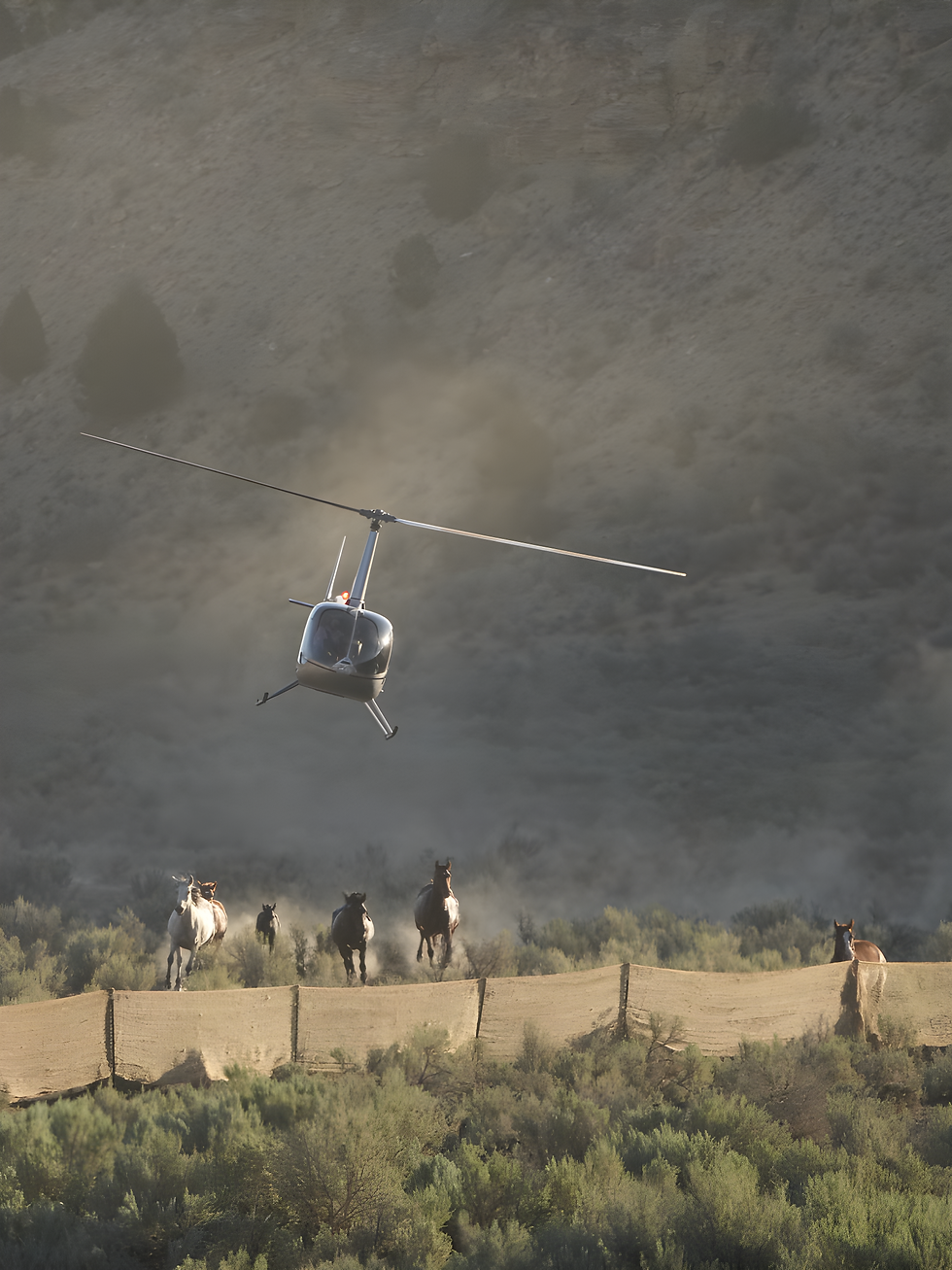
Helicopter flies low over a dusty hillside, chasing several wild horses into a trap behind a tan fence in a rugged pasture.
Wild horses being chased into a trap during a helicopter roundup. © Brian Clopp for AWHC

In Nevada’s Virginia Range, American Wild Horse Conservation operates the largest humane fertility-control program of its kind. The work is far more than delivering a vaccine by dart. It is a living management system: identifying individual horses, tracking mares and foals, training field teams, maintaining data, earning land access and returning season after season.


The results are measurable. From January through June 2026, the program documented 109 foals, compared with 494 during the same period in 2020, a 78 percent reduction. Across nearly 300,000 acres, the work has involved approximately 3,400 identified horses and collaboration among the State of Nevada, trained volunteers, landowners, local communities, conservation partners and businesses.


This is science at scale. It is also proof of something larger: humane management works when it is treated not as a pilot on the margins, but as infrastructure.


No single fertility-control method will fit every herd. Remote darting is practical where horses can be individually identified and approached safely; in more remote landscapes, treatment may need to occur during carefully planned gathers followed by release. Some places require water improvements, fencing changes, roadway mitigation or different technology altogether. Good management is adaptive by nature.


What matters is that the objective changes from removing the greatest possible number of animals to maintaining healthy, genetically viable herds on the range wherever possible.


Conservation as a shared practice


The future will not be built by government alone, or by advocacy alone.


It will require the BLM and Forest Service working alongside scientists, tribal communities, local advocates, ranchers, conservationists and the many people who share multiple-use public lands. It will require private partners willing to contribute technology, data systems, access, philanthropy and operational expertise. It will require lawmakers to fund prevention with the same seriousness that taxpayers are currently funding holding.


And it will require bridge builders.


Bridge building does not mean surrendering conviction. It means beginning with the shared truths that healthy horses need healthy land; taxpayers deserve an effective system; rural communities deserve to be heard; and federally protected animals deserve management worthy of that status. It means replacing a cycle of litigation, emergency and distrust with measurable objectives, transparent reporting and local partnerships that endure beyond a single administration or roundup schedule.


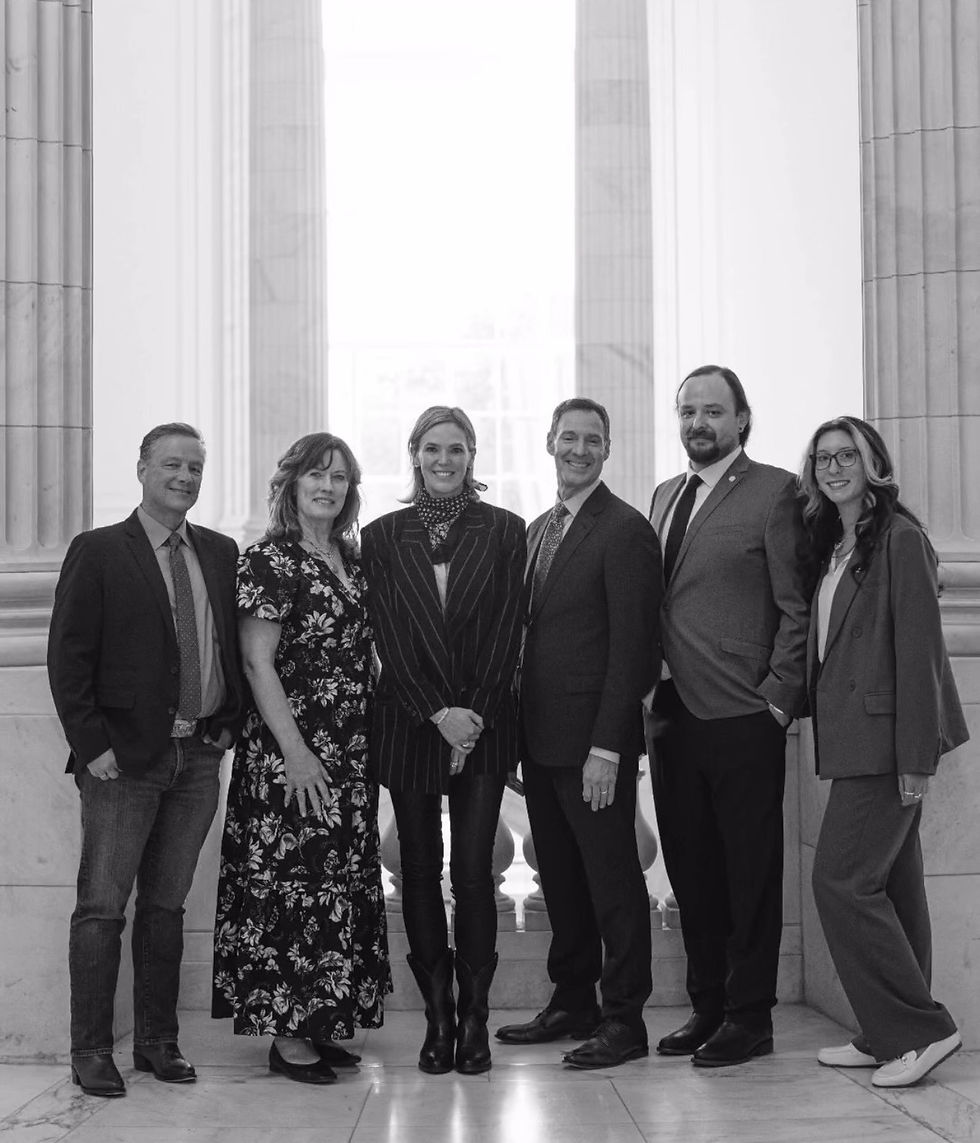
Six smiling members of the American Wild Horse Conservation team pose on Capitol Hill between tall columns in a black-and-white formal group portrait.
American Wild Horse Conservation Team on Capitol Hill working to protect and preserve America's wild horses and burros

At American Wild Horse Conservation, we have been expanding this work through on-range programs and partnerships from Nevada’s Virginia Range and Fish Springs to the  developed fertility-control partnership for Utah’s Cedar Mountain herd now run by Utah based organizations. We are bringing field evidence into conversations with agencies and Congress, and asking for appropriations that can move humane fertility control from exception to standard practice.


We are also showing up through art, fashion, film and photography because policy alone cannot carry the whole story.


Photography has always been essential to wild-horse protection. It reveals family bands, courtship, grief, play and survival, social lives that disappear when horses become numbers in a federal spreadsheet. It also serves as witness during removals, making animal welfare visible to the public. Film can bring the range into rooms far from the West. Art can cross an ideological divide before an argument ever begins. Fashion can place a wild horse over Rockefeller Center and invite millions of people to ask what freedom looks like in practice.


These are not decorative additions to conservation. They are ways of restoring relationships.

We protect what we know. We fight for what we have learned to love. And sometimes beauty is the first door through which understanding enters.


What we choose to leave wild


Wild horses and burros are not separate from the biodiversity of the West. They live within intricate landscapes of sagebrush, native grasses, migration corridors, springs, birds and other wildlife. Their future depends on managing the whole, not reducing nature to competing columns on a balance sheet.


As America marks 250 years, we are being asked to consider not only what we inherited, but what we intend to pass forward.

The wild horse helped carry this country into being. The burro carried people, water and possibility through some of its most unforgiving landscapes. Today, they ask something different of us: not labor, but leadership.


We know the old system is broken. We know the cost of continuing it. And we know a better model already exists in the quiet, disciplined work of counting, treating, monitoring and returning; in public and private partners sharing responsibility; in science made operational; and in culture reminding us why any of it matters.


The next chapter of wild horse conservation will not be written by choosing between compassion and management. It will be written by insisting upon both.


We built this country with horses. The least we can do is leave them a horizon.


Help us keep this momentum going and protect even more wild horses and burros. Donate today: https://bit.ly/44INYlE

EquuStyle Magazine thanks Patricia Miller, Executive Director, American Wild Horse Conservation for writing an excellent article and sharing photographs. Our sincere thanks to every supporter of AWHC who advocates for the protection and preservation of America's wild horses and burros on our public lands.


All images Copyright American Wild Horse Conservation -all rights reserved. Cannot be reproduced for any purpose without permission from the photographer or American Wild Horse Conservation.


The cover image of a wild stallion running free on the cover of Chad Hanson's book "The Wild Horse Effect: Awe, Well-Being, and the Transformative Power of Nature”
"The Wild Horse Effect: Awe, Well-Being, and the Transformative Power of Nature" is available for presale now and on sale March 11, 2025

EquuStyle: Who inspired you to become a photographer?


Chad Hanson: My grandfather loved cameras. I grew up watching him tinker with lenses and light meters. By the time I went off to college, it felt natural to think of the world as a subject, and to see our public land as art. I discovered “visual sociology” in school, an approach to the study of culture that uses photographs. Using photos for academic purposes put me in touch with the depression-era work of Walker Evans and Dorothea Lange. To this day, as a teacher, I still use their images in my courses. With regard to mustangs, though, it was the work of Kimerlee Curyl that inspired me early on. As far as I can tell, she has the best timing in the business.


During the workshops that I teach, on writing and photography, I often urge students to “find their heroes.” I believe there’s value in identifying, cultivating, and curating your influences. Still, at some level, it’s the face of nature that serves as the source of my inspiration. Wild horses stare at you from behind nature’s most charismatic faces, and I find the places where they live compelling too.


EquuStyle: A central theme in your book is "awe." Could you explain what "awe" means to you and how people can benefit from experiencing it?


A wild mustang stallion stands on grassy plains under a cloudy sky, looking strong and serene. Distant mountains are visible in the background. Image is from Chad Hanson's book "The Wild Horse Effect: Awe, Well-Being, and the Transformative Power of Nature”.
A wild stallion on the high plains of Wyoming

Chad Hanson: When I feel awe I am utterly struck by what’s in front of me. I experience a feeling of absorption in the moment. I actually become so absorbed that it’s hard to keep track of the moments as they slide from the future into the present. I enter a time-outside-of-time. I’m also set upon by the impression that I am a small part of a greater whole, and when I shift back to my normal mode of being, it’s with a heightened sense of gratitude.


My experience of awe is pretty common it turns out, and today, in places like the Greater Good Science Center, scholars like Dacher Keltner use modern techniques for measuring the chemical changes that occur when we feel blown-away. Levels of cortisol, the body’s stress hormone, tend to free-fall. Serotonin levels increase, giving rise to a sense of satisfaction. Most important to me, when we feel awed, the body releases oxytocin, a hormone that increases what we call pro-social tendencies. Under the influence of oxytocin, we grow kinder, more generous, and less self-centered. A whole body of evidence points to the psychological worth of awe, but the social benefits strike me as equally valuable.


EquuStyle: As a faculty member at Casper College, how do you integrate wild horses into your teaching?


Chad Hanson: I teach a short course called The Wild Horse Experience. The class includes two afternoons on campus. Then we load the vans. We head out to search for mustangs on a Saturday field trip. During the course, I share as much I’ve been able to learn about wild horses, but just as important, students describe their experiences with the horses in their lives, past and present. The course unfolds as a discussion about our relationships with horses, and then seemingly without fail, by the end of the class, the conversation shifts. Whether in the field, or in the van on the way home, we end up wondering out loud about American culture and values. In the end, The Wild Horse Experience always seems to turn into a dialog about our relationship to the natural world.


  • A wild horse and two other wild horses standing on the snow-covered high plaines of Wyoming.
  • Wild horses communicate with each other through touch.

EquuStyle: Your words focus on honoring horses and giving them dignity. When it comes to wild horses, how do we treat them with dignity?


Anyone who shares their home with cats or dogs or horses knows that animals feel, show preferences, and possess personalities. In our barns and corrals, we bear constant witness to the intelligence, and sometimes the mischievousness of horses. We work with their idiosyncrasies. We teach them, and they learn. Day in and day out, domestic horses prove that they are both educable and capable of making independent decisions.


Ironically, for most of our history, when we studied horses in the wild, we tended to assume that their behaviors were instinctual and thus the result of biological impulse, as opposed to reason or choice-making. To this day, many biologists assume, “If you’ve seen one wild horse you’ve seen them all,” as if their behavior is simply patterned by “the force of nature.” Their actions: outside their control.   


I’m glad to say, in just the past few years, things have started to change. As a sociologist, I was thrilled to see, in 2021, a peer-reviewed article in the sciences suggesting that wild horses create multileveled societies. In the same year, a group of equine subjects in an Italian study passed the mirror-self-recognition test. Horses know who they are. More important, they know who they are in relation to others. We’re just beginning to understand the social relations that wild horses form beyond their immediate family bands. We need further research, of course, but it is becoming clear that mustangs engage in almost constant relationship-building. They likely identify as part of large-scale bonded groups. They can even create and acknowledge an extended clan. In my mind, each step we take to learn more about mustangs, their intelligence and their social lives, the more success we’ll find when it comes to convincing others to see their worth and dignity.


  • A lone wild horse surveys its habitat in the Wyoming wilderness.

EquuStyle: What do you believe is the most effective way to change the way wild horses are managed?


Chad Hanson: As a general strategy, the Bureau of Land Management treats wild horses—legally defined as American icons and living symbols of the West—as if they were livestock bound for slaughter. In truth, we do not even afford them that level of decency. The BLM hires livestock companies with helicopters to chase and capture our mustangs. But in agribusiness, they only use choppers to locate animals. Business people would never order a helicopter to descend on a herd of stock. If we scared cattle with helicopters, they would run desperately, and potentially injure themselves in the process. We see cattle as having value (economic value) so we take steps to assure their safety. On the other hand, helicopter roundups in horse herds nearly always end with mustangs injured and killed. There are BLM staff that schedule roundup after roundup, knowing they can expect chaos, death and brutality.


The good news: people are like horses. We are not all the same. There are BLM staff members that appreciate mustangs. Within the BLM, there are men and women who would much prefer to use humane and affordable strategies to manage wild horses. I consider it my job, our job, to find those people and to work with them. They could use our help and cooperation is contagious. I am a proud member of a coalition of petitioners in a lawsuit aimed at stopping the complete elimination of two Wyoming herds, so I understand, when we are backed into a corner, we have to appeal to the nation’s highest authorities. But lawsuits come with high stakes, and consequences that we can’t fully control. Long term, I am committed to creating situations where wild horse enthusiasts and BLM staff can work together on behalf of our mustangs.


  • Chad Hanson's image of a lone wild stallion in Wyoming.

EquuStyle: In the current environment, with traumatizing helicopter roundups and holding pens, how can citizens effectively demand an end to the violence?


Chad Hanson: I encourage citizens and horse advocates to think big—bigger than we have in years. I am a fan of a concept called the “Overton window.” In short, the idea suggests that, at any given time, there is a window, of a certain size, that limits the number of solutions to public policy problems we see as “acceptable.” Thus, successful advocates “open” the window, stretching it in the direction of their interests. In other words, it helps to ask for more than what might seem currently feasible. It’s the only way to make a proposal that feels “unthinkable” today, turn into tomorrow’s “obvious” or “sensible” approach.


I would like to see a diverse coalition of citizens and equine advocacy groups wondering, in open and public forums, “Why don’t we have a Wild Horse National Park?” What about a series of, “Wild Horse National Monuments?” How about the identification of regions that we could call, “Wild Horse Commons,” in states with adjacent herd management areas? I’m talking about large and well-studied regions, home to genetically viable herds, managed on the range through non-violent, humane and affordable means. Everyone knows that suggestions on these lines will meet with opposition, but none of these proposals will ever come about if we don’t start the conversations.


In the long run, persistent efforts in these directions might bear fruit. And in the short term, discussions about expanding protections for mustangs hold the potential to pull currently “outlandish” ideas into the realm of the possible. If we shift the conversation toward hard-to-achieve goals, then suddenly, the reasonable (but currently out-of-the-question) suggestion to halt the helicopters and treat wild horses with dignity starts to feel like “common sense.”


All images Copyright Chad Hanson -all rights reserved. Cannot be reproduced for any purpose without permission from Chad Hanson.


Subscribe for equine art & advocacy

Subscribe today and receive a quarterly email to inform you about the upcoming

digital issue of EquuStyle Art & Advocacy Magazine.

Share via

© Copyright Protected

EquuStyle Magazine ©2023-2026 EquuStyle.com All rights reserved.

Privacy Policy

bottom of page