top of page

Magazine Articles

Writer: Patricia Miller
Patricia Miller
Sep 30
6 min read


America’s wild horses and burros do not need another cycle of crisis. They need a modern management system, one that brings science, welfare, culture and collaboration together to keep them wild.


This summer, above the limestone and gold of Rockefeller Center, wild horses ran through the heart of Manhattan.


Woman in denim holds a blue-orange scarf in a grassy mountain meadow with horses grazing in the background.
Designer Chloé Gosselin's hand-painted flag titled "Freedom in the Wild Light"

They appeared not in flesh, but in silk, a herd moving beneath a deep Nevada sky on a flag hand-painted by designer Chloé Gosselin. Titled Freedom in the Wild Light, the work was created for Vogue and the Council of Fashion Designers of America’s United Flags of Fashion, presented with

America250. The horses were drawn from a photograph Gosselin made while visiting Nevada’s Fish Springs herd; the lead horse was inspired by her own horse, Milo. Beadwork created by the family of Ronda Kauk, a member of the Utu Utu Gwaitu Paiute Tribe and a guardian of the Mono Lake horses, replaced the familiar state star with an Indigenous North Star, a symbol of guidance and hope.


Nearby, designer, equestrian and American Wild Horse Conservation Board Member Jenni Kayne offered her own meditation on Nevada: shifting light, mountains, warmth and the quiet beauty of the Western landscape. Together, these works placed the wildness of the West inside one of America’s most visible cultural spaces.


The image was beautiful but it also raised an uncomfortable question:What does it mean to celebrate the wild horse as an emblem of freedom while continuing to manage these animals through a system built primarily around removing that freedom?


The American promise for wild horses and burros


In 1971, Congress unanimously passed the Wild Free-Roaming Horses and Burros Act, declaring these animals “living symbols of the historic and pioneer spirit of the West.” The law entrusted the Bureau of Land Management and the U.S. Forest Service with their protection on designated public lands.


More than half a century later, that promise remains unfinished.

Two wild horses, one white and one brown, stand in a metal trailer behind gray bars after being rounded up by the Bureau of Land Management.
The Wild Free-Roaming Horses and Burros Act of 1971 specifically states "It is the policy of Congress that wild free-roaming horses and burros shall be protected from capture, branding, harassment, or death; and to accomplish this they are to be considered in the area where presently found, as an integral part of the natural system of the public lands."

The BLM estimates that 85,466 wild horses and burros lived on the public lands it manages as of March 2026. They occupy a fraction of the agency’s wider estate, approximately 25.5 million acres across ten Western states, lands also asked to accommodate livestock grazing, energy and mineral development, recreation, wildlife habitat and increasingly severe drought and wildfire.


Managing populations is essential but how do we do it while keeping horses on the range and still protecting the lands they need to thrive?


The dominant federal response has become a costly, ineffective loop: gather, remove and hold.

As of May 2026, 58,025 federally protected wild horses and burros were living in off-range corrals and pastures. In fiscal year 2024, the federal government spent $101 million on off-range holding, 66 percent of total Wild Horse and Burro Program expenditures. At that pace, the country is maintaining a billion-dollar-per-decade holding system while leaving too little funding and capacity for the on-range work that could reduce the need for removals.


  • Wild horses in a holding pen with no room to move. Click on photo to learn how to help now.
    Wild horses in a holding pen with no room to move. Click on photo to learn how to help now.
  • Distressed wild stallions sparring after BLM roundup. Click on image to learn how you can help now.
    Distressed wild stallions sparring after BLM roundup. Click on image to learn how you can help now.
  • America's wild horses deserve freedom, not captivity or slaughter. Click on photo to help today.
    America's wild horses deserve freedom, not captivity or slaughter. Click on photo to help today.

All images © Darlene Smith for American Wild Horse Conservation


This is not the wildlife-management system most Americans imagine when they hear the word protected. Nor is it fiscally sustainable.


The answer, however, is not to abandon management. It is to modernize it.


From crisis response to management


For years, the public conversation has been framed as a choice between two extremes: remove horses or do nothing. It is a false choice.


A modern model begins before roundups are scheduled and long before helicopters take off.  It combines accurate and transparent population data, fertility control, habitat and water stewardship, genetic monitoring, migration and movement planning, public safety measures, and accountable, multi-year plans tailored to each herd and landscape. When removal is truly necessary, it should be limited, humane and paired with responsible placement—not treated as the first or only tool.


We have the tools but we have not had the will to implement them at a scale large enough to make a meaningful difference.
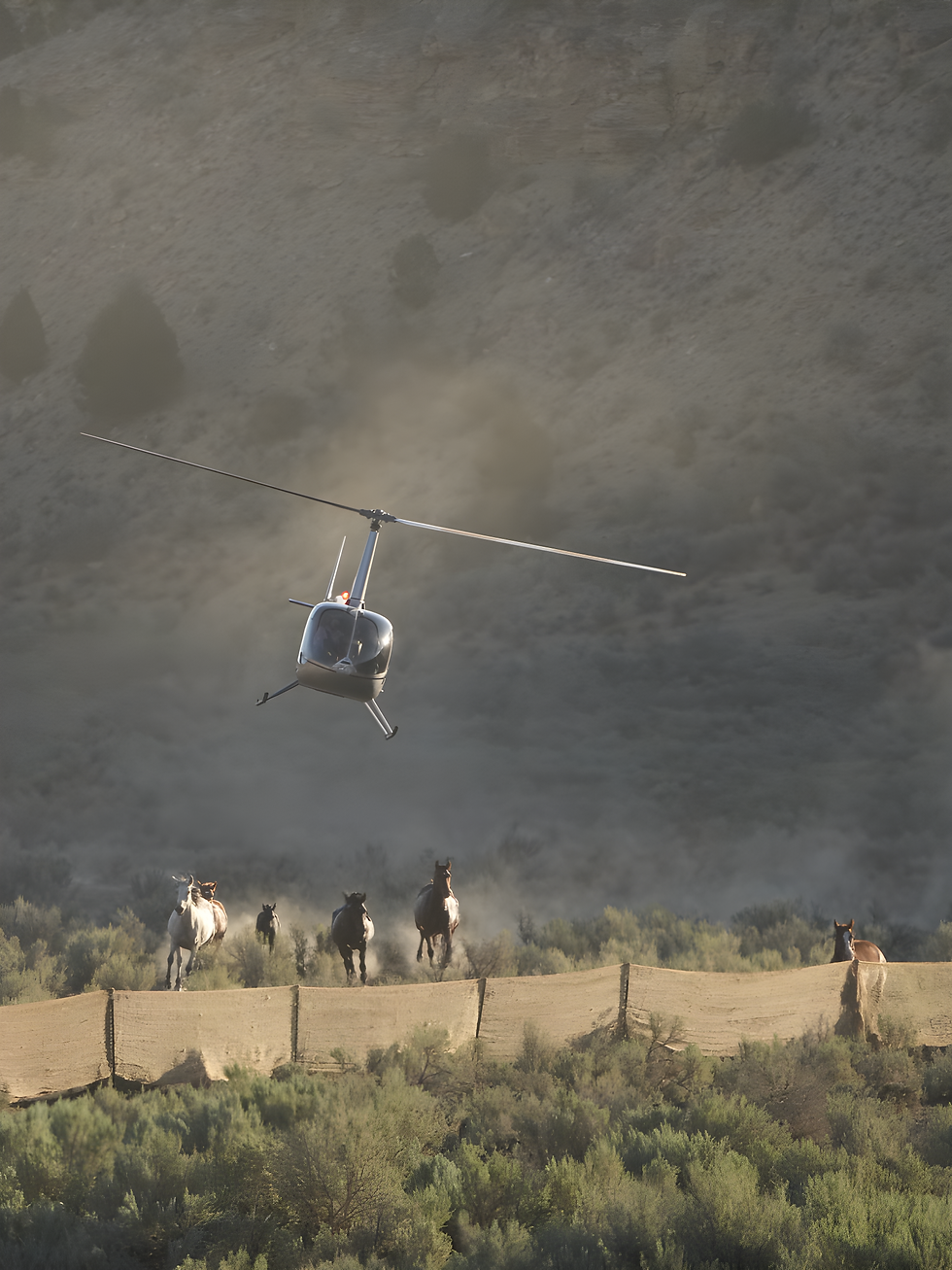

Helicopter flies low over a dusty hillside, chasing several wild horses into a trap behind a tan fence in a rugged pasture.
Wild horses being chased into a trap during a helicopter roundup. © Brian Clopp for AWHC

In Nevada’s Virginia Range, American Wild Horse Conservation operates the largest humane fertility-control program of its kind. The work is far more than delivering a vaccine by dart. It is a living management system: identifying individual horses, tracking mares and foals, training field teams, maintaining data, earning land access and returning season after season.


The results are measurable. From January through June 2026, the program documented 109 foals, compared with 494 during the same period in 2020, a 78 percent reduction. Across nearly 300,000 acres, the work has involved approximately 3,400 identified horses and collaboration among the State of Nevada, trained volunteers, landowners, local communities, conservation partners and businesses.


This is science at scale. It is also proof of something larger: humane management works when it is treated not as a pilot on the margins, but as infrastructure.


No single fertility-control method will fit every herd. Remote darting is practical where horses can be individually identified and approached safely; in more remote landscapes, treatment may need to occur during carefully planned gathers followed by release. Some places require water improvements, fencing changes, roadway mitigation or different technology altogether. Good management is adaptive by nature.


What matters is that the objective changes from removing the greatest possible number of animals to maintaining healthy, genetically viable herds on the range wherever possible.


Conservation as a shared practice


The future will not be built by government alone, or by advocacy alone.


It will require the BLM and Forest Service working alongside scientists, tribal communities, local advocates, ranchers, conservationists and the many people who share multiple-use public lands. It will require private partners willing to contribute technology, data systems, access, philanthropy and operational expertise. It will require lawmakers to fund prevention with the same seriousness that taxpayers are currently funding holding.


And it will require bridge builders.


Bridge building does not mean surrendering conviction. It means beginning with the shared truths that healthy horses need healthy land; taxpayers deserve an effective system; rural communities deserve to be heard; and federally protected animals deserve management worthy of that status. It means replacing a cycle of litigation, emergency and distrust with measurable objectives, transparent reporting and local partnerships that endure beyond a single administration or roundup schedule.
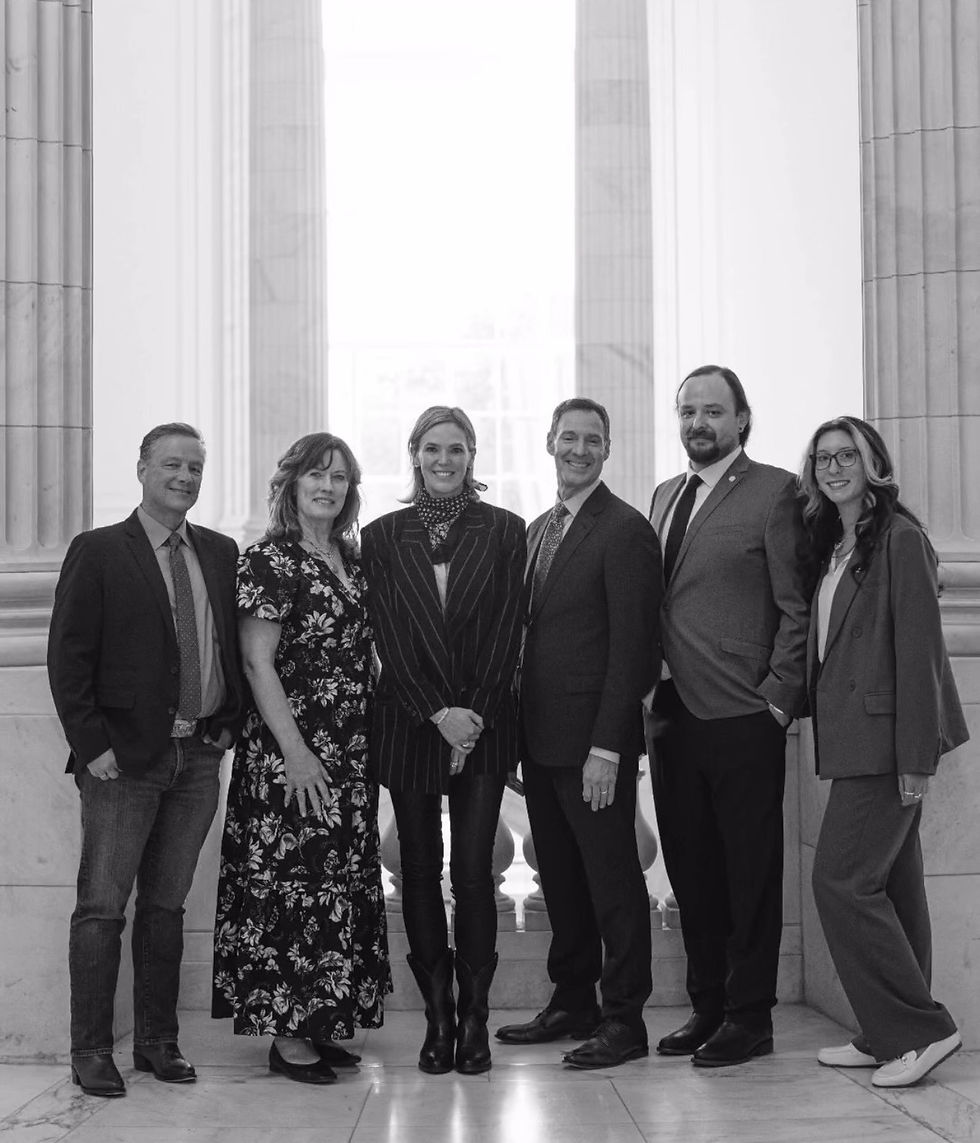

Six smiling members of the American Wild Horse Conservation team pose on Capitol Hill between tall columns in a black-and-white formal group portrait.
American Wild Horse Conservation Team on Capitol Hill working to protect and preserve America's wild horses and burros

At American Wild Horse Conservation, we have been expanding this work through on-range programs and partnerships from Nevada’s Virginia Range and Fish Springs to the  developed fertility-control partnership for Utah’s Cedar Mountain herd now run by Utah based organizations. We are bringing field evidence into conversations with agencies and Congress, and asking for appropriations that can move humane fertility control from exception to standard practice.


We are also showing up through art, fashion, film and photography because policy alone cannot carry the whole story.


Photography has always been essential to wild-horse protection. It reveals family bands, courtship, grief, play and survival, social lives that disappear when horses become numbers in a federal spreadsheet. It also serves as witness during removals, making animal welfare visible to the public. Film can bring the range into rooms far from the West. Art can cross an ideological divide before an argument ever begins. Fashion can place a wild horse over Rockefeller Center and invite millions of people to ask what freedom looks like in practice.


These are not decorative additions to conservation. They are ways of restoring relationships.

We protect what we know. We fight for what we have learned to love. And sometimes beauty is the first door through which understanding enters.


What we choose to leave wild


Wild horses and burros are not separate from the biodiversity of the West. They live within intricate landscapes of sagebrush, native grasses, migration corridors, springs, birds and other wildlife. Their future depends on managing the whole, not reducing nature to competing columns on a balance sheet.


As America marks 250 years, we are being asked to consider not only what we inherited, but what we intend to pass forward.

The wild horse helped carry this country into being. The burro carried people, water and possibility through some of its most unforgiving landscapes. Today, they ask something different of us: not labor, but leadership.


We know the old system is broken. We know the cost of continuing it. And we know a better model already exists in the quiet, disciplined work of counting, treating, monitoring and returning; in public and private partners sharing responsibility; in science made operational; and in culture reminding us why any of it matters.


The next chapter of wild horse conservation will not be written by choosing between compassion and management. It will be written by insisting upon both.


We built this country with horses. The least we can do is leave them a horizon.


Help us keep this momentum going and protect even more wild horses and burros. Donate today: https://bit.ly/44INYlE

EquuStyle Magazine thanks Patricia Miller, Executive Director, American Wild Horse Conservation for writing an excellent article and sharing photographs. Our sincere thanks to every supporter of AWHC who advocates for the protection and preservation of America's wild horses and burros on our public lands.


All images Copyright American Wild Horse Conservation -all rights reserved. Cannot be reproduced for any purpose without permission from the photographer or American Wild Horse Conservation.


Wild Beauty: Mustang Spirit of the West is a documentary on wild horses by award-winning filmmaker Ashley Avis.  wildbeautyfoundation.org  equustyle.com
Wild Beauty: Mustang Spirit of the West is a documentary on wild horses by award-winning filmmaker Ashley Avis.

EquuStyle: Were you a wild horse advocate before deciding to write, narrate, direct, edit, and produce the film “Wild Beauty: Mustang Spirit of the West?


Ashley Avis: I grew up with horses, an experience that truly helped shape the course of my life and career.  However, it wasn't until my late twenties that I discovered the plight of wild horses in the Western United States when I was brought aboard to write and direct a reimagining of Black Beauty, which was released by Disney in 2020. 


In being tasked with modernizing Anna Sewell's iconic classic, which inspired my great love of horses as a child - I wanted to honor the spirit of what she had crafted.  Few people know Black Beauty was not written as a children's book - it was an animal welfare plea for the horses of Anna's time in the late 1800s.  And so, in researching modern-day issues horses are facing today, I began reading about the roundups, the cruelty, the corruption, and the startling inhumanity. 


That is what moved me, along with my husband and producing partner Edward Winters, to embark on Wild Beauty: Mustang Spirit of the West.  That independent documentary took five passionate years to craft.


  • A cinematic still of a wild stallion during the filming of Wild Beauty: Mustang Spirit to the West.  equustyle.com
    A still of a wild stallion
  • A cinematic still of the tenderness between three wild horses during the filming of Wild Beauty: Mustang Spirit to the West.  equustyle.com
    Tenderness of wild horses
  • A cinematic still of a closeup of a wild horse head during the filming of Wild Beauty: Mustang Spirit to the West.  equustyle.com
    Closeup of a wild horse head
  • A cinematic still of wild horses on the move during the filming of Wild Beauty: Mustang Spirit to the West.  equustyle.com
    Wild horses on the move

EquuStyle:  What motivated you to make the film?


Ashley Avis: Originally, we went out to capture footage of wild horses in their natural habitat, so that we could bring authenticity to our narrative film, Black Beauty.  Ed and I raised a little bit of money to embark on that first trip to Utah, Wyoming, and Nevada - experiencing the extraordinary beauty of wild horses on the range, along with our first roundup.


The devastating Bureau of Land Management operation was on the Triple B Complex in Nevada.  I will never forget hiking with our heavy camera gear to the top of a mountain, while the BLM officials (several with guns) informed us we couldn't put up umbrellas in the 100-degree heat because it would "scare the horses."  Mind you, those poor mustangs were miles away from us, being chased at eye level by dueling helicopters. We were horrified.


A cinematic still of wild horses on the move during the filming of Wild Beauty: Mustang Spirit to the West.  equustyle.com
Wild horses on the move

What struck me about that day, as a former journalist, was that the agency had clearly hidden the "trap site" (the metal corrals where they stampede and capture the horses) so that the public, along with our film crew, could not see what was happening.  Trap sites are often where the injuries often happen, as horses break their legs and necks trying to escape, or get back to their families.  


After witnessing that roundup and realizing the antiquation and brutality of it - we wanted to know why.  We soon came to understand that wild horses were being eradicated by the federal government in deference to the commercial livestock industry.  A battle over land and powerful special interests.  We realized at that point we had to keep going, we had to create a second film - a Blackfish for wild horses.


EquuStyle:  What were some of the greatest challenges that you had to overcome to get the film funded and produced?


Ashley Avis: The greatest challenge besides raising the money, which is always hard - surrounded access. The BLM officials eventually got wind of what we were doing, and they did not want us documenting roundup cruelty, or the fact that BLM officials kill healthy horses for senseless reasons - those they deem blind, arthritic, or have a club foot.  The agency officials we came into contact with were deceptive, they routinely blocked the trapsites from our view, in one instance they even forced us away from shelter during a thunderstorm, making us stand out on the open range in the rain as we filmed.  They routined and flippantly denied our Constitutional rights as journalists. 


A cinematic still of a young wild foal enjoying freedom during the filming of Wild Beauty: Mustang Spirit to the West.  equustyle.com
A young wild foal enjoying freedom

The other great challenge was sadness.  As a horsewoman, witnessing these atrocities befall innocent wild horses; pregnant mares, newborn foals, and the brave stallions trying to protect them - was very difficult to bear.  However, my emotions were of course nothing compared to what they went through.


EquuStyle:  What were the conditions like during the filming?


Ashley Avis: A great deal of our Wild Beauty journey was truly spectacular - and I encourage everyone to get out and see the American West. 


Our crew drove over 20,000 miles over thirteen different states, and diverse landscapes.  The rich forests of Oregon, the crimson rock moonscapes in Arizona, the sagebrush seas of Nevada.  We had a tiny crew of five - it was myself, my husband/producing partner Ed, my younger brother/producer Richard Avis, our cinematographer Kai Krause, and a camera assistant.  My parents even joined us on one trip - while my Mom cooked food for the crew out of the back seat of their rental car.  It was a family affair.


  • A cinematic still of two young wild foals enjoying freedom during the filming of Wild Beauty: Mustang Spirit to the West.  equustyle.com
    Two young wild foals
  • A cinematic still of a wild horse in the afternoon glow during the filming of Wild Beauty: Mustang Spirit to the West.  equustyle.com
    Wild horse afternoon glow
  • A cinematic still of a two wild stallions sparring during the filming of Wild Beauty: Mustang Spirit to the West.  equustyle.com
    Wild stallions sparring
  • Ashley Avis with wild horsesA cinematic still of Ashley Avis with wild horses during the filming of Wild Beauty: Mustang Spirit to the West.  equustyle.com
    Ashley Avis with wild horses

There were the darker moments as well, such as visiting the holding facilities where wild horses are warehoused like livestock.  These places are often cramped, dirt pens where there is no room to roam, or gallop.  The closely bonded families are separated, and you hear them cry for each other.  Sometimes there is not even shelter from the elements - heat or rain.  I have seen these government facilities flooded with rain and muck.  The BLM doesn't post photos like those on social media.  But that is the truth behind how they 'humanely manage' our federally protected national icons after a roundup.  


And most people find this shocking - our tax-dollars are paying for it.  The BLM's budget to 'manage' wild horses, which is largely spent on costly roundups and holding - is over 150 million dollars a year.


EquuStyle:  Did you or your film crew consider giving up when armed BLM staff were aggressive with you during the filming?


Ashley Avis: Never.  The more injustice we saw, the bolder we became.


EquuStyle:  What part of the film is most disturbing to you?


Ashley Avis: That's a hard question.  My gut reaction was when we went undercover in Texas, into the slaughter pipeline - covertly filming as wild horses and burros got auctioned off to kill buyers.  I desperately wished in that moment I had millions of dollars - I would have rescued them all.  


But I think the most disturbing part of filming Wild Beauty was seeing the horses we had come to know, after they had been subjected to a roundup. 


A cinematic still of two wild horses showing affection during the filming of Wild Beauty: Mustang Spirit to the West.  equustyle.com
Write members of Congress to protect wild horses

The herd we became closest to were the Onaqui horses in Utah.  We featured them in Black Beauty and got to spend years visiting them.  In the controversial roundup of 2021, my heart shattered as we watched those horses chased by the helicopters.  They ended up in a dirty, half-flooded holding facility - their once resplendent coats caked with mud, water halfway up their knees.  It broke my heart.  If you look into the eyes of a free wild horse, it stirs a sense of inexplicable joy and wild in you.  To then take in the same, clouded gaze of a horse who has been stripped of its family and freedom - you will be haunted for the rest of your life.


EquuStyle:  What part of the film is most hopeful to you?


Ashley Avis: Oh, so much.  Seeing the families in the wild.  Witnessing a filly grow up to become a lead mare, or watching a stallion engaged in a battle - then soon after striding over to gently nuzzle his sleeping foal with exquisite tenderness.  Those were the moments that made being out on the range so special, while also reminding us what was at stake in their protection.  And it brings me joy to be able to share that with people around the world.


The children also inspire hope.  Before the roundup of the Onaqui, we launched a campaign called "I Stand With WIld Horses" - encouraging young people to write letters to their Members of Congress, or to the President.  Suddenly hundreds of people were posting to social media, holding up signs with those words, tagging their lawmakers.  It was incredible.  When we arrived at a rally in Salt Lake City in Utah - there it was again on the Capitol steps "I Stand With Wild Horses."


I think there is great hope to be found in the next generation speaking out on behalf of our world in Wild Beauty.


Ashley Avis and the award-winning documentary Wild Beauty: Mustang Spirit to the West.  equustyle.com
Wild Beauty: Mustang Spirit to the West

EquuStyle:  How have viewers of the film responded?


Ashley Avis: It has been overwhelming to witness how audiences have responded, particularly in theater where you can really feel that emotion surge.  There are instances of joy, levity, and laughter - along with horror, anger, and a profound sense of injustice.


It moves me to tears when people walk out of the film angry - but with passion.  And they say things like, "I didn't know this was happening.  This is wrong.  What can I do to help?"


EquuStyle:  After watching the film, what action or actions do you want viewers to take?


Ashley Avis: Awareness is key.  We must urge our Members of Congress to take action and to stop the brutality and corruption against wild horses and burros, before we lose them completely.  This is a fight over land and special interests, and wild horses have been caught in the middle.


We are asking people to become educated by visiting www.wildbeautyfoundation.org - and to make calls to their Representatives, urging them to co-sponsor The Wild Horse and Burro Protection Act (H.R. 3656) which if passed, would end the use of antiquated helicopters in the roundups - helping to curtail this cruelty.


EquuStyle:  How have wild horse photographers and advocates Kimerlee Curyl, Carol Walker, and Sandy Sisti used their influence on social media to promote the film?


Ashley Avis: I often stay, particularly to children - storytelling has great responsibility.  We are all storytellers, so what are we choosing to put out into the world?


There is such rich storytelling in art and wildlife photography.  The stunning work of Kimerlee Curyl, Sandy Sisti, and Carol Walker is so affecting - each image is a glimpse into a world, into a story.  And these extraordinary women don't stop there - they are also tireless in their advocacy.  They use their artistic gifts and social media platforms to bring wild horses to new audiences to inspire change. 


Before I met Kimerlee Curyl back in 2017, I was so moved by her photography that her images became references to how I wanted to cinematically explore framing "Beauty" in our feature film Black Beauty.  She is very inspiring to me.


EquuStyle:  Have horse rescues and sanctuaries been approached to promote the film to their supporters?


Ashley Avis: We have spread the word far and wide, encouraging everyone to share the film, and to get the message out not only to the equine audience - but to a global audience.  We also provide links to the documentary free of charge for educational purposes - to schools, universities, and other groups. 


EquuStyle:  Are any other organizations helping with the marketing and promotion of the film?


Ashley Avis: The long-term ripple effect Wild Beauty has is something we will never fully know - so many people and organizations around the world have shared it.  We are appreciative to every one of them, because it is teamwork that will ultimately inspire change.


Noted collaborators during the years it took to create Wild Beauty were Western Watersheds Project and The Cloud Foundation.


EquuStyle:  In what ways has the film impacted the mission of Wild Beauty Foundation?


Ashley Avis: In every way imaginable.  Black Beauty led to Wild Beauty, which led to our first rescue of thirteen horses (any horsewoman will understand me when I joke... I promised my husband I would start with one...).  Those "Lucky 13" inspired the creation of the foundation, which led to using our platform as filmmakers to shed a spotlight on the issue.  Things only got bigger, and as The Wild Beauty Foundation became a voice in the space - we soon found ourselves on the way to Congress.


Our mission as a nonprofit is to raise awareness that inspires fundamental change to protect the horses of our time, through film, education, rescue, and advocacy.


EquuStyle:  Have you noticed an increase in the number of youth and adults seeking information about how to advocate for wild horses?


Ashley Avis: I am blown away by the messages I receive - not only from adults, but from children around the world who want to know what they can do to help.  I recently hand-delivered about fifty postcards from kids to individual Members of Congress when I visited Washington D.C. in April.  The impact those letters have is incredible - their sincerity cuts through the political noise and inspires lawmakers to listen.


A cinematic still of a wild paint horse during the filming of Wild Beauty: Mustang Spirit to the West.  equustyle.com
Take action to protect America’s vanishing wild horses

EquuStyle:  Do you think your recent meeting on Capitol Hill was productive? Did you accomplish the goals you set beforehand?


Ashley Avis: Nothing moves very quickly in Washington, which is the hard truth.  However, I do feel we successfully launched a pretty large boulder down the bureaucratic mountain during our most recent trip, this time screening portions of Wild Beauty within the United States Capitol.


We were lucky this past April to have Oscar-nominated actress Diane Lane alongside us.  Diane saw the documentary and asked how she could help.  Her presence opened so many doors, and we added several new co-sponsors to a bill we are fighting for.  We have such incredible champions now - notably Rep. Dina Titus (D-NV) who is the sponsor of The Wild Horse and Burro Protection Act, Rep. Steve Cohen (D-TN), Rep. Brian Fitzpatrick (D-PA), among others.


EquuStyle:  H.R.3656 - Wild Horse and Burro Protection Act of 2023 was introduced in the House on May 24, 2023. What can citizens do to influence the passage of this vital legislation?


Ashley Avis: Awareness.  So many people, including horse people, simply do not know this is happening. 


I would say, after four trips to Washington D.C. in the past three years - perhaps half the Members of Congress we have met with know anything about the roundups, and if they have heard of them - they rarely know about the brutality.  Your calls and emails to help educate their staff do make a difference.  So please, if you're moved by this article - make that call, send that note, visit istandwithwildhorses.org to share your thoughts using our automated form.  Please be moved to act.


EquuStyle:  Why do you think politicians are reluctant to pass legislation to stop cruel helicopter and fixed aircraft roundups of wild horses?


Ashley Avis: The deep pockets and ceaseless lobbying by the livestock industry - which is determined to eradicate wild horses from their rightful habitat in favor of commercial cattle and sheep grazing.  The helicopter roundups are also a business.  The contractors are awarded hundreds of thousands, if not millions of dollars to do this work - and they certainly don't want to lose that money train.  The most awarded contractor by the BLM has been paid over thirty million dollars.  


We are up against several powerful opponents.  But we are not going away.  


EquuStyle:  After learning more about the motivations behind the BLM, livestock ranchers, politicians, and other critics of wild horses, do you believe wild horses have a chance to remain on public lands?


Ashley Avis: I do.  The BLM is, unfortunately, doing a great job of deceiving the media, whether it's telling stories out on the range that are not based on fact or science, or putting out news stories that state wild horses are overpopulated, degrading the rangeland, etc.  They use this 'reasoning' as false justification to remove a few hundred federally protected wild horses, before releasing thousands of cattle and sheep to graze on precisely the same land.  According to the BLM's own data, livestock are the leading reason for rangeland degradation at figures over 70% - but they don't tell the press that. 


I cannot imagine a world in which we lose nature.  I am encouraged by the public outcry that has resulted in part from Wild Beauty being available to a global audience - and I do believe we will change this.  But to be successful, we need to band together and fight.


EquuStyle:  What are the Wild Beauty Foundation’s current and future strategies to advocate for protecting and preserving America’s wild horses?


Ashley Avis: Currently, we are working hard on the passage of significant legislation to protect wild horses, while planning our next Washington D.C. event.  For the future, we are developing a video curriculum for children in schools called "Wild Horse Week," and constructing a plan to grow our efforts at the foundation.  If you can help in any way, let us know!


Subscribe for equine art & advocacy

Subscribe today and receive a quarterly email to inform you about the upcoming

digital issue of EquuStyle Art & Advocacy Magazine.

Share via

© Copyright Protected

EquuStyle Magazine ©2023-2026 EquuStyle.com All rights reserved.

Privacy Policy

bottom of page