top of page

Magazine Articles

A wild horse does not pose for the camera. It decides whether to allow a human presence at all.


That quiet truth sits at the center of Kimerlee Curyl’s work. Her images of American mustangs are not staged portraits or romantic props against a western sky. They are records of living animals, shaped by family bonds, weather, fear, curiosity, and hard-won freedom on public lands.


Curyl has built a reputation as both an artist and an advocate because she treats wild horses as individuals. Her photographs invite people to look longer, past the familiar symbol of the mustang, and toward the real animals affected by policy decisions, land use conflicts, and public misunderstanding.


Her mission is simple to say and difficult to carry out: help protect wild mustangs by making them visible, valued, and impossible to dismiss.


Two wild horses nuzzle together in a monochrome outdoor portrait against a bright sky.  Image by award-winning photographer and wild horse advocate Kimerlee Curyl.
Wild horses are most powerful when seen as part of their home range.

A camera became a bridge to the wild horse world


EquuStyle: What initially drew you to wild horses and inspired you to focus your photography on them?


Kimerlee Curyl: After wanting a horse my entire life and finally having one as an adult, I was

working with a trainer in what was coined “natural horsemanship.” It was often mentioned that “in the wild,” a horse would behave or respond a certain way. And while I wasn’t necessarily questioning that, I felt this pull to see them for myself—to be immersed in their world, watch their behaviors, and draw upon my own instincts and intuitions about them.


And from that very first visit, my heart was on fire. It lit me up like nothing in my life had before. I didn't know exactly what was happening yet, but I knew my life had just changed. Everything I had been doing was about to take a 180.


Why wild mustangs need more than admiration


EquuStyle: How has your understanding of wild horses evolved over the two decades of your work?


Kimerlee Curyl: Wild horses are pure, raw, and simple when it comes down to it. Their basic needs are freedom, family, and forage. As a horsewoman, this understanding has completely influenced my interactions, my thoughts, and my approach to being with horses.


Now, mind you, it’s been 22 years, so nothing was ever learned overnight. But one of the things I’ve come to understand is that while some horses can be what we would call dominant, dominance is never what they are looking for. Sadly, much of the horse world still follows this outdated theory. Horses are looking for a leader—someone their highly intelligent and incredibly sensitive nervous systems instinctively trust and will follow. Horses feel the difference between the two before any physical interaction has taken place. It is an intuition I am completely in awe of.


Their connection to the grounded land beneath them, and to the energy and emotional elements of the air around them, is so deeply intertwined with who they are. Mother Nature could not have composed a better symphony, in my opinion.


Two wild horses nuzzle close together in a sepia-toned close-up, one dark-maned and one pale. Monochromatic image by award-winning photographer and wild horse advocate Kimerlee Curyl.
Family bonds are central to how wild horse bands survive.

Wild horse photography that makes an impact


EquuStyle: What techniques do you use to capture the emotion and spirit of wild horses in your photography?


Kimerlee Curyl: Patience. Something I am not innately gifted with. It has certainly been one of the many gifts, and lessons they have given me.


You simply cannot contrive a moment to happen in the wild, especially with these highly sensitive creatures. There is no hiding in the bushes and waiting to get the shot. You really need to feel, to know and understand their behavior. These creatures can feel a fly land on their back; sneaking around them makes them uneasy and tense. They know you are there, and that won’t be a shot most collectors are looking for.


I truly believe you have to know your subject, not just love them. Horses are easy to love and admire for their glorious beauty, strength, and grace, but knowing them takes a lot more than a few hours behind a camera with them while adjusting your f-stops.


I have loved and been obsessed with horses my entire life, but in the summer of 2003, that love I had for them shifted. They took me out of a dark place and everything became completely about them. And to this day, I’m still learning, watching, and listening to the beautifully complex ways of the horse. They are so completely fascinating.


For me, that is where the real magic happens—not in trying to create a moment, but in being present enough, patient enough, and knowledgeable enough to recognize it when—or right before—it unfolds.


The mustang as an individual, not just an icon


EquuStyle: How do you balance artistic expression with the need for advocacy in your work?


Kimerlee Curyl: For me, they have never really been separate, the two merged so seamlessly.


I fell in love with wild horses long before I fully understood the complexities of what was happening to them. In the beginning, I simply wanted to be there—to witness them, to understand them, and to photograph what I was seeing and feeling. But the more time I spent with them, the more I learned what was happening to them, I realized that loving something also comes with a responsibility to protect it.


I’ve always believed that art has the ability to reach people in a way that facts and statistics cannot. “Art has a voice” is a phrase that came to me very early in my career, and I’ve carried it with me ever since. A photograph can impact you in an instant. It makes you feel something. And feeling something is often the beginning of caring—and when you care, you are more likely to take action.


I don't want my work to feel like a lecture, or for every photograph to carry a heavy message. Over the years, my images have naturally become another form of advocacy. I realized I had the ability to bring these horses into people's homes and lives in a way that could create a deeper connection to them. For me, that connection is where inspiring change happens and the real power of art lies.


My goal has never been to simply show people what wild horses look like. It is to give them a glimpse of what they feel like—their relationships, their individuality, their freedom, their tenderness, their raw power. If I can create that connection through my work, then I have an opportunity to give them a voice beyond the boundaries of the wild places where I photograph them.


Advocacy, to me, isn't about making every photograph a statement. The most powerful thing I can do is simply let horses be seen for who they are. Beauty opens the door. Connection keeps it open. And once someone cares, conversations are sparked, people want to know more, and ultimately, they in turn help protect what they have come to love. At least that is my hope.


Close-up view of a wild mustang with wind moving through its mane. Monochromatic image by award-winning photographer and wild horse advocate Kimerlee Curyl.
A single horse can carry the whole story of wildness and survival.

Protecting wild horses is a complicated issue


EquuStyle: What are the biggest challenges facing wild horses today? And, how can individuals help?


Kimerlee Curyl: The biggest challenge wild horses have faced—and continue to face—is human greed competing with their right to remain on the public lands they call home. The details run deep, long, and, frankly, are exhausting.


Wild horses are removed from public lands for a variety of reasons, including livestock grazing, oil and gas development, and other competing uses of their habitat. Much of the conflict comes down to how we choose to manage and prioritize our public lands. Federal grazing permits allow livestock to use public lands at rates far below what comparable private grazing would cost, while American taxpayers subsidize much of the management and infrastructure associated with these uses.


And this is where the wild horse issue becomes much bigger than wild horses. It is about who has access to our public lands, who benefits from them, and whose interests are being prioritized. Wild horses are often portrayed as the problem, when in reality they are competing for space on lands that belong to all of us.


That is, of course, a very condensed explanation of an incredibly complicated issue and it is frustrating for me to have to repeat the same concerns after more than two decades of watching it unfold.


The good news is that awareness has grown tremendously since I first became involved. There are more organizations doing important work, more people asking questions, and more resources available for individuals who want to understand the issue and use their voices.


And that is where I believe individuals can make a difference. Educate yourself. Follow organizations doing credible work on the ground. Contact your elected representatives and the agencies responsible for managing these lands. Submit public comments when decisions affecting wild horses are open for input. Support the organizations fighting for humane, science-based management.


I hear it all the time: “But I do call. I do write. I do submit comments, and nothing happens.” And I understand that frustration. But I also want people to understand that exhaustion is part of the problem. Special interests and the federal government can rely on people becoming overwhelmed, frustrated, and eventually silent. Please don't mistake the lack of immediate results for a lack of impact.


I believe individuals can make a difference. Educate yourself.

I have watched awareness of this issue grow exponentially in recent years. That did not happen because of one phone call or one letter. It happened because people kept speaking. It happened through voices, images, videos, education, organizations, and, most importantly, people caring enough to keep showing up.


You don't have to be an expert, and you don't have to do everything. But you can learn, you can speak up, and you can keep showing up. Every voice adds to the collective one. And I believe that collective voice is exactly what has brought this issue into the public consciousness in a way I could never have imagined when I first began this work.


EquuStyle: How do you engage your audience in the conversation about wild horse conservation?


I’m not going to pretend I’m particularly great at social media. I love engaging with people about the images—through talking about a moment, a story, or why I feel something is worthy of becoming a limited edition. Some images are created very intentionally as awareness pieces, while others are created simply as fine art. There is a story and a reason behind both, and I love having the opportunity to share that.


Honestly, this translates so much better in-person. At a speaking event, a gallery show, or simply standing beside an image with someone, the conversation unfolds naturally. Someone may walk up because they are drawn to the beauty of an image, and five minutes later we're talking about the horse, the herd, their relationships, or what is happening on the public lands where I photographed them. Those are my favorite conversations because they are organic.


Social media, of course, comes with a different set of challenges—the constant competition for attention, the algorithms, and, inevitably, the trolling. But even that doesn't bother me as much as it probably should. I don't mind someone who sees the issue differently expressing their opinion, as long as we remember that opinions are just that: opinions. There is a tremendous amount of science and research supporting the importance of wildlife, healthy ecosystems, and protecting wild places. And, what that means for our futures.


Wild mustang stallions engage in a dramatic sparring match against a backdrop of rugged mountains and moody skies, capturing the raw spirit of the Onaqui wilderness. Monochromatic image by award-winning photographer and wild horse advocate Kimerlee Curyl.
Wild mustang stallions engage in a dramatic sparring match against a backdrop of rugged mountains and moody skies, capturing the raw spirit of the Onaqui wilderness.

What does frustrate me is that we continually seem to have to justify the existence of wild things and wild places in the first place. Sometimes it feels like we're trying to justify the need for clean air and clean water. These are not luxuries. They are the foundation of life.


So, I suppose the way I engage people is less about trying to convince them of something and more about inviting them to look closer. Look at the horse. Look at the relationships. Look at the landscape. Ask questions. Become curious. Because once you really see something—and begin to care about it—the conversation becomes much more meaningful.


What Curyl’s work teaches about responsible attention


EquuStyle: What role do you believe art plays in wildlife advocacy and conservation efforts?


Kimerlee Curyl: I think art can do something that facts and statistics alone sometimes cannot: it can create an emotional connection. Science can tell us what is happening and why it matters, but art can make us stop long enough to care about it.


Wildlife conservation needs scientists, biologists, advocates, policymakers, and people willing to do the hard work of protecting these places and animals. But I also believe it needs storytellers. We need people who can translate what is happening in the natural world into something others can see, feel, and understand.


That is where I believe art has an important role. A photograph can cross boundaries that words sometimes cannot. You don't have to know anything about wild horses to be moved by the way a mare looks at her foal, the relationship between members of a family band, or the freedom in a horse running across a landscape. You can feel the connection before you ever know the facts.


Once you care, you become inspired to learn. You want to know where that horse lives, what is happening to the landscape, or why that mustang needs protection. In that way, art has the potential to be the beginning of the conversation for conservation.


Every piece of art doesn’t need to carry a political or conservation message. Sometimes its greatest contribution is simply reminding us what is beautiful, what is wild, and what we stand to lose if we don't protect it.


For me, that is the power of art in conservation. It doesn't replace science or advocacy—it helps give them a human connection. It gives the issue a face, a feeling, and ultimately a voice.


Low-angle view of a wild mustang  family crossing dry earth near sagebrush in Utah. Monochromatic image by award-winning photographer and wild horse advocate Kimerlee Curyl.
The future of wild horses is tied to the ground they still roam.

A mission measured in visibility and protection


EquuStyle: How do you envision the future of wild horses in America, and what steps do you think are necessary to ensure their protection?


Kimerlee Curyl: This question is difficult for me because, honestly, I am incredibly worried about the future of wild horses and wild places in America. After more than two decades of photographing them, witnessing their lives, and advocating for them, there are things happening right now that are deeply concerning. Regulations and policies are being changed, healthy horses are being removed from the range in record numbers, and truckloads of horses shipped to slaughter. Special interest groups are incredibly powerful and working very hard to shape the

future of our public lands and the animals who depend upon them.


We are living in a time when wildness does not always appear to be valued by our federal government. But I don't believe that means the American people don't value it.


In fact, I believe quite the opposite. I believe there are still so many of us who are willing to step away from our screens, look up, and remember what it feels like to be connected to something bigger than ourselves. To inhale the beauty of a wild landscape. To stand in the presence of a wild horse. To understand that these places and animals have an intrinsic value that doesn't depend on what they can produce, what they are worth financially, or what we can take from them.


Wild horse grazing in a grassy field, close-up black-and-white portrait with flowing mane and calm mood. Monochromatic image by award-winning photographer and wild horse advocate Kimerlee Curyl.
Majestic wild horse grazing peacefully, symbolizing the enduring spirit of America's untamed landscapes.

The future of wild horses cannot rest on a handful of advocates or organizations. It also involves a much larger public voice, people who are willing to learn, speak up, stay engaged, and refuse to become exhausted by the enormity of the fight.


And despite how worried I am, we must remain hopeful. For their sake.


I have witnessed too much change over the past 22 years to believe that our voices don't matter. Awareness of wild horse issues has grown tremendously. More people know their names, their stories, and what is happening to them. That awareness exists because people cared enough to speak, to photograph, to write, to educate, to organize, and to keep showing up.


The road ahead is not envisioned as an easy one.


But refusing to envision wild horses not still running across open landscapes, families still together, and future generations having the extraordinary privilege of encountering something truly wild is not an option.


That is the future I will continue to work toward. And as long as there are people who still care, I believe it is possible.


Kimerlee Curyl serves as an inkind partner for The Wild Beauty Foundation.


Raise your voice to protect and preserve America's wild horses and burros today! #TheLostHorsses

EquuStyle Magazine is grateful for Kimerlee Curyl's thoughtful and informative interview and for sharing here exquisite photographs.


All images Copyright Kimerlee Curyl Photography-all rights reserved. Cannot be reproduced for any purpose without permission from Kimerlee Curyl Photography.


Writer: Patricia Miller
Patricia Miller
18 hours ago
6 min read


America’s wild horses and burros do not need another cycle of crisis. They need a modern management system, one that brings science, welfare, culture and collaboration together to keep them wild.


This summer, above the limestone and gold of Rockefeller Center, wild horses ran through the heart of Manhattan.


Woman in denim holds a blue-orange scarf in a grassy mountain meadow with horses grazing in the background.
Designer Chloé Gosselin's hand-painted flag titled "Freedom in the Wild Light"

They appeared not in flesh, but in silk, a herd moving beneath a deep Nevada sky on a flag hand-painted by designer Chloé Gosselin. Titled Freedom in the Wild Light, the work was created for Vogue and the Council of Fashion Designers of America’s United Flags of Fashion, presented with

America250. The horses were drawn from a photograph Gosselin made while visiting Nevada’s Fish Springs herd; the lead horse was inspired by her own horse, Milo. Beadwork created by the family of Ronda Kauk, a member of the Utu Utu Gwaitu Paiute Tribe and a guardian of the Mono Lake horses, replaced the familiar state star with an Indigenous North Star, a symbol of guidance and hope.


Nearby, designer, equestrian and American Wild Horse Conservation Board Member Jenni Kayne offered her own meditation on Nevada: shifting light, mountains, warmth and the quiet beauty of the Western landscape. Together, these works placed the wildness of the West inside one of America’s most visible cultural spaces.


The image was beautiful but it also raised an uncomfortable question:What does it mean to celebrate the wild horse as an emblem of freedom while continuing to manage these animals through a system built primarily around removing that freedom?


The American promise for wild horses and burros


In 1971, Congress unanimously passed the Wild Free-Roaming Horses and Burros Act, declaring these animals “living symbols of the historic and pioneer spirit of the West.” The law entrusted the Bureau of Land Management and the U.S. Forest Service with their protection on designated public lands.


More than half a century later, that promise remains unfinished.

Two wild horses, one white and one brown, stand in a metal trailer behind gray bars after being rounded up by the Bureau of Land Management.
The Wild Free-Roaming Horses and Burros Act of 1971 specifically states "It is the policy of Congress that wild free-roaming horses and burros shall be protected from capture, branding, harassment, or death; and to accomplish this they are to be considered in the area where presently found, as an integral part of the natural system of the public lands."

The BLM estimates that 85,466 wild horses and burros lived on the public lands it manages as of March 2026. They occupy a fraction of the agency’s wider estate, approximately 25.5 million acres across ten Western states, lands also asked to accommodate livestock grazing, energy and mineral development, recreation, wildlife habitat and increasingly severe drought and wildfire.


Managing populations is essential but how do we do it while keeping horses on the range and still protecting the lands they need to thrive?


The dominant federal response has become a costly, ineffective loop: gather, remove and hold.

As of May 2026, 58,025 federally protected wild horses and burros were living in off-range corrals and pastures. In fiscal year 2024, the federal government spent $101 million on off-range holding, 66 percent of total Wild Horse and Burro Program expenditures. At that pace, the country is maintaining a billion-dollar-per-decade holding system while leaving too little funding and capacity for the on-range work that could reduce the need for removals.


  • Wild horses in a holding pen with no room to move. Click on photo to learn how to help now.
    Wild horses in a holding pen with no room to move. Click on photo to learn how to help now.
  • Distressed wild stallions sparring after BLM roundup. Click on image to learn how you can help now.
    Distressed wild stallions sparring after BLM roundup. Click on image to learn how you can help now.
  • America's wild horses deserve freedom, not captivity or slaughter. Click on photo to help today.
    America's wild horses deserve freedom, not captivity or slaughter. Click on photo to help today.

All images © Darlene Smith for American Wild Horse Conservation


This is not the wildlife-management system most Americans imagine when they hear the word protected. Nor is it fiscally sustainable.


The answer, however, is not to abandon management. It is to modernize it.


From crisis response to management


For years, the public conversation has been framed as a choice between two extremes: remove horses or do nothing. It is a false choice.


A modern model begins before roundups are scheduled and long before helicopters take off.  It combines accurate and transparent population data, fertility control, habitat and water stewardship, genetic monitoring, migration and movement planning, public safety measures, and accountable, multi-year plans tailored to each herd and landscape. When removal is truly necessary, it should be limited, humane and paired with responsible placement—not treated as the first or only tool.


We have the tools but we have not had the will to implement them at a scale large enough to make a meaningful difference.


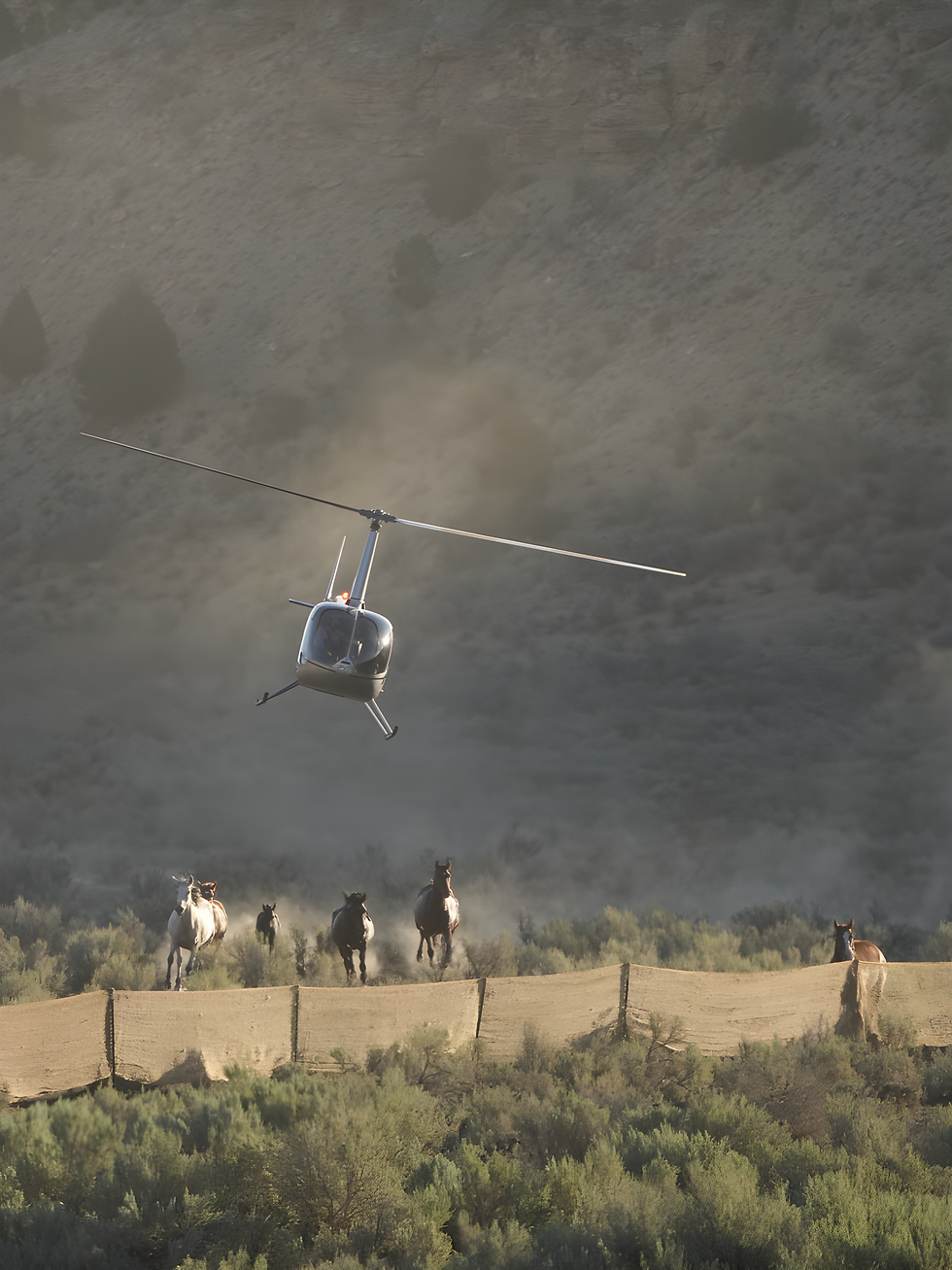
Helicopter flies low over a dusty hillside, chasing several wild horses into a trap behind a tan fence in a rugged pasture.
Wild horses being chased into a trap during a helicopter roundup. © Brian Clopp for AWHC

In Nevada’s Virginia Range, American Wild Horse Conservation operates the largest humane fertility-control program of its kind. The work is far more than delivering a vaccine by dart. It is a living management system: identifying individual horses, tracking mares and foals, training field teams, maintaining data, earning land access and returning season after season.


The results are measurable. From January through June 2026, the program documented 109 foals, compared with 494 during the same period in 2020, a 78 percent reduction. Across nearly 300,000 acres, the work has involved approximately 3,400 identified horses and collaboration among the State of Nevada, trained volunteers, landowners, local communities, conservation partners and businesses.


This is science at scale. It is also proof of something larger: humane management works when it is treated not as a pilot on the margins, but as infrastructure.


No single fertility-control method will fit every herd. Remote darting is practical where horses can be individually identified and approached safely; in more remote landscapes, treatment may need to occur during carefully planned gathers followed by release. Some places require water improvements, fencing changes, roadway mitigation or different technology altogether. Good management is adaptive by nature.


What matters is that the objective changes from removing the greatest possible number of animals to maintaining healthy, genetically viable herds on the range wherever possible.


Conservation as a shared practice


The future will not be built by government alone, or by advocacy alone.


It will require the BLM and Forest Service working alongside scientists, tribal communities, local advocates, ranchers, conservationists and the many people who share multiple-use public lands. It will require private partners willing to contribute technology, data systems, access, philanthropy and operational expertise. It will require lawmakers to fund prevention with the same seriousness that taxpayers are currently funding holding.


And it will require bridge builders.


Bridge building does not mean surrendering conviction. It means beginning with the shared truths that healthy horses need healthy land; taxpayers deserve an effective system; rural communities deserve to be heard; and federally protected animals deserve management worthy of that status. It means replacing a cycle of litigation, emergency and distrust with measurable objectives, transparent reporting and local partnerships that endure beyond a single administration or roundup schedule.


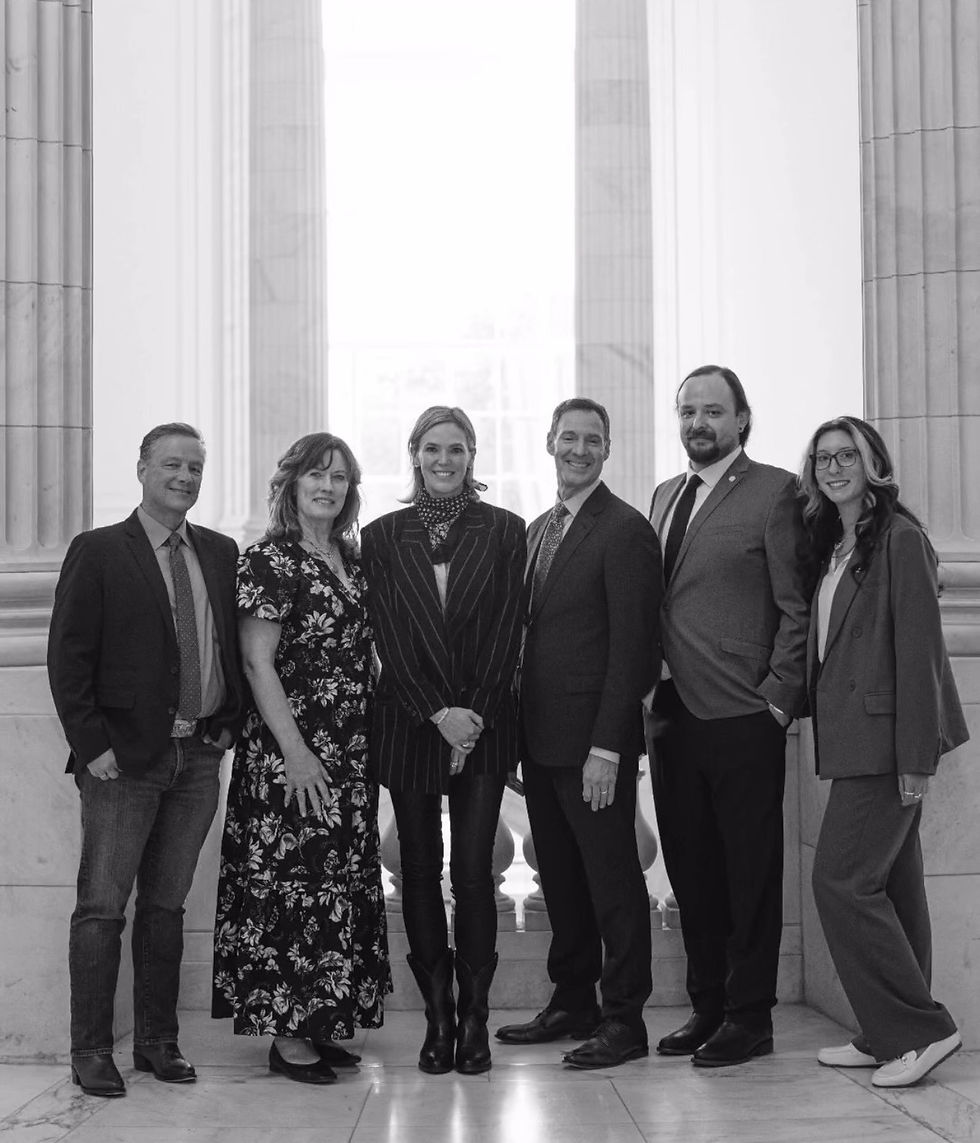
Six smiling members of the American Wild Horse Conservation team pose on Capitol Hill between tall columns in a black-and-white formal group portrait.
American Wild Horse Conservation Team on Capitol Hill working to protect and preserve America's wild horses and burros

At American Wild Horse Conservation, we have been expanding this work through on-range programs and partnerships from Nevada’s Virginia Range and Fish Springs to the  developed fertility-control partnership for Utah’s Cedar Mountain herd now run by Utah based organizations. We are bringing field evidence into conversations with agencies and Congress, and asking for appropriations that can move humane fertility control from exception to standard practice.


We are also showing up through art, fashion, film and photography because policy alone cannot carry the whole story.


Photography has always been essential to wild-horse protection. It reveals family bands, courtship, grief, play and survival, social lives that disappear when horses become numbers in a federal spreadsheet. It also serves as witness during removals, making animal welfare visible to the public. Film can bring the range into rooms far from the West. Art can cross an ideological divide before an argument ever begins. Fashion can place a wild horse over Rockefeller Center and invite millions of people to ask what freedom looks like in practice.


These are not decorative additions to conservation. They are ways of restoring relationships.

We protect what we know. We fight for what we have learned to love. And sometimes beauty is the first door through which understanding enters.


What we choose to leave wild


Wild horses and burros are not separate from the biodiversity of the West. They live within intricate landscapes of sagebrush, native grasses, migration corridors, springs, birds and other wildlife. Their future depends on managing the whole, not reducing nature to competing columns on a balance sheet.


As America marks 250 years, we are being asked to consider not only what we inherited, but what we intend to pass forward.

The wild horse helped carry this country into being. The burro carried people, water and possibility through some of its most unforgiving landscapes. Today, they ask something different of us: not labor, but leadership.


We know the old system is broken. We know the cost of continuing it. And we know a better model already exists in the quiet, disciplined work of counting, treating, monitoring and returning; in public and private partners sharing responsibility; in science made operational; and in culture reminding us why any of it matters.


The next chapter of wild horse conservation will not be written by choosing between compassion and management. It will be written by insisting upon both.


We built this country with horses. The least we can do is leave them a horizon.


Help us keep this momentum going and protect even more wild horses and burros. Donate today: https://bit.ly/44INYlE

EquuStyle Magazine thanks Patricia Miller, Executive Director, American Wild Horse Conservation for writing an excellent article and sharing photographs. Our sincere thanks to every supporter of AWHC who advocates for the protection and preservation of America's wild horses and burros on our public lands.


All images Copyright American Wild Horse Conservation -all rights reserved. Cannot be reproduced for any purpose without permission from the photographer or American Wild Horse Conservation.


EquuStyle: When did you first become interested in photographing wild horses? What sparked that passion for you?


Sandy Sharkey: In my early twenties, I was on a trail ride in Alberta’s Rocky Mountains near Banff. One afternoon, I lay on my back in an alpine meadow. My trail horse munched grass beside me, content and relaxed. Suddenly, everything shook, and I jumped up, convinced I was experiencing an earthquake. But it wasn’t an earthquake. It was a herd of wild horses galloping past me on a rocky ridge. It was over as quickly as it began, and the wild horses disappeared into a forest. But it was one of the most beautiful things I’d ever seen.


Wild Alberta Mountain Horses is the title of a photograph by wild horse photographer and advocate Sandy Sharkey as featured in the Fall 2025 issue of EquuStyle Magazine at equustyle.com
Wild mountain horses traverse the rugged landscape of the Alberta Rocky Mountains, showcasing their strength and resilience amidst the natural beauty of Canada.
At that time, I had no idea that wild horses existed. My life was forever changed. I needed to experience wild horses again and again. I wanted to capture their essence with my camera and share their stories of free-spirited resilience.

A Personal Connection to Wild Horses


EquuStyle: What personal connection do you feel to the wild horses you photograph, and how does this influence your work?


Sandy Sharkey: I believe the most ‘free-spirited’ time of our lives is when we are kids—before the wide-ranging demands of society take root. Over time, that free spirit of youth diminishes under the weight of responsibility. When I’m with wild horses, I feel like that eight-year-old kid again. Wild horses symbolize freedom, embodying an unabashed free spirit that exists in all of us.


"Utah Wild Mare and Stallion" is the title of a photograph by wild horse photographer and advocate Sandy Sharkey as featured in the Fall 2025 issue of EquuStyle Magazine at equustyle.com
A wild mare and stallion share a tender moment on the vast plains of Utah, embodying the spirit of freedom and companionship.

In many ways, connecting with wild horses can reconnect the adventurous soul we’ve buried through adulthood. Someone once told me, ‘It’s not how you feel about someone; it’s how you feel about yourself when you’re with that person.’ The same applies to wild horses. When I’m with these magnificent animals, the awakening of my heart and soul influences my photographic work in a visceral way.


If one of my images captures the free spirit of a wild horse, creating a beautiful connection between human and horse, this is much more important to me than a technically perfect photo.


Memorable Encounters with Wild Horses


EquuStyle: Could you share a memorable encounter with a wild horse that deeply impacted you?


Sandy Sharkey: There are so many encounters to choose from. But one stands out. In the spring of 2018, I was photographing wild horses in Utah’s Onaqui range. One morning, I saw a huge cloud of dust rolling across the desert floor, like a scene from ‘Wile E. Coyote and the Roadrunner’. The dust was created by a scrappy, smallish wild buckskin stallion known as ‘Buck’. He was covered in battle scars, and several wounds were fresh, but nothing stopped him. Buck was determined to steal the mares from every stallion in sight.


"Battle Scarred Onaqui Stallion known as Buck" is the title of a photograph by wild horse photographer and advocate Sandy Sharkey as featured in the Fall 2025 issue of EquuStyle Magazine at equustyle.com
Majestic and resilient, Buck the battle-scarred Onaqui stallion strides across the rugged landscape, embodying the untamed spirit of the wild.

He wasn’t successful that day, and I’m not sure he was ever successful. But the huge spirit from this small package embodied persistence, true grit, and wild spirit—everything we love about wild horses. Buck is my horse hero.


The Call to Wild Horse Advocacy


EquuStyle: What initially drew you into wild horse advocacy?


Sandy Sharkey: When I first started photographing wild horses, I quickly learned about the challenges they face. I couldn’t continue to share photos of beautiful wild horses without speaking out and raising awareness about the atrocities of wild horse roundups and the slaughter pipeline.


"Utah Fiery Boy" is the title of a photograph by wild horse photographer and advocate Sandy Sharkey as featured in the Fall 2025 issue of EquuStyle Magazine at equustyle.com
"Utah Fiery Boy" is the title of a wild and free, Onaqui stallion rearing majestically against a backdrop of the rugged Utah landscape.

Along with photographic storytelling, I began to host wild horse retreats and trips to other wild horse areas in the world. When we see mankind’s treatment of wild horses, and how it differs depending on geographic location, we can better understand and help shape a future where wild horses are protected and respected.


In the American West, thousands of mustangs have been rounded up by helicopters and removed by the U.S. government, in deference to the demands of public lands ranchers. The system is broken, and the government is resistant to working for meaningful change.


There are over 60,000 wild horses languishing in holding facilities. In contrast, cattle ranchers in northern Portugal accept the ‘Garrano’ wild horses. In Chilean Patagonia, wild horses known as ‘Baguales’ are revered and have become a draw for adventurers. In Mongolia, Przewalski’s horses were extinct from the wild, but due to a successful captive breeding program, they once again roam the Mongolian steppes.


  • "Wild Garrano Mare in Northern Portugal" is the title of a photograph by wild horse photographer and advocate Sandy Sharkey as featured in the Fall 2025 issue of EquuStyle Magazine at equustyle.com
    Wild Garrano Mare in Northern Portugal
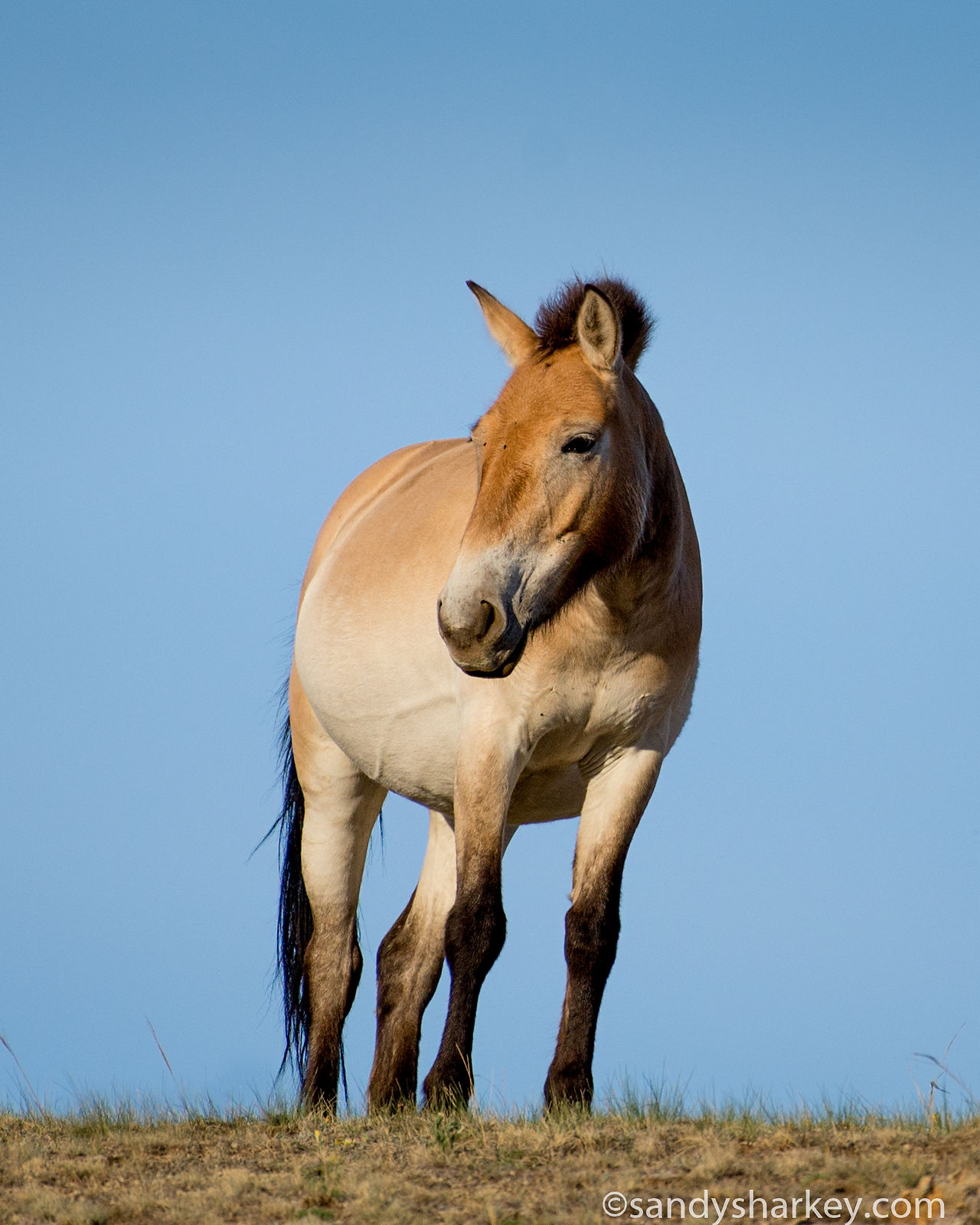
  • "Wild Przewalski's Horse, Mongolia" is the title of a photograph by wild horse photographer and advocate Sandy Sharkey as featured in the Fall 2025 issue of EquuStyle Magazine at equustyle.com
    Wild Przewalski's Horse, Mongolia
  • "Sable Island wild stallion" is the title of a photograph by wild horse photographer and advocate Sandy Sharkey as featured in the Fall 2025 issue of EquuStyle Magazine at equustyle.com
    Sable Island wild stallion

The wild horses of Canada’s remote Sable Island are 100 percent protected, living wild and free with zero interference from mankind. We have much to learn regarding mankind’s complex relationships with wild horses.

Shifting Perceptions Through Photography


EquuStyle: How do you believe your images help to shift perceptions and garner support for wild horses?


Sandy Sharkey: My goal on social media is to have my wild horse images pack a one-two punch. Hopefully, someone is emotionally drawn into a photo—whether it’s a wild horse portrait, a wild horse family band, or an action shot—and they stick around long enough to read the text that goes along with it.


My posts can include hard-hitting calls to action or be sweet or humorous. I try to mix it up as much as possible because different people respond to different things.


Misconceptions About Wild Horses


EquuStyle: What are some of the biggest misconceptions about wild horses that you aim to dispel through your advocacy?


Sandy Sharkey: Wild horses are sentient, intelligent, family-oriented animals that have earned the right to exist peacefully on the landscape. Those who profit from the usage of public lands have created a false narrative about wild horses being a strain on the ecosystem. Nothing could be further from the truth.


Unfortunately, the wild horse has become the scapegoat for rangeland damage caused by human activities, particularly public lands ranching. My wild horse advocacy is rooted in dispelling the false narrative wrongly promoted by special interest groups.


Key Messages in Advocacy


EquuStyle: As a speaker, when addressing audiences, what are the key messages you strive to convey about wild horses?


Sandy Sharkey: It starts with instilling the knowledge that wild horses actually EXIST. I shouldn’t be surprised that most people don’t know that wild horses live in wild spaces around the world. I had no idea myself until that eye-opening encounter in the Alberta wilderness so many years ago.


  • A photograph of a Salt Wells Creek Wyoming Wild Stallion known as 'Jack by wild horse photographer and advocate Sandy Sharkey as featured in the Fall 2025 issue of EquuStyle Magazine at equustyle.com.
    Salt Wells Creek Wyoming Wild Stallion known as 'Jack
  • A photograph of a Utah Onaqui wild stallion known as "One Ear" by wild horse photographer and advocate Sandy Sharkey as featured in the Fall 2025 issue of EquuStyle Magazine at equustyle.com.
    Utah Onaqui wild stallion known as One Ear
  • "Wild Alberta Mountain Horses" is the title of a photograph by wild horse photographer and advocate Sandy Sharkey as featured in the Fall 2025 issue of EquuStyle Magazine at equustyle.com
    Wild Alberta Mountain Horses
  • A photograph of a rearing wild foal and its mother titled "Utah Onaqui Mare and Foal" by wild horse photographer and advocate Sandy Sharkey as featured in the Fall 2025 issue of EquuStyle Magazine at equustyle.com
    Utah Onaqui Mare and Foal
  • "Welcome to the World (Onagui)" is the title of a photograph of a wild stallion and mare with their newborn foal by wild horse photographer and advocate Sandy Sharkey as featured in the Fall 2025 issue of EquuStyle Magazine at equustyle.com
    Welcome to the World (Onagui)

As a speaker, I always begin by assuming that I’m introducing the wonder of wild horses to someone for the first time. Following that, my role is to convey wild horses’ precarious relationships with humans and how we can work together to elicit positive change.

Engaging Individuals Through Storytelling


EquuStyle: How do you engage and inspire individuals who may have little prior knowledge or connection to these animals?


Sandy Sharkey: I try to engage people in a way that they can relate. Storytelling is immensely important. For example, to wild horses, family is everything. When wild horse families are ripped apart by tragic helicopter roundups, the stallions, mares, and foals desperately call out to each other after being indiscriminately packed into livestock trailers and separated forever. We can’t begin to imagine the heartbreak. But we can certainly relate to our own family relationships and reflect on the tragedy of being separated from a loved one.


A photograph of a "Wyoming Wild Horse Family" by wild horse photographer and advocate Sandy Sharkey as featured in the Fall 2025 issue of EquuStyle Magazine at equustyle.com.
"Wyoming Wild Family"

Impacting Conservation and Policy


EquuStyle: Do you have a story about how your images of wild horses or a speaking engagement directly impacted wild horse conservation or policy?


Sandy Sharkey: In 2023, I was honored to speak at the Wild Horse Conference in Washington, DC. My presentation was titled ‘Storytelling for Change’. Stories connect us all, and it’s the most powerful way to invoke positive change.


A photograph of an Alberta Wild Stallion known as 'Maverick' by wild horse photographer and advocate Sandy Sharkey as featured in the Fall 2025 issue of EquuStyle Magazine at equustyle.com.
Alberta Wild Stallion known as 'Maverick'

To help save wild horses, it’s important for people to have an emotional connection. Strong storytelling can move mountains. I love grassroots campaigns powered by the human heart. I created the hashtag ‘#ButImJustOnePersonSaid300MillionPeople’ to encourage people to listen to wild horse stories and feel moved to act. Every single voice is a megaphone.


Inspiration from Others


EquuStyle: Who are some individuals who have inspired you in your journey as a photographer and advocate?


Sandy Sharkey: There are far too many to mention, and I would likely miss someone! Over the years, I’ve been fortunate to work with outstanding people who have dedicated their lives to wild horses. I’ve stood shoulder-to-shoulder on wild horse ranges with advocates who know the herds and the individual horses, from birth to adulthood to death from old age. It’s always a unique gift when a horse lives wild and free for his or her entire life, which speaks volumes about the high odds of being captured long before that day.


I’m inspired by the photographers, the writers, the organizers of webinars and rallies, the creators of film and music, and everyone who works tirelessly to ensure that wild horses will run free for generations to come. And to the members of the public who don’t look the other way—taking the time to make phone calls, write letters, and share posts. In many ways, they are my greatest source of inspiration.


Guiding Photography Tours


EquuStyle: What inspired you to guide photography tours of wild horses on Sable Island?


Sandy Sharkey: I want the world to know that a place actually exists where wild horses are 100 percent protected. Located 180 miles from Halifax, Nova Scotia, in the Atlantic Ocean, the grassy dunes of Sable Island are home to approximately 500 wild horses. Here, they are free to form family bands, give birth, watch their foals grow, and share lifelong bonds with each other, with zero interference from mankind. The horses are managed by Mother Nature, living an existence in harmony with the sea.


  • A photograph of two wild horses on Sable Island titled 'Dad and Me' by wild horse photographer and advocate Sandy Sharkey as featured in the Fall 2025 issue of EquuStyle Magazine at equustyle.com
    'Dad and Me' Wild Horses of Sable Island
  • "Wild Horses of Sable Island at Dusk" is the title of a photograph by wild horse photographer and advocate Sandy Sharkey as featured in the Fall 2025 issue of EquuStyle Magazine at equustyle.com
    Wild Horses of Sable Island at Dusk
  • "Wild Horses of Sable Island" is the title of a photograph by wild horse photographer and advocate Sandy Sharkey as featured in the Fall 2025 issue of EquuStyle Magazine at equustyle.com
    Wild Horses of Sable Island
  • "Sable Island Wild Hippie" is the title of a photograph by wild horse photographer and advocate Sandy Sharkey as featured in the Fall 2025 issue of EquuStyle Magazine at equustyle.com
    Sable Island Wild Hippie

Being on Sable Island not only feeds our soul; it restores our hope that one day, all wild horses will be as revered and respected as the wild horses that have survived on this crescent-shaped island for over 350 years. We must never give up hope.


Supporting Wild Horse Protection


EquuStyle: For those interested in supporting wild horse protection, what concrete actions would you recommend they take?


Sandy Sharkey: It’s a good idea to follow wild horse organizations that provide excellent background information, along with current news and suggested calls to action. Here are some respected sources:


It’s important to contact your legislators and ask for humane reform regarding the treatment of wild horses. Elected officials can’t ignore an army of voices.


And while the fight to save wild horses is in the category of ‘David vs. Goliath’, I prefer to look at it this way: WE are not David; WE are Goliath. Thankfully, those with empathy and compassion greatly outnumber those who profit from public lands and want the wild horses eliminated. We just need to stay together and raise our voices.


Remember: #*ButI’mJustOnePersonSaid300MillionPeople*


Wild horses in a grassy field, text reads "But I'm just ONE person," "300 MILLION people," "saveourwildhorses.net."
Elected officials can’t ignore an army of voices.


All images Copyright Sandy Sharkey Photography—all rights reserved. Cannot be reproduced for any purpose without permission from Sandy Sharkey and Sandy Sharkey Photography.


Subscribe for equine art & advocacy

Subscribe today and receive a quarterly email to inform you about the upcoming

digital issue of EquuStyle Art & Advocacy Magazine.

Share via

© Copyright Protected

EquuStyle Magazine ©2023-2026 EquuStyle.com All rights reserved.

Privacy Policy

bottom of page