


America’s wild horses and burros do not need another cycle of crisis. They need a modern management system, one that brings science, welfare, culture and collaboration together to keep them wild.
This summer, above the limestone and gold of Rockefeller Center, wild horses ran through the heart of Manhattan.

They appeared not in flesh, but in silk, a herd moving beneath a deep Nevada sky on a flag hand-painted by designer Chloé Gosselin. Titled Freedom in the Wild Light, the work was created for Vogue and the Council of Fashion Designers of America’s United Flags of Fashion, presented with
America250. The horses were drawn from a photograph Gosselin made while visiting Nevada’s Fish Springs herd; the lead horse was inspired by her own horse, Milo. Beadwork created by the family of Ronda Kauk, a member of the Utu Utu Gwaitu Paiute Tribe and a guardian of the Mono Lake horses, replaced the familiar state star with an Indigenous North Star, a symbol of guidance and hope.
Nearby, designer, equestrian and American Wild Horse Conservation Board Member Jenni Kayne offered her own meditation on Nevada: shifting light, mountains, warmth and the quiet beauty of the Western landscape. Together, these works placed the wildness of the West inside one of America’s most visible cultural spaces.
The image was beautiful but it also raised an uncomfortable question:What does it mean to celebrate the wild horse as an emblem of freedom while continuing to manage these animals through a system built primarily around removing that freedom?
The American promise for wild horses and burros
In 1971, Congress unanimously passed the Wild Free-Roaming Horses and Burros Act, declaring these animals “living symbols of the historic and pioneer spirit of the West.” The law entrusted the Bureau of Land Management and the U.S. Forest Service with their protection on designated public lands.
More than half a century later, that promise remains unfinished.

The BLM estimates that 85,466 wild horses and burros lived on the public lands it manages as of March 2026. They occupy a fraction of the agency’s wider estate, approximately 25.5 million acres across ten Western states, lands also asked to accommodate livestock grazing, energy and mineral development, recreation, wildlife habitat and increasingly severe drought and wildfire.
Managing populations is essential but how do we do it while keeping horses on the range and still protecting the lands they need to thrive?
The dominant federal response has become a costly, ineffective loop: gather, remove and hold.
As of May 2026, 58,025 federally protected wild horses and burros were living in off-range corrals and pastures. In fiscal year 2024, the federal government spent $101 million on off-range holding, 66 percent of total Wild Horse and Burro Program expenditures. At that pace, the country is maintaining a billion-dollar-per-decade holding system while leaving too little funding and capacity for the on-range work that could reduce the need for removals.

Wild horses in a holding pen with no room to move. Click on photo to learn how to help now. 
Distressed wild stallions sparring after BLM roundup. Click on image to learn how you can help now. 
America's wild horses deserve freedom, not captivity or slaughter. Click on photo to help today.
All images © Darlene Smith for American Wild Horse Conservation
This is not the wildlife-management system most Americans imagine when they hear the word protected. Nor is it fiscally sustainable.
The answer, however, is not to abandon management. It is to modernize it.
From crisis response to management
For years, the public conversation has been framed as a choice between two extremes: remove horses or do nothing. It is a false choice.
A modern model begins before roundups are scheduled and long before helicopters take off. It combines accurate and transparent population data, fertility control, habitat and water stewardship, genetic monitoring, migration and movement planning, public safety measures, and accountable, multi-year plans tailored to each herd and landscape. When removal is truly necessary, it should be limited, humane and paired with responsible placement—not treated as the first or only tool.
We have the tools but we have not had the will to implement them at a scale large enough to make a meaningful difference.
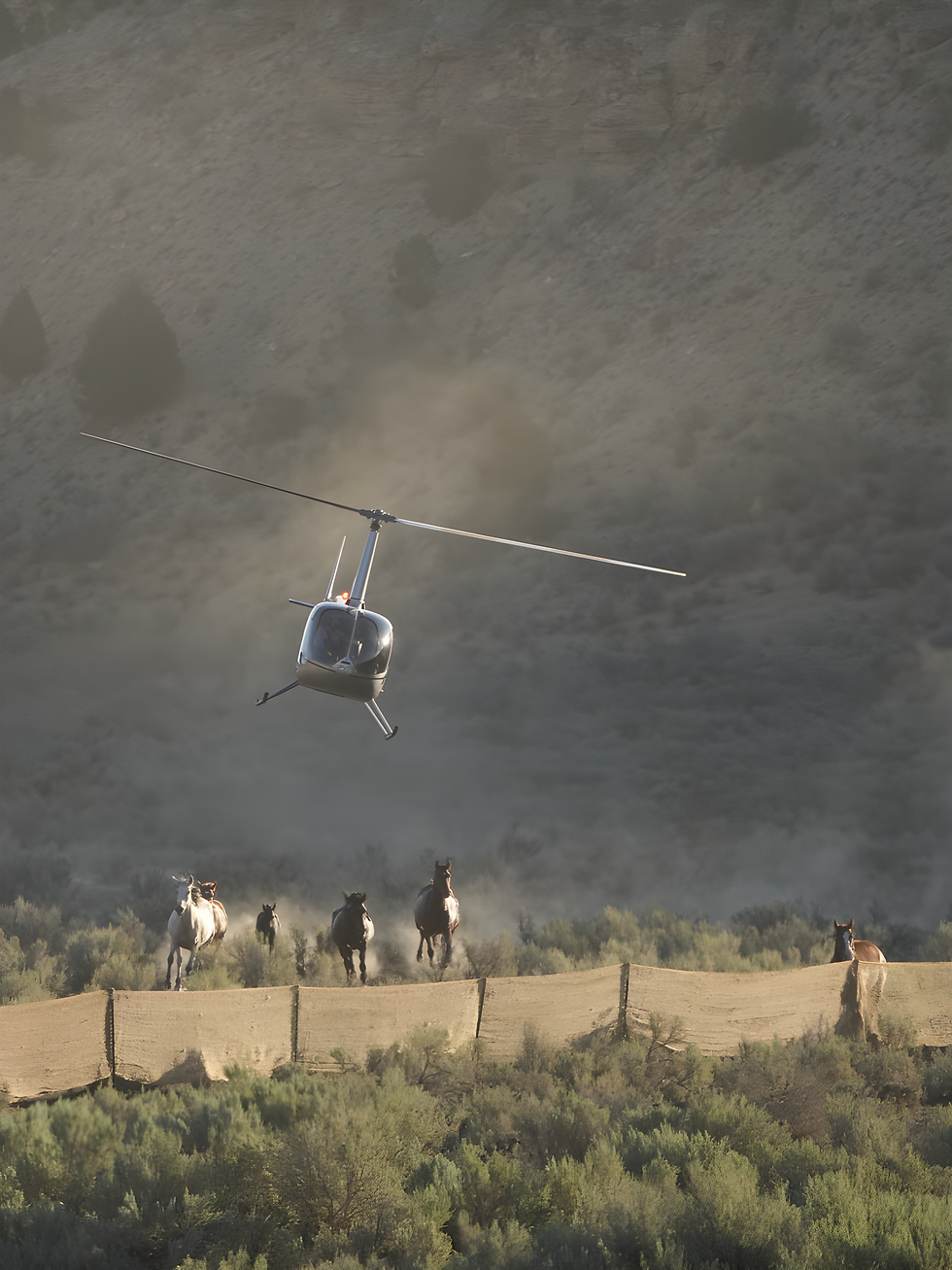
In Nevada’s Virginia Range, American Wild Horse Conservation operates the largest humane fertility-control program of its kind. The work is far more than delivering a vaccine by dart. It is a living management system: identifying individual horses, tracking mares and foals, training field teams, maintaining data, earning land access and returning season after season.
The results are measurable. From January through June 2026, the program documented 109 foals, compared with 494 during the same period in 2020, a 78 percent reduction. Across nearly 300,000 acres, the work has involved approximately 3,400 identified horses and collaboration among the State of Nevada, trained volunteers, landowners, local communities, conservation partners and businesses.
This is science at scale. It is also proof of something larger: humane management works when it is treated not as a pilot on the margins, but as infrastructure.
No single fertility-control method will fit every herd. Remote darting is practical where horses can be individually identified and approached safely; in more remote landscapes, treatment may need to occur during carefully planned gathers followed by release. Some places require water improvements, fencing changes, roadway mitigation or different technology altogether. Good management is adaptive by nature.
What matters is that the objective changes from removing the greatest possible number of animals to maintaining healthy, genetically viable herds on the range wherever possible.
Conservation as a shared practice
The future will not be built by government alone, or by advocacy alone.
It will require the BLM and Forest Service working alongside scientists, tribal communities, local advocates, ranchers, conservationists and the many people who share multiple-use public lands. It will require private partners willing to contribute technology, data systems, access, philanthropy and operational expertise. It will require lawmakers to fund prevention with the same seriousness that taxpayers are currently funding holding.
And it will require bridge builders.
Bridge building does not mean surrendering conviction. It means beginning with the shared truths that healthy horses need healthy land; taxpayers deserve an effective system; rural communities deserve to be heard; and federally protected animals deserve management worthy of that status. It means replacing a cycle of litigation, emergency and distrust with measurable objectives, transparent reporting and local partnerships that endure beyond a single administration or roundup schedule.
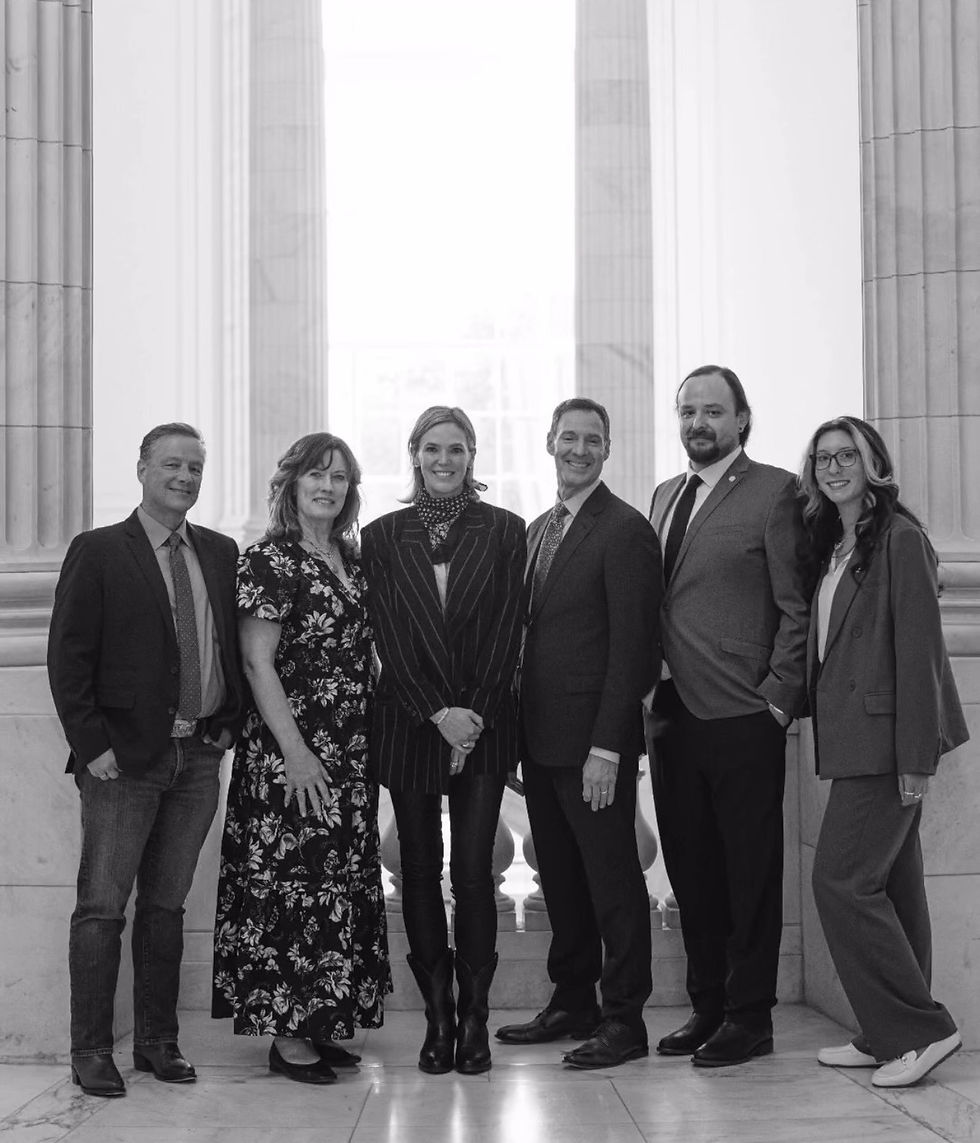
At American Wild Horse Conservation, we have been expanding this work through on-range programs and partnerships from Nevada’s Virginia Range and Fish Springs to the developed fertility-control partnership for Utah’s Cedar Mountain herd now run by Utah based organizations. We are bringing field evidence into conversations with agencies and Congress, and asking for appropriations that can move humane fertility control from exception to standard practice.
We are also showing up through art, fashion, film and photography because policy alone cannot carry the whole story.
Photography has always been essential to wild-horse protection. It reveals family bands, courtship, grief, play and survival, social lives that disappear when horses become numbers in a federal spreadsheet. It also serves as witness during removals, making animal welfare visible to the public. Film can bring the range into rooms far from the West. Art can cross an ideological divide before an argument ever begins. Fashion can place a wild horse over Rockefeller Center and invite millions of people to ask what freedom looks like in practice.
These are not decorative additions to conservation. They are ways of restoring relationships.
We protect what we know. We fight for what we have learned to love. And sometimes beauty is the first door through which understanding enters.
What we choose to leave wild
Wild horses and burros are not separate from the biodiversity of the West. They live within intricate landscapes of sagebrush, native grasses, migration corridors, springs, birds and other wildlife. Their future depends on managing the whole, not reducing nature to competing columns on a balance sheet.
As America marks 250 years, we are being asked to consider not only what we inherited, but what we intend to pass forward.
The wild horse helped carry this country into being. The burro carried people, water and possibility through some of its most unforgiving landscapes. Today, they ask something different of us: not labor, but leadership.
We know the old system is broken. We know the cost of continuing it. And we know a better model already exists in the quiet, disciplined work of counting, treating, monitoring and returning; in public and private partners sharing responsibility; in science made operational; and in culture reminding us why any of it matters.
The next chapter of wild horse conservation will not be written by choosing between compassion and management. It will be written by insisting upon both.
We built this country with horses. The least we can do is leave them a horizon.
EquuStyle Magazine thanks Patricia Miller, Executive Director, American Wild Horse Conservation for writing an excellent article and sharing photographs. Our sincere thanks to every supporter of AWHC who advocates for the protection and preservation of America's wild horses and burros on our public lands.
All images Copyright American Wild Horse Conservation -all rights reserved. Cannot be reproduced for any purpose without permission from the photographer or American Wild Horse Conservation.


