top of page

Magazine Articles


Film crew recording an elderly former racehorse trainer wearing a cowboy hat is seated outdoors near stables. Equipment and film crew members surround him, capturing audio and video during an interview about the film "Eddie's Turn".
Writer/Director Annika Hylmö and crew on the set of the upcoming film Eddie's Turn. Photo: Ashley Covington

Swedish filmmaker Annika Hylmö had just completed her first short film, the film festival award-winning comedy Dr. Penelope, was enjoying the critical acclaim and looking forward to pre-production on her next two projects when the COVID pandemic in 2020 shut down the film industry. Gone were the movie theatre audiences and with them the funding – donations and grants – that independent filmmakers rely on. 


“It was very tough,” said Hylmö, who has been living in California for over 20 years. “I wrote scripts and made short films for many years, with the goal to make narrative films, something I’ve been working toward my whole career.” The shut-down left everything open-ended, with no clue how long it would last. Discouraged, worried about her career and her finances, Hylmö started experiencing anxiety and knew she needed to take care of her mental health.


Swedish filmmaker Annika Hylmö riding a white horse named Eddie in a forest. She wears a brown top and helmet, and the horse has a maroon bridle. Green trees surround them.
Hylmö and Eddie on one of their afternoon jaunts. "I try to ride at least three times each week." Photo: Ashley Covington

As a youngster, the one activity that soothed her more than anything else was riding. As often as she could, Annika would make her way over to the stable and take one of the horses for a ride. “I realized I wanted to start riding again,” Hylmö said, who never formally quit riding but between getting her master's degree and her Ph. D in Communications she didn’t have time for something she once thought of as a hobby.


It took only a couple of weeks of riding regularly that made Hylmö realize this was much, much more than a hobby. Annika got back into riding three days a week, exploring new trails and vistas, and getting to know Eddie, the 10-year-old white gelding she rode regularly. Eddie had been a successful racehorse, who competed at Santa Anita and Del Mar racetracks before an injury forced his retirement. 


Eddie, who would soon be Annika’s horse, did more for Hylmö’s mental health than she could have imagined. “I experienced such a dramatic change in the way I felt about myself and about my life when I was around him that I wanted to learn what this was about,” she said, leading her to discovery a therapeutic school for treating anxiety disorders and trauma called equine therapy, where the presence of a horse in the therapy sessions give clients a sense of security as they reveal their feelings. She learned that former racehorses were among the best equine therapy partners, due to their temperament and self-discipline. “I became aware of this incredibly symbiotic relationship happening across species,” Hylmö said. “We have the capacity – and the desire – to help each other, to make both of us better.”


All photos of Annika Hylmö and Eddie by Ashly Covington


Hylmö believes the narrative story-telling format will resonate more powerfully with audiences because of the emotional nature of the horse and human connection. “In a documentary, you can tell the audience what the problem is you’re trying to solve,” Hylmö said. “In a scripted story you have to make them feel it.”  Films like Seabiscuit, Secretariat and Robert Redford’s classic The Horse Whisperer, have gone down in history as forever changing the way humans understand horses and, how they understand us. Steven Spielberg’s War Horse gave us a closer look at the inner life of horses and the trust that is so vital to any meaningful horse/human dynamic.
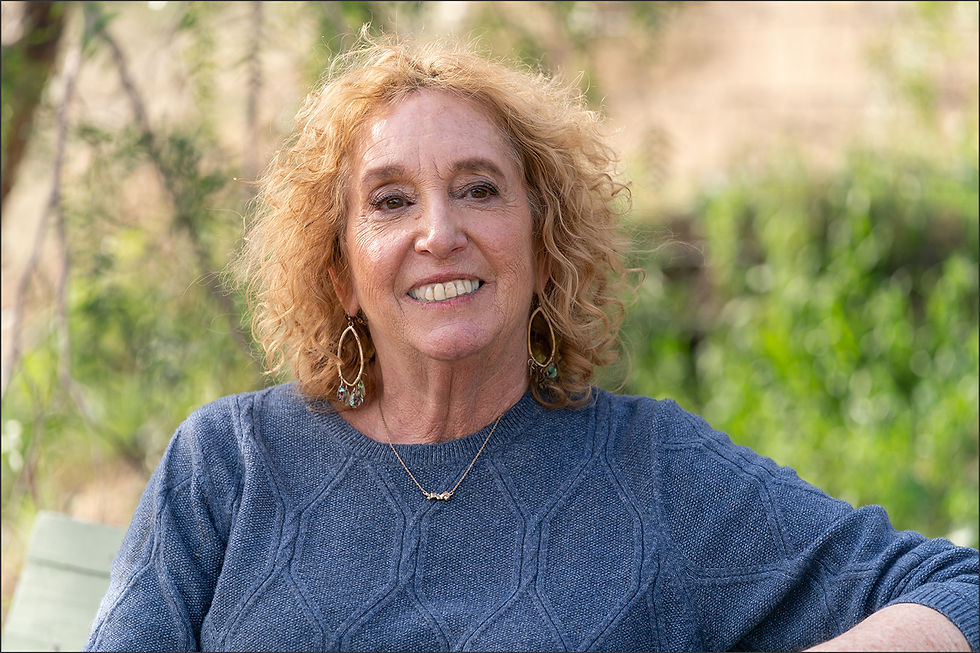

Smiling woman with curly hair in a blue sweater sits outdoors against a blurred green background, conveying a cheerful and relaxed mood.
Eddie's Turn Producer Betsy Pollock being interviewed about the challenges of bringing a short film to life. Photo: Ashly Covington

With her mission clear, Hylmö turned to her good friend and colleague, Academy Award®-winning producer Betsy Pollock, who was AFI’s head of production for 16 years. Together they produced a budget that included pre-production, principal photography and post-production, horse wrangling, ranch and stable rentals, cast and crew. One of Hylmö’s first hires was Bergitte Jorgensen of Bixi Communications to create and support an online and social media presence for Eddie’s Turn. “Fundraising for independent projects has always been difficult,” stated Pollock, “and has become even more so as the industry has contracted over the past few of years, as all independent filmmakers know. Fortunately, there are organizations like our fiscal sponsor, Film Independent, that partner with indie filmmakers to provide support, networking opportunities, outreach, etc.”


All photos of Annika Hylmö and Eddie by Ashly Covington


Annika and her team are investing in a concentrated social media and outreach campaign for Fall 2025 to support the EquuStyle article’s publication with racetracks, horse owners, breeding farms, horse clubs and more. “We believe that Eddie’s Turn can have social impact and make a difference in our world,” said Hylmö. “It’s our intention once the film is complete and we’ve finished our festival run to offer Eddie’s Turn as a fundraising tool to off-the-track thoroughbred communities and an educational tool for equine therapy centers.”


“We’re made aware every day that there’s a mental heath crisis out there,” Annika said thoughtfully, “and a need for more affordable care. It is our hope that Eddie’s Turn will help build awareness of Equine Therapy and its value, for people looking for help and for on-and-off-track racehorse owners as well.”


EquuStyle Magazine expresses gratitude to Pamela Rodi for her captivating article on the forthcoming film Eddie's Turn and Ashly Covington's photography. We extend our heartfelt thanks to all those involved in the creation of Eddie's Turn, particularly filmmakers Annika Hylmö and Producer Betsy Pollock, who aim to highlight the advantages of equine-assisted therapy for people of all backgrounds.


All images are copyrighted by Ashly Covington and Eddie's Turn Movie - all rights reserved. Reproduction for any purpose is prohibited without permission from Ashly Covington and Eddie's Turn Movie.


Please read EquuStyle Magazine's Disclaimer https://www.equustyle.com/disclaimer 


Updated: May 1, 2025


A veteran in a black hoodie hugs a black and white horse labeled "I AM VALUED" in an outdoor setting, conveying a calm, comforting mood during an equine-therapy program.
A veteran engages with a therapy horse during a H.O.O.V.E.S. program. Photo credit: Sean McConnell

For many Veterans, returning to civilian life comes with invisible wounds. The weight of post-traumatic stress, traumatic brain injuries, and the challenges of reintegration can diminish well-being and quality of life. Yet across the country, Veterans are discovering a unique path to healing—through the profound connection between humans and horses.


Healing Through Horses


In 2024, Horses for Mental Health (HMH) and Arenas for Change (ARCH), with funding from the Veterans Affairs Adaptive Sports Grant (VA ASG), partnered with 14 organizations across 11 states to provide equine-assisted learning services for 354 Veterans.


To assess the impact, 213 Veterans completed pre- and post-program assessments, and the results were remarkable:

✅ 93% reported improved mental health and well-being

✅ 99% said working with horses significantly enhanced their healing


The true impact is best understood through the voices of those who experienced it firsthand:


A veteran in a striped shirt and cap stands walks a white therapy horse with other veterans looking on. Lush greenery background, relaxed mood. Photo credit: Sean McConnell - H.O.O.V.E.S.
Photo credit: Sean McConnell - H.O.O.V.E.S.

"I was barely a shell of a man when I came here. Now, I have confidence, clarity, and for the first time in decades, I see a future for myself."


"Horses don’t judge. They just meet you where you are. That made all the difference."


"For the first time, I feel like I’m not just surviving—I’m actually living again."


A Path to Transformation

At the heart of this work is transformation—what Arenas for Change calls an “ARCH Moment.” These life-changing turning points mark the shift from struggle to hope, allowing individuals to step through a metaphorical arch of new perspectives and personal growth.


For Veterans, healing unfolds in the presence of a horse, where the nervous system—often overstimulated and dysregulated by trauma—can begin to settle. Horses offer a calm, nonjudgmental space, allowing Veterans to experience safety, connection, and trust.


"Being in their presence is the greatest peace I have ever experienced!" – Veteran participant


Horses’ intuitive responses provide honest, unfiltered feedback, reflecting emotions and behaviors in ways that help Veterans process their experiences from a new perspective.


“They showed me how I was showing up to others, and I did not realize that at first. It was eye-opening, for sure.” – Veteran participant


Through these interactions, many Veterans describe a profound reconnection—not just with the horses, but with their own authentic selves.


“I feel lighter and more free to be myself.” – Veteran participant


Rustic sign reading "H.O.O.V.E.S. Healing Our Veterans Est. 2018" hangs on wood post. Background of green fields and trees under blue sky. Photo credit: Sean McConnell - H.O.O.V.E.S.
Photo credit: Sean McConnell - H.O.O.V.E.S.

Amanda Held, founder of H.O.O.V.E.S. in Ohio, has witnessed these transformations firsthand. “Many Veterans walk into our program feeling disconnected and hopeless. But after working with the horses alongside our personal growth curriculum, they rediscover trust, confidence, and purpose. The grant funding allowed us to serve Veterans who might not have had access otherwise.”


For Carol Young at Healing Strides of Virginia, the experience is just as profound. “The most powerful thing is watching a Veteran who was once withdrawn begin to reconnect—with themselves, with others, and with life. These programs aren’t just helping—they’re saving lives.”


Sustaining the Impact - Seen Through Horses Campaign


Providing these services takes dedication—not just to the Veterans, but also to the horses. Programs rely on financial support to ensure proper care for their equine partners, maintain facilities, and train skilled facilitators.


A veteran in a cap smiles beside a brown horse in a wooded area. He wears a black shirt with the text "Not all wounds are visible."
Photo credit: Sean McConnell - H.O.O.V.E.S.

Beyond the VA Grant, programs like H.O.O.V.E.S. and Healing Strides of VA expanded their reach through the Seen Through Horses Campaign, a national awareness and fundraising effort led by Horses for Mental Health, with support from title sponsor Zoetis


Through this initiative, these organizations gained visibility, attracted new supporters, and secured additional funding to continue serving Veterans and caring for their horses.


"Participating in the campaign allowed us to reach more people who believe in the power of horses to heal," said Young. "It helped us sustain our work, not just for the Veterans, but for the horses who make it possible.”


The Bigger Picture: Horses for Mental Health & ARCH


The Seen Through Horses Campaign, produced annually by Horses for Mental Health during May, Mental Health Awareness Month, brings together programs nationwide to increase awareness, raise funding, and advocate for the integration of horses in mental health care and personal growth services.


Additionally, many of these programs benefit from training and support through Arenas for Change (ARCH), which equips facilitators with an innovative, story-based approach in their equine-assisted work. This approach helps professionals create safe, engaging, and meaningful experiences, empowering clients to author their own transformative journeys.


The results are clear:

✅ Veterans are healing

✅ Programs are growing

✅ More people are recognizing the power of horses to change lives.


And for the men and women who have served our country, that means hope—not just for today, but for the future.


Support the Mission


To learn more about these programs or to get involved:

Horses for Mental Health: https://horsesformentalhealth.org/ 

Arenas for Change (ARCH): https://arenasforchange.com/

To access the full VA Grant outcome report, visit: https://horsesformentalhealth.org/veterans-2024grantreport/


EquuStyle Art & Travel magazine thanks Tyler Brklacich Co-Founder & Executive Director of Horses for Mental Health and Lynn Thomas, CEO and Founder of Arenas for Change (ARCH). Please share the link to this article to help raise awareness about HMH’s Seen Through Horses Campaign, especially during May which is Mental Health Awareness month.


All images Copyright Horses for Mental Health, H.O.O.V.E.S. and Healing Strides of VA -all rights reserved. Cannot be reproduced for any purpose without permission from Horses for Mental Health , H.O.O.V.E.S. and Healing Strides of VA.


Subscribe to get exclusive updates

Subscribe today and receive a quarterly email to inform you about the upcoming

digital issue of EquuStyle Art & Advocacy Magazine.

Share via

© Copyright Protected

EquuStyle Magazine ©2023-2025 EquuStyle.com All rights reserved.

Privacy Policy

bottom of page